How is SAPTI Essential in Creating a 'Self-Reliant' Gujarat with 674 Graduates by December 2025?
Synopsis
Discover how the Stone Artisan Park Training Institute (SAPTI) is shaping the future of Gujarat by empowering 674 graduates by December 2025. This initiative not only preserves the state's rich heritage but also fosters sustainable employment opportunities in the stone craft sector.
Key Takeaways
SAPTI enhances skill development in the stone craft sector.
674 graduates are expected by December 2025.
The program merges tradition with modern techniques.
SAPTI plays a vital role in preserving Gujarat's cultural heritage.
Success stories inspire youth to pursue careers in stone craftsmanship.
Gandhinagar, Jan 19 (NationPress) Aligning with Prime Minister Narendra Modi's vision of "Vikas Bhi, Virasat Bhi" -- development and heritage coexist -- the Stone Artisan Park Training Institute (SAPTI) established by the Gujarat government is significantly enhancing skill development within the stone craft sector.
SAPTI plays a pivotal role in preserving India's rich sculptural heritage while simultaneously creating job opportunities for the youth, thus becoming a fundamental component of Gujarat's self-reliance initiative.
By December 2025, an impressive 674 candidates will have graduated from the institute.
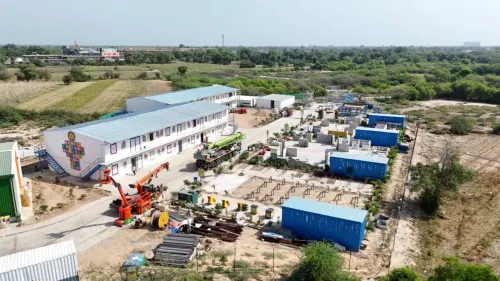
Initiated by the Industries and Mines Department of the Gujarat government, in partnership with the Office of the Commissioner of Geology and Mining in Gandhinagar, SAPTI is tapping into the state's extensive potential in stone crafts and architectural sculpture.
Two Artisan Parks function under SAPTI -- one located in Ambaji within the Banaskantha district and another in Dhrangadhra, situated in Surendranagar district.
The Ambaji centre is dedicated to marble sculpture, whereas the Dhrangadhra centre specializes in sandstone carving.
Under the guidance of Chief Minister Bhupendra Patel, institutions such as SAPTI are crucial in connecting cultural heritage with sustainable job creation.
From 2022 to 2025, the two SAPTI centres witnessed a total of 1,082 enrolments.
By December 26, 2025, 674 candidates will have successfully completed their training -- 307 from the Ambaji centre and 367 from the Dhrangadhra centre.
This data highlights SAPTI's increasing contribution to fostering a skilled workforce for Gujarat's stone craft and sculpture industry.
The impact of SAPTI is exemplified through inspiring stories like that of Akshay Pilani from Chuli village in Dhrangadhra taluka of Surendranagar district.
After finishing higher secondary education, Akshay initially aimed to join the police or the Army.
His career trajectory shifted when he discovered opportunities in stone handicrafts and design through the SAPTI-Dhrangadhra. Enrolling in the Stone Craft and Design course proved to be a game-changer.
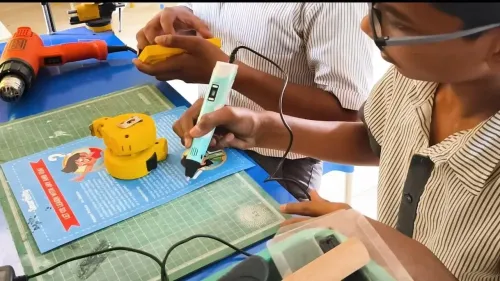
Through organized practical training and expert guidance, Akshay acquired skills in stone carving, painting, product design, and the operation of modern machinery alongside traditional carving techniques.
In addition to training, he received valuable industry exposure and financial assistance.
Coming from a farming background, Akshay has now established himself as a proficient artisan.
He successfully completed two major stone carving projects in Chandigarh and currently earns approximately Rs 40,000 per month -- a remarkable achievement that has motivated many other young individuals to consider careers in sculpture and stone craft.
SAPTI's core mission is to strengthen and preserve India's sculptural traditions through skill development, education, innovation, and entrepreneurship.
In addition to creating jobs, the institute plays a vital role in transmitting Gujarat's centuries-old stone art and architectural heritage to future generations.
By merging traditional methods with modern tools and global design trends, SAPTI revitalizes the legacy of stone sculpture and aligns it with contemporary markets -- guaranteeing that heritage and livelihood flourish together.
Point of View
Gujarat is not only safeguarding its artistic heritage but also promoting self-reliance in a rapidly changing global landscape. As editors, we recognize the significance of such programs in fostering sustainable development and empowering local communities.
NationPress
19 Sept 2026
Frequently Asked Questions
How many candidates have graduated from SAPTI?
As of December 2025, a total of 674 candidates are expected to have graduated from SAPTI.
What types of training does SAPTI offer?
SAPTI offers training in various stone crafts including marble sculpture and sandstone carving, integrating traditional techniques with modern practices.
Where are the SAPTI centres located?
There are two SAPTI centres: one in Ambaji, Banaskantha district, focusing on marble sculpture, and another in Dhrangadhra, Surendranagar district, specializing in sandstone carving.
How does SAPTI contribute to employment?
SAPTI creates sustainable employment opportunities by training youth in stone crafts, enabling them to establish careers in this traditional yet evolving industry.