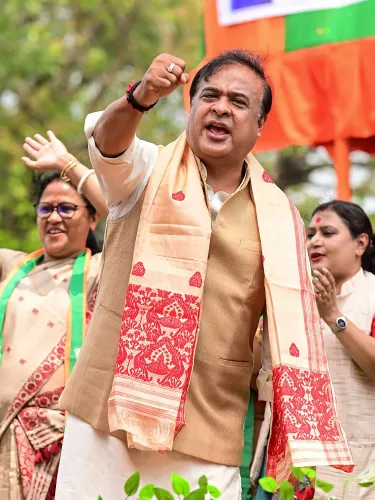
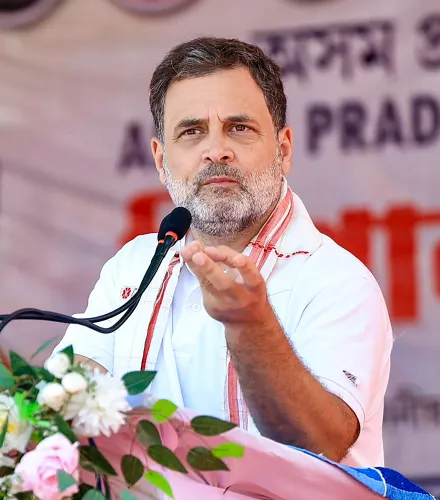
Rahul Gandhi pushing India to 'anarchy', says Assam CM Himanta Biswa Sarma
Synopsis
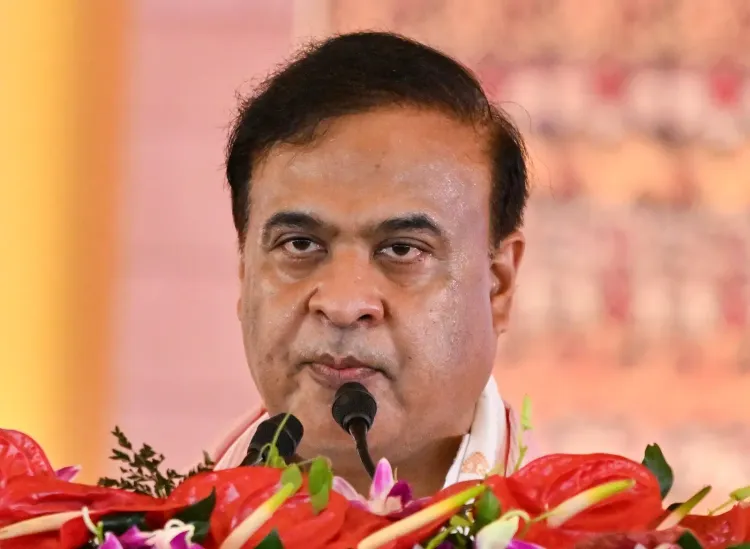
Assam Chief Minister Himanta Biswa Sarma has accused Rahul Gandhi of pushing India towards 'anarchy' by leading a Congress march to the Supreme Court — escalating the BJP-Congress battle over institutional independence and drawing a sharp line between permissible criticism and what he calls conduct that erodes constitutional confidence.
Key Takeaways
Assam CM Himanta Biswa Sarma on 12 October accused Rahul Gandhi of 'exposing democratic institutions to anarchy.' The remarks were triggered by the Congress 's march towards the Supreme Court in New Delhi .
Sarma warned that protests against judicial decisions could encourage citizens to defy court verdicts.
The Congress has been challenging the functioning of the Election Commission of India (ECI) as part of a broader campaign.
The BJP has framed Congress protests as politically motivated and damaging to institutional credibility.
Assam Chief Minister Himanta Biswa Sarma on Monday, 12 October launched a sharp broadside against Congress leader Rahul Gandhi, accusing him of 'undermining' democratic institutions and warning that protests against judicial decisions risked pushing India towards 'anarchy'. The remarks came in response to the Congress's march towards the Supreme Court in New Delhi as part of the party's broader political campaign against what it alleges are institutional failures.
What Sarma Said
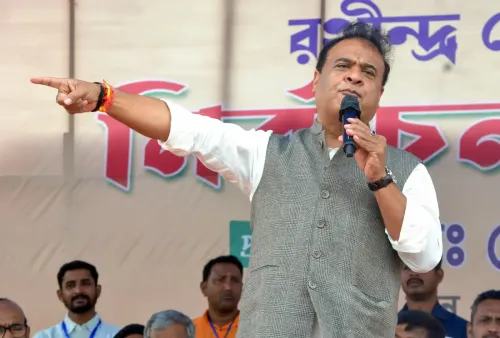
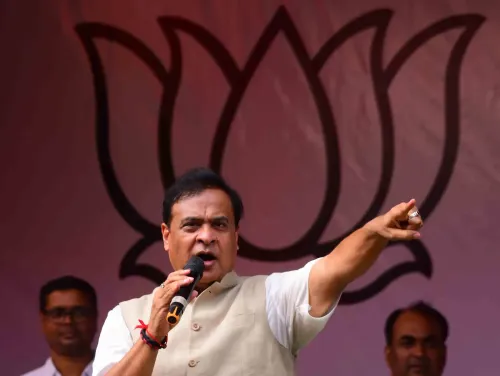
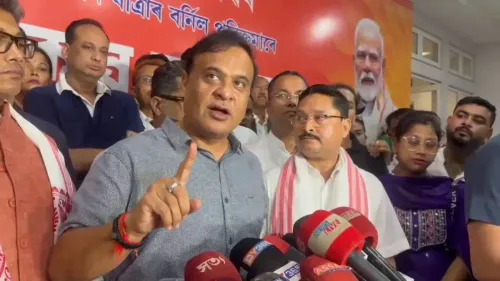
Speaking in Guwahati, Sarma alleged that Gandhi was setting a dangerous precedent by mobilising supporters to demonstrate against institutions responsible for upholding the Constitution and administering justice. 'I have never seen anyone threaten the Supreme Court,' the Chief Minister said, arguing that political disagreements must not be allowed to erode the authority of the judiciary.
He further warned that if such demonstrations became an accepted form of political protest, it could encourage citizens dissatisfied with court verdicts to resort to similar methods. 'He is exposing our democratic institutions to anarchy,' Sarma said, referring to Gandhi directly.
The Broader Argument
Sarma drew a parallel between protests against judicial institutions and political reactions to electoral defeats, alleging that the Congress leadership was fostering a culture in which unfavourable outcomes are routinely attributed to institutional wrongdoing. He argued that the rule of law requires political leaders and ordinary citizens alike to respect judicial proceedings, even when decisions go against their interests.
The Chief Minister contended that instead of questioning institutions, political leaders who lose cases or elections should examine their own shortcomings and return to voters with a stronger programme.
Context: BJP vs Congress on Institutional Independence
The Congress has been challenging aspects of the functioning of the Election Commission of India (ECI) and has raised concerns over the electoral process. Its march towards the Supreme Court on Monday forms part of this wider campaign. Sarma, however, maintained that criticism of institutions should not cross the line into conduct capable of undermining public confidence in the constitutional system.
His remarks sit within the Bharatiya Janata Party's (BJP) broader effort to portray the Congress's protests as politically motivated and potentially damaging to institutional credibility. The confrontation between the two parties over the independence and functioning of democratic institutions, including the ECI, has been intensifying in recent weeks.
Congress Position
The Congress has maintained its criticism of the electoral process and the functioning of constitutional bodies, arguing that raising concerns about institutions is a legitimate exercise of democratic rights. The party has not yet formally responded to Sarma's remarks made on Monday.
With both sides hardening their positions, the debate over the limits of permissible protest against constitutional institutions is likely to sharpen as the political calendar ahead grows more contested.
Point of View
A conflation that mainstream coverage has largely left unchallenged. At the same time, the Congress's decision to march to the Supreme Court — rather than engaging through legal channels — does invite questions about strategy: is the goal legal redress or political optics? That ambiguity hands the BJP precisely the narrative it needs heading into a contested electoral cycle.
NationPress
12 Oct 2026
Frequently Asked Questions
Why did Assam CM Himanta Biswa Sarma attack Rahul Gandhi on 12 October?
Sarma criticised Gandhi in response to the Congress's march towards the Supreme Court in New Delhi, accusing him of undermining democratic institutions and warning that such protests could push India towards 'anarchy'. He argued that political disagreements must be resolved through constitutional channels, not street demonstrations against judicial bodies.
What was the Congress march to the Supreme Court about?
The Congress march on 12 October was part of the party's broader political campaign raising concerns about the functioning of constitutional bodies, including the Election Commission of India. The party alleges institutional failures in the electoral process and has been escalating its protests on those grounds.
What exactly did Himanta Biswa Sarma say about Rahul Gandhi?
Sarma said 'He is exposing our democratic institutions to anarchy,' referring to Gandhi. He also stated 'I have never seen anyone threaten the Supreme Court,' arguing that leaders must respect judicial proceedings even when decisions go against them.
How has the Congress responded to Sarma's remarks?
The Congress has maintained its broader criticism of the electoral process and constitutional bodies, framing such protests as a legitimate exercise of democratic rights. The party had not issued a formal response to Sarma's specific remarks as of Monday.
What is the larger BJP-Congress dispute over institutions about?
The two parties have been engaged in an intensifying confrontation over the independence and functioning of democratic institutions, particularly the Election Commission of India. The BJP argues that Congress protests are politically motivated, while Congress contends it is holding constitutional bodies accountable.