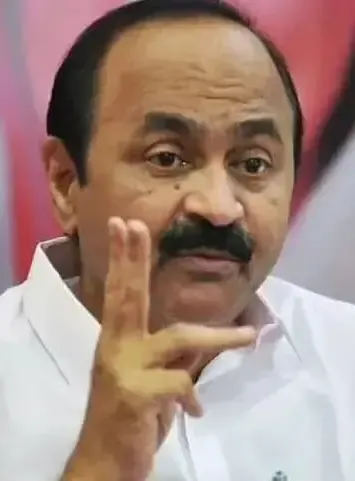
Kerala Elections: V. D. Satheesan Critiques CM Pinarayi Vijayan's Political Flip-Flops
Synopsis
In a fierce critique, Kerala's Leader of Opposition, V. D. Satheesan, accuses Chief Minister Pinarayi Vijayan of political opportunism and communalism ahead of the upcoming elections, raising serious questions about the integrity of his leadership.
Key Takeaways
Satheesan's Critique: Accuses Vijayan of shifting positions for electoral advantage.
Communalism Allegations: Claims the Chief Minister fosters both majority and minority communalism.
Sabarimala Position: Criticism of changing stance on women's entry.
Selective Enforcement: Highlights discrepancies in the treatment of political figures.
Upcoming Elections: Assembly elections on April 9 will be crucial for Kerala's future.
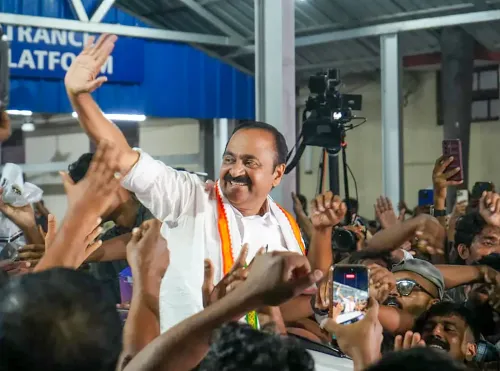
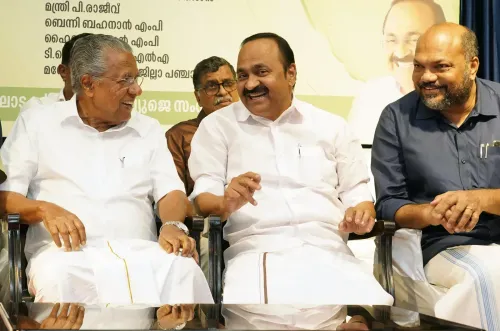
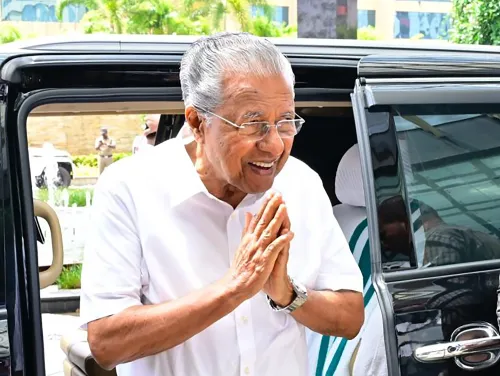
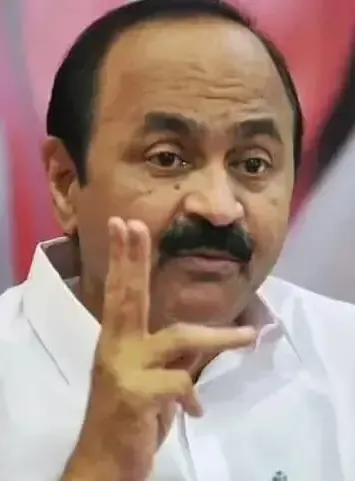
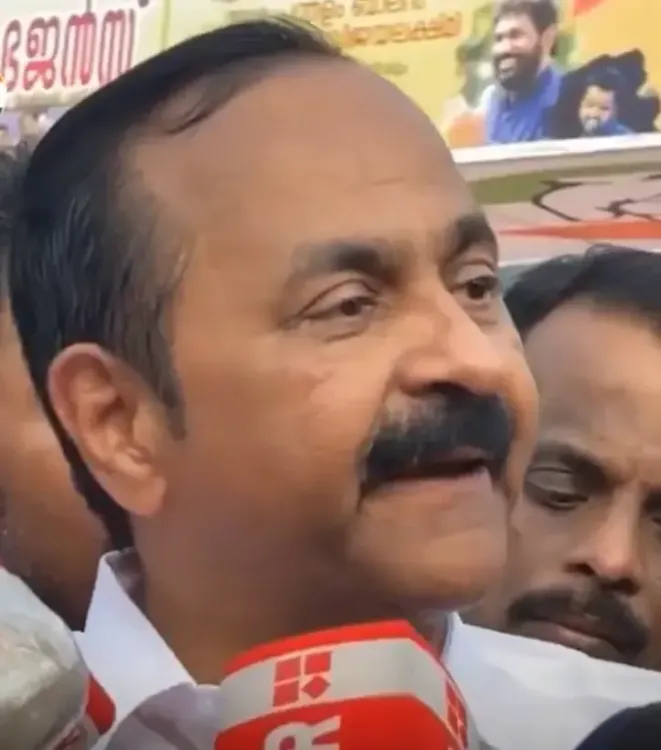
Thiruvananthapuram, March 27 (NationPress) The Leader of Opposition in Kerala, V. D. Satheesan, has launched a scathing critique against Chief Minister Pinarayi Vijayan, accusing him of frequently changing his stance for electoral benefits while promoting both majority and minority communalism. Speaking to reporters in Kattakkada, a suburb of the state capital, Satheesan claimed that Vijayan has alternated between appeasing minorities and majorities based on the evolving political landscape.
“In the parliamentary elections, it was minority appeasement; when that backfired, it became majority appeasement,” he stated, emphasizing that Vijayan has made contradictory public statements on sensitive matters.
Satheesan further accused the Chief Minister of misleading the populace regarding alleged ties with Jamaat-e-Islami. He asserted that previous denials were contradicted by earlier statements and supporting documents, including an editorial from his party's publication. “He continues to mislead people despite evidence to the contrary,” Satheesan remarked.
Touching on the Sabarimala issue, he noted that Vijayan had previously asserted that his government would not alter its position on women's entry for electoral reasons, only to later change his stance after electoral challenges.
Additionally, Satheesan criticized the government for its lack of decisive action in matters involving CPI-M members, accusing it of protecting wrongdoers.
On a national level, Satheesan highlighted what he termed “selective enforcement,” contrasting the extensive questioning of Rahul Gandhi by central agencies with the handling of cases involving CM Vijayan’s family.
Intensifying his critique, he suggested a tacit understanding between the BJP and CPI-M in several districts, including Palakkad, aimed at undermining the Congress-led UDF. Nevertheless, Satheesan expressed confidence that the UDF would achieve victories in crucial constituencies like Malampuzha and Kongad.
Defending his involvement in public discussions that drew scrutiny, he stated that engaging in debates across political platforms is a long-standing democratic tradition. He dismissed claims of ideological compromise, asserting that articulating the Congress perspective in such settings is not equivalent to endorsing opposing ideologies.
These remarks reflect an escalation in political discourse as the Assembly elections approach, scheduled for April 9, when voters will elect 140 new legislators.
Point of View
The criticisms leveled by Satheesan against CM Vijayan underscore the intense political rivalry in Kerala. The allegations of shifting alliances and communalism highlight the complex interplay of politics in the region, reflecting broader national trends in electoral strategies and party dynamics.
NationPress
25 Sept 2026
Frequently Asked Questions
What are the main accusations against CM Vijayan?
V. D. Satheesan accuses CM Vijayan of frequently changing his stance for electoral gains and promoting both majority and minority communalism.
What does Satheesan say about the Sabarimala issue?
Satheesan claims Vijayan initially stated his government would not change its position on women's entry into Sabarimala for electoral reasons but later softened his stance.
What does Satheesan imply about the BJP and CPI-M?
He suggests there is a tacit understanding between the BJP and CPI-M in certain constituencies aimed at undermining the Congress-led UDF.
What is the significance of the upcoming Assembly elections?
The Assembly elections on April 9 will determine the future political landscape in Kerala, with voters electing 140 new legislators.
How does Satheesan defend his participation in public debates?
He argues that engaging in discussions across political platforms is a long-standing democratic practice and does not imply ideological compromise.