Kerala CM-designate Satheesan orders minimal convoy, no road blocks
Synopsis
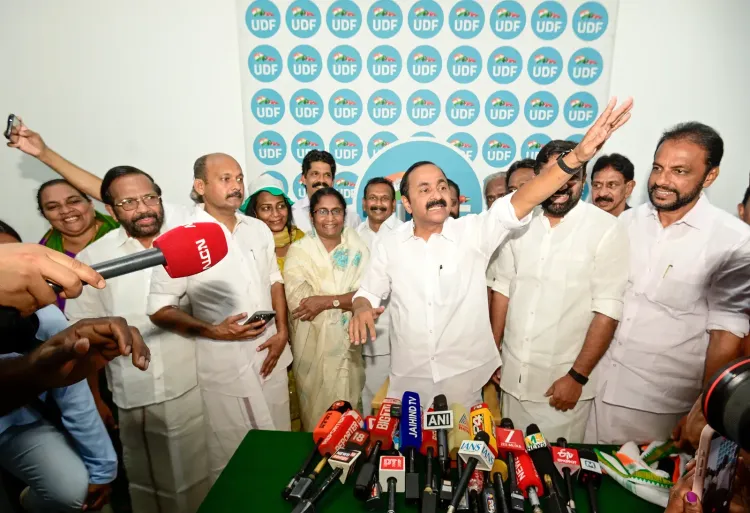
Before even taking oath, Kerala CM-designate V. D. Satheesan has told police to ditch the 20-vehicle convoy and stop blocking roads for his movement — a direct repudiation of the VIP security culture that dogged his predecessor Pinarayi Vijayan for a decade, and a calculated bet that symbolism can set the tone for an entire government.
Key Takeaways
Satheesan instructed senior police officials on 15 May to scale back his security convoy before taking oath as Kerala Chief Minister .
He has directed that only mandatory pilot and escort vehicles accompany him — no additional convoy vehicles.
Roads must not be blocked and commuters must not be inconvenienced during his travel, per his instructions.
His predecessor Pinarayi Vijayan routinely moved with convoys of up to 20 vehicles , drawing sustained public criticism.
Satheesan had repeatedly attacked VIP security excess from the UDF Opposition benches during Vijayan's tenure.
Even before taking oath as Kerala's next Chief Minister, V. D. Satheesan has moved to dismantle the VIP security culture that defined his predecessor's decade in power. On Friday, 15 May, the Chief Minister-designate instructed senior police officials to drastically scale back his security arrangements — no road blockades, no sprawling convoy, and no disruption to ordinary commuters.
What Satheesan Has Ordered
According to sources, Satheesan has told police officials that only the mandatory pilot and escort vehicles are required for his movement. He has specifically directed that roads must not be blocked ahead of his travel and that residents and commuters should face no inconvenience on his account. The instructions represent a sharp operational break from recent precedent.
The Pinarayi Vijayan Contrast
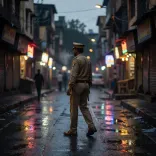
For much of the last decade, the security apparatus surrounding then Chief Minister Pinarayi Vijayan drew sustained public criticism. In the latter years of his tenure, Vijayan's movement routinely involved convoys of up to 20 vehicles — comprising pilot cars, multiple escort vehicles, signal jammer units, armed police teams, and a trailing ambulance. Roads were blocked well in advance, police personnel were deployed along entire highway stretches, and commuters were frequently stranded as the convoy moved through cities and towns.
The aggressive crowd-control measures during protests — particularly the scrutiny of black masks, black clothing, and black flags — triggered widespread debate about an expanding VIP security culture in the state. The then Congress-led United Democratic Front (UDF) Opposition, led by Satheesan himself, repeatedly raised the issue inside and outside the Kerala Legislative Assembly, accusing the Vijayan administration of turning the state machinery into an instrument of fear and inconvenience for ordinary citizens.
The Political Signal Behind the Decision
Satheesan's instructions are being read as more than an administrative adjustment. Having built his political identity through sharp attacks on perceived governmental arrogance, the incoming Chief Minister appears determined to project his tenure in deliberate contrast. His popularity grew, in part, from a public image of accessibility — a leader uncomfortable with excess and conscious of the optics of power.
Notably, this is a pattern seen elsewhere in Indian politics, where incoming administrations use early symbolic gestures to reset public perception. In Satheesan's case, the signal is particularly pointed: the man who spent years criticising VIP culture from the Opposition benches is now, on the eve of assuming office, rejecting it for himself.
What to Watch
Whether these instructions translate into lasting policy or fade once the pressures of office set in will be the real test. Security protocols for sitting Chief Ministers involve inputs from multiple agencies, and scaling them back sustainably requires institutional buy-in, not just a directive. Civil society groups and Opposition voices will likely watch whether the minimal-convoy approach holds beyond the honeymoon period of a new government.
Point of View
But it is also a hostage to fortune. The gap between a pre-oath instruction and sustained institutional practice is wide — security agencies have their own risk calculus, and sitting Chief Ministers often find their early austerity signals quietly reversed by protocol. More importantly, the real measure of VIP culture reform is not convoy size but whether the broader apparatus of crowd control, protest management, and access to power changes. Satheesan built his brand attacking Vijayan on exactly these grounds; the bar he has set for himself is correspondingly high.
NationPress
29 Sept 2026
Frequently Asked Questions
What has Kerala CM-designate V. D. Satheesan ordered regarding his security convoy?
Satheesan has instructed senior police officials to limit his movement to only the mandatory pilot and escort vehicles, with no additional convoy cars and no road blockades. He specifically directed that ordinary commuters and residents must not be inconvenienced during his travel.
How does this compare to former CM Pinarayi Vijayan's security arrangements?
Vijayan's convoys reportedly stretched to as many as 20 vehicles, including pilot cars, escort vehicles, signal jammer units, armed police teams, and a trailing ambulance. Roads were routinely blocked well in advance, drawing persistent public criticism throughout his tenure.
Why is Satheesan's convoy order seen as a political statement?
Satheesan spent years as UDF Opposition leader attacking the Vijayan government's VIP security culture, accusing it of inconveniencing ordinary citizens. By rejecting a similar setup for himself before even taking oath, he is reinforcing his public image as an accessible, anti-establishment leader.
When is V. D. Satheesan expected to take oath as Kerala Chief Minister?
Satheesan has not yet taken oath as of 15 May; the convoy instructions were issued ahead of his formal swearing-in. A specific oath date was not confirmed in available reports.
Will the minimal-convoy arrangement become permanent policy?
That remains to be seen. The instructions are currently a directive from the Chief Minister-designate, and whether they translate into a lasting security protocol will depend on institutional compliance and sustained political will once he assumes office.