Shivraj plants rudraksha, pledges farm-to-global-market push
Synopsis
On India's 80th Independence Day, Agriculture Minister Shivraj Singh Chouhan pledged to build a farm-to-global-market value chain rooted in chemical-free farming and announced the government's commitment to doubling the Lakhpati Didi target from 3 crore to 6 crore beneficiaries.
Key Takeaways
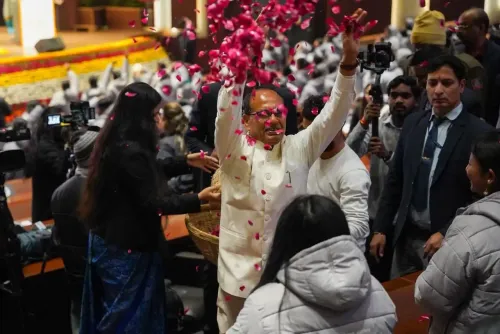
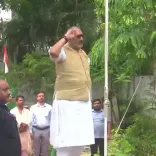
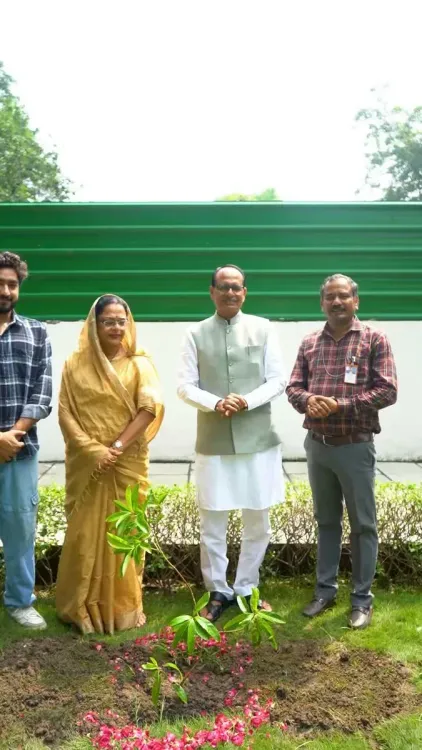
Shivraj Singh Chouhan planted a rudraksha sapling at his New Delhi residence on India's 80th Independence Day under the #OnePlantADay initiative.
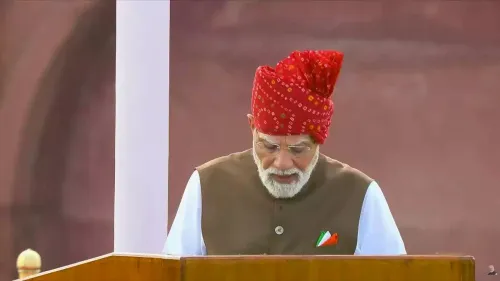
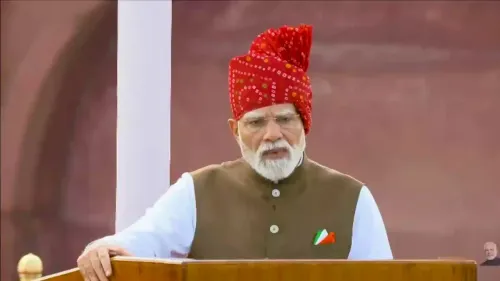
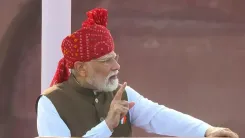
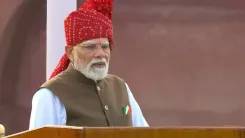
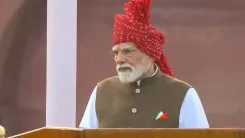
PM Modi 's Red Fort address outlined the 'Shakti ki Saptadhara' ; Chouhan identified agriculture and food production as one of the seven streams under his ministry's charge.
The minister pledged to build a complete value chain — from chemical-free production through processing to global market access — for Indian agricultural products.
The government's Lakhpati Didi target of 3 crore beneficiaries has been declared met; the new goal is 6 crore women earning at least Rs 1 lakh annually through SHGs.
Chouhan invoked Modi's call to place national interest above personal interest as the guiding principle for the ministry's work in the year ahead.
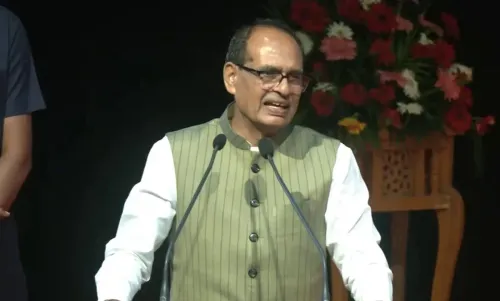
On India's 80th Independence Day, Union Agriculture Minister Shivraj Singh Chouhan planted a rudraksha sapling at his New Delhi residence — a personal ritual anchored to a national resolve. Taking cue from Prime Minister Narendra Modi's address from the ramparts of the Red Fort, Chouhan laid out an ambitious agricultural roadmap: chemical-free farming, end-to-end processing, and a value chain that carries Indian produce all the way to global markets.
Modi's 'Shakti ki Saptadhara' and agriculture's place in it
In his Independence Day address, Prime Minister Modi outlined what he called the 'Shakti ki Saptadhara' — seven streams of national strength. Chouhan pointed squarely to the agriculture stream as his ministry's mandate. 'We will take our agriculture from the farm to the global market,' he wrote, framing it not merely as a production challenge but as a full-spectrum value-chain mission: grow clean, process at scale, and sell to the world. The commitment draws on a policy lineage stretching back to the Paramparagat Krishi Vikas Yojana launched in 2015, which seeded India's push toward organic and natural farming. What Chouhan is now signalling is the next leg — moving beyond input substitution to building the logistics, processing, and market-linkage infrastructure that can make chemical-free Indian produce competitive on international shelves.Lakhpati Didi: from 3 crore to 6 crore
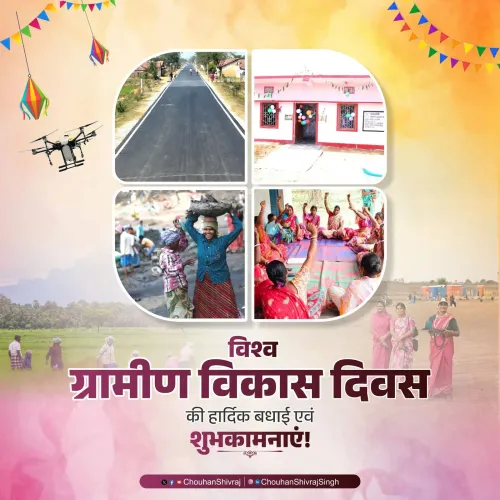
Chouhan also renewed the government's commitment to the Lakhpati Didi scheme — the flagship initiative under Deendayal Antyodaya Yojana-National Rural Livelihoods Mission (DAY-NRLM) that aims to lift women in self-help groups to annual earnings of at least Rs 1 lakh. The original target of 3 crore beneficiaries, he said, has been met. The new target: 6 crore Lakhpati Didis. Doubling the target is a significant administrative signal. SHG networks — numbering in the tens of millions across rural India — are increasingly being woven into the same farm-to-market value chain Chouhan described: women's collectives processing, packaging, and marketing agricultural produce. The two pledges, read together, sketch a model where rural women are not just beneficiaries but active nodes in India's agricultural export ecosystem.National interest above self — the Independence Day pledge
Chouhan closed with a line from Modi's address that he chose to amplify: 'Sabse upar rashtrahit, swayam ke hiton ke upar' — national interest above personal interest. 'Duty will be our identity,' he wrote, translating the Prime Minister's call into a personal and ministerial commitment. The rudraksha sapling — planted under the #OnePlantADay banner — adds a symbolic dimension: a tree associated with spiritual resolve, rooted in the soil on the day India marks its freedom. The kicker Chouhan offered his followers doubles as the ministry's operating instruction for the year ahead: 'Turn dreams into resolve, resolve into capability, and capability into success.'Point of View
Not just a ceremonial gesture. By anchoring his agricultural roadmap explicitly to Modi's 'Shakti ki Saptadhara' framework, he positions his ministry as a central pillar of the government's second-term economic narrative — one that ties rural livelihoods, export ambition, and sustainability into a single arc. The doubling of the Lakhpati Didi target from 3 crore to 6 crore is the sharpest policy marker here: it commits the ministry publicly to a measurable outcome that will be tracked and cited. The farm-to-global-market framing, meanwhile, signals that the next phase of agrarian reform will be less about input subsidies and more about value-chain infrastructure — a shift that, if resourced, could redefine India's agricultural export profile.
NationPress
15 Aug 2026
Frequently Asked Questions
What is the Lakhpati Didi scheme and what is the new target?
Lakhpati Didi is a government initiative under DAY-NRLM that helps women in self-help groups earn at least Rs 1 lakh per year. The original target of 3 crore beneficiaries has been declared achieved; the new target announced on Independence Day 2026 is 6 crore Lakhpati Didis.
What did PM Modi say about agriculture in his Independence Day speech?
PM Modi outlined a framework called 'Shakti ki Saptadhara' — seven streams of national strength — from the Red Fort. Agriculture and food production was identified as one of these seven streams, with a focus on taking Indian farming to global markets.
What did Shivraj Singh Chouhan pledge on Independence Day 2026?
Union Agriculture Minister Shivraj Singh Chouhan pledged to promote chemical-free farming, build end-to-end processing infrastructure, and create a robust value chain to take Indian agricultural products from the farm to global markets.
What is chemical-free farming and why is the government promoting it?
Chemical-free or natural farming reduces dependence on synthetic pesticides and fertilisers. India has promoted it since the Paramparagat Krishi Vikas Yojana in 2015; it is now being linked to export competitiveness, as global markets increasingly demand residue-free produce.
Why did Shivraj Singh Chouhan plant a rudraksha tree on Independence Day?
Chouhan planted a rudraksha sapling at his New Delhi residence as part of the #OnePlantADay initiative, combining a symbolic gesture of resolve with the Independence Day occasion to highlight environmental and spiritual significance.