SC declines Assam floods PIL, forwards petition to authorities for remedial action
Synopsis
The Supreme Court refused to treat recurring Assam floods as a legal problem — but its decision to forward the PIL to authorities rather than dismiss it outright carries an implicit message: the institutional failures documented by the CAG, the vacant technical posts at the Brahmaputra Board, and over ₹1,100 crore sitting idle in disaster funds are too serious to ignore, even if the remedy lies outside courtroom orders.
Key Takeaways
The Supreme Court on 5 October 2026 declined to entertain a PIL on recurring floods and erosion in Assam and the Brahmaputra Valley .
A bench led by CJI Surya Kant observed the issue was 'not essentially legal' in nature, but directed the registry to forward the petition to all respondent authorities.
The PIL cited the CAG Performance Audit (Report No.
5 of 2018) identifying deficiencies in flood-control planning, floodplain zoning, and project monitoring in Assam.
65 of 182 sanctioned technical posts at the Brahmaputra Board were vacant as of 2024, according to an official Lok Sabha reply dated 12 December 2024 . ₹1,112.50 crore remained uninvested in Assam's State Disaster Response Fund as on 31 March 2025 ; ₹555.13 crore was unspent under the Water Resources grant in 2024-25 .
Respondents include the Union government , Central Water Commission , National Disaster Management Authority , Brahmaputra Board , and the Assam government .
The Supreme Court on Monday, 5 October 2026, declined to entertain a public interest litigation (PIL) seeking judicial directions to address recurring floods, riverbank erosion, and drainage failures in Assam and the Brahmaputra Valley, instead directing its registry to forward the petition to all concerned authorities for appropriate remedial action.
What the Court Decided
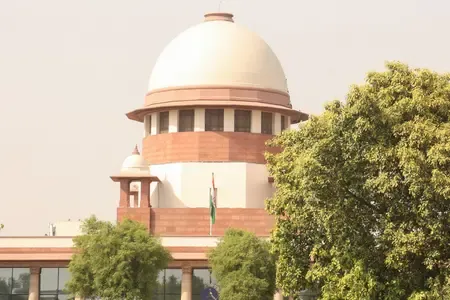
A bench headed by Chief Justice of India (CJI) Surya Kant refused to issue notice on the PIL filed by advocate Ujjawal Gaur, who appeared in person. While declining to entertain the plea, the bench observed that the deficiencies and suggestions flagged by the petitioner were matters that ought to draw the attention of the relevant authorities, but the issue was 'not essentially legal' in nature. The court directed its registry to forward a copy of the petition to all respondent authorities — including the Union government, Central Water Commission, National Disaster Management Authority, Brahmaputra Board, and the Assam government — asking them to examine its contents and take appropriate remedial steps.
What the PIL Sought
Gaur had argued before the apex court that recurring flood devastation in Assam could not be treated as wholly inevitable, given that statutory frameworks and specialised institutions had been created for flood control, bank erosion, and drainage management. The petition invoked three central statutes: the Brahmaputra Board Act, 1980; the Assam Embankment and Drainage Act, 1953; and the River Boards Act, 1956 — each of which, he contended, contemplates scientific investigation, integrated river-basin planning, and implementation of flood and erosion measures.
Among the reliefs sought were directions for updated hydrological and morphological studies, an integrated basin-wide management framework, protection of natural drainage channels, and the creation of a high-level expert mechanism to examine systemic problems.
Gaps Highlighted by CAG Reports
The petitioner placed considerable reliance on successive reports of the Comptroller and Auditor General of India (CAG) to establish institutional failure. In particular, the plea cited the CAG's Performance Audit on 'Flood Control in Assam', contained in Report No. 5 of 2018, which reportedly identified deficiencies in integrated basin-wise planning, floodplain zoning, hydrological and morphological studies, and the execution and monitoring of flood-control works.
On the question of institutional capacity, the petition referred to an official Lok Sabha reply dated 12 December 2024, which disclosed that 65 of 182 sanctioned technical posts in the Brahmaputra Board remained vacant as of 2024 — a vacancy rate of over 35%. The plea also pointed to a CAG State Finances Audit Report showing that ₹1,112.50 crore remained uninvested in the State Disaster Response Fund as on 31 March 2025, alongside savings of ₹555.13 crore under the Water Resources grant during 2024-25 — funds that critics argue should have been deployed on flood mitigation infrastructure.
Broader Context: A Decades-Old Crisis
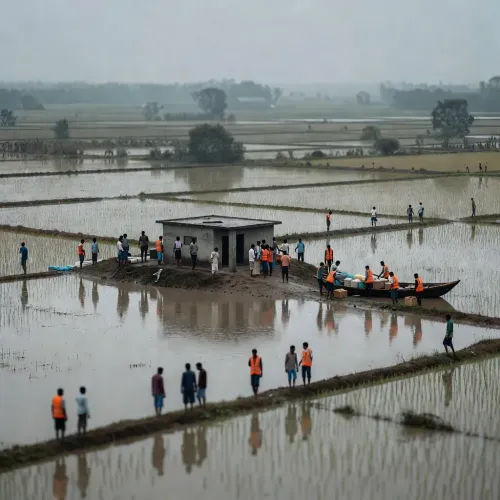
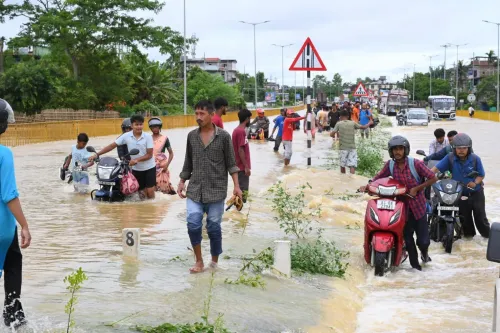
Assam is among India's most flood-prone states, with the Brahmaputra and its tributaries inundating large swathes of the state almost every monsoon season. The petitioner's contention — that administrative lapses rather than acts of nature are the primary driver of recurring devastation — echoes long-standing criticism from civil society, engineers, and successive parliamentary committees. The argument that statutory bodies are not discharging their mandated functions, despite existing legal and institutional architecture, adds a governance dimension to what is frequently framed as a purely environmental or geographical problem.
What Happens Next
With the Supreme Court choosing administrative referral over judicial intervention, the onus now shifts to the respondent authorities to act on the petition's contents. There is, however, no court-imposed deadline or accountability mechanism for compliance, which critics may argue dilutes the order's practical force. Whether the referral produces concrete action on flood-control infrastructure, technical staffing, and utilisation of disaster funds will depend on the political will of the Centre and the Assam government. The forward-looking question is whether this administrative nudge from the apex court will prove more effective than the unrealised potential of the statutory frameworks the petition itself cited.
Point of View
Without any compliance timeline or follow-up mechanism, risks becoming a bureaucratic dead letter. The data the petitioner marshalled is striking: over a third of Brahmaputra Board technical posts unfilled, more than ₹1,100 crore undeployed in disaster funds, and CAG findings from 2018 that appear unaddressed eight years on. The real accountability gap here is not in courtrooms but in the absence of any enforceable institutional mechanism that compels statutory bodies to do what they were created to do — a gap that neither this PIL nor the court's order meaningfully closes.
NationPress
6 Oct 2026
Frequently Asked Questions
Why did the Supreme Court refuse to entertain the Assam floods PIL?
The Supreme Court, led by CJI Surya Kant, declined to entertain the PIL because it found the issue 'not essentially legal' in nature, meaning it was not amenable to the kind of judicial directions sought. The court nonetheless directed its registry to forward the petition to all respondent authorities, asking them to take appropriate remedial measures.
What did the Assam floods PIL seek from the Supreme Court?
The PIL filed by advocate Ujjawal Gaur sought directions to ensure effective implementation of statutory flood and erosion management frameworks in Assam and the Brahmaputra Valley. It specifically asked for updated hydrological and morphological studies, an integrated basin-wide management plan, protection of natural drainage channels, and the creation of a high-level expert mechanism to examine recurring flood problems.
What institutional failures did the PIL highlight?
The PIL cited successive CAG reports — including the Performance Audit on 'Flood Control in Assam' in Report No. 5 of 2018 — flagging deficiencies in planning, floodplain zoning, and project monitoring. It also disclosed that 65 of 182 sanctioned technical posts at the Brahmaputra Board were vacant in 2024, and that ₹1,112.50 crore remained uninvested in Assam's State Disaster Response Fund as of 31 March 2025.
Which authorities will now receive the PIL petition?
The Supreme Court directed its registry to forward the petition to the Union government, the Central Water Commission, the National Disaster Management Authority, the Brahmaputra Board, the Assam government, and other concerned states and authorities. They have been asked to examine the petition's contents and take remedial steps.
What laws govern flood management in Assam and the Brahmaputra Valley?
Three principal statutes govern the domain: the Brahmaputra Board Act, 1980; the Assam Embankment and Drainage Act, 1953; and the River Boards Act, 1956. The PIL argued that these laws mandate scientific investigation, integrated river-basin planning, and implementation of flood, erosion, and drainage measures — functions that, according to the petitioner, are not being adequately discharged.