SC issues notice on 30% quota for women lawyers in govt panels
Synopsis
No woman has ever served as Attorney General or Solicitor General of India since Independence — and women hold just 25.3% of panel lawyer positions across major states. The Supreme Court has now issued notice on a PIL demanding a 30% mandatory quota in all government legal panels, a case that could redraw how the state picks its courtroom face.
Key Takeaways
The Supreme Court issued notice to the Centre , states, and UTs on 20 May 2025 on a PIL seeking 30% reservation for women in government legal panels.
The petition was filed by Ladli Foundation Trust ; SCBA President Vikas Singh appeared for the petitioner.
Women constitute only around 25.3% of panel lawyers across major states, with several states reporting even lower representation.
No woman has ever served as Attorney General or Solicitor General of India since Independence.
The bench of CJI Surya Kant , Justice Joymalya Bagchi , and Justice Vipul M.
Pancholi has listed the matter for hearing next week.
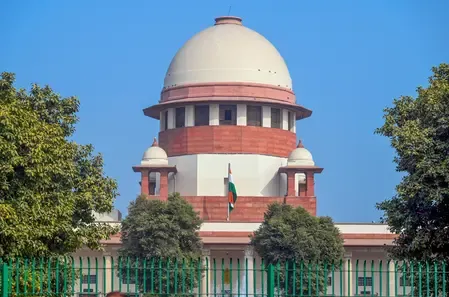
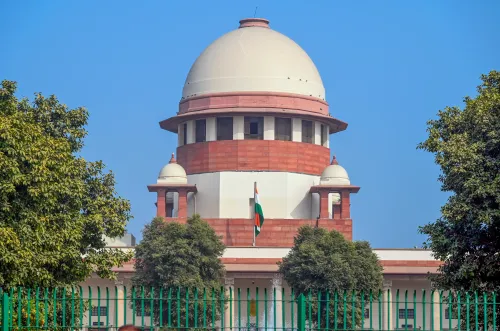
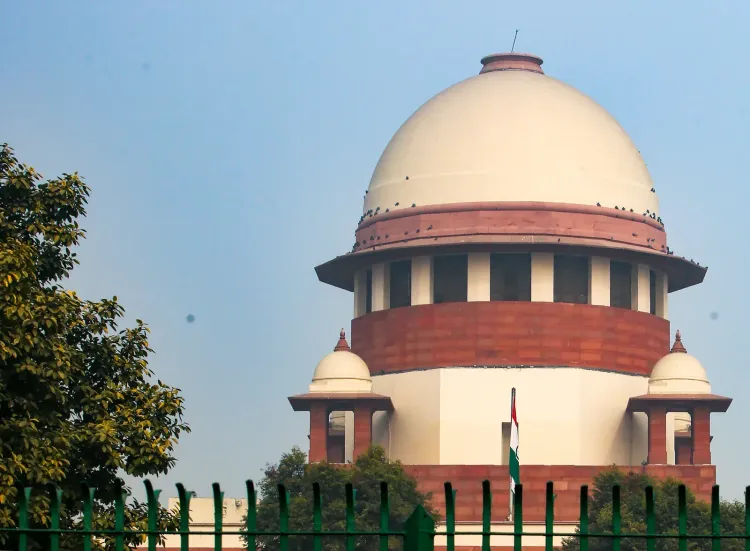
The Supreme Court on Wednesday, 20 May issued notice to the Centre, all states, and Union Territories on a public interest litigation seeking a mandatory 30 per cent reservation for women advocates in government legal panels and law officer appointments across India. The bench, led by Chief Justice of India Surya Kant alongside Justices Joymalya Bagchi and Vipul M. Pancholi, agreed to take up the matter and listed it for further hearing next week.
What the PIL Demands
The petition, filed by Ladli Foundation Trust, seeks a court direction to implement a minimum 30 per cent reservation for women advocates in all High Court panels, government law officer positions, and all Central and State Government as well as Public Sector Undertaking legal panels. The plea argues that government empanelments are critical professional platforms that shape visibility, career progression, and prospects for judicial elevation — and must therefore reflect the constitutional mandate of equality.
Key Data Cited in the Petition
The PIL relies on empirical data showing that women constitute only around 25.3 per cent of panel lawyers across major states, with several states reporting even lower figures. Crucially, the petition points out that no woman has served as Attorney General for India or Solicitor General of India since Independence, and none of the Additional Solicitors General assigned to various High Courts are women. The plea contends that despite constitutional guarantees under Articles 14 and 15(3), women continue to face systemic exclusion from institutional legal opportunities.
What the SCBA Survey Found
Senior advocate and Supreme Court Bar Association (SCBA) President Vikas Singh, who appeared for the petitioner along with advocates Varun Singh and Mudit Gupta, urged the court to act on a recent SCBA nationwide survey. The survey found that a majority of women advocates believe government panel appointments are easier for men, and called for a mandatory policy to ensure adequate representation. 'This is pursuant to the SCBA survey on women in the legal profession. They need to be included in government panels,' Singh submitted before the bench.
Legal Basis and Precedent
The petition draws on recent Supreme Court directions that mandated reservation for women in bar association governing bodies, arguing that similar affirmative measures are constitutionally permissible — and necessary — in government legal empanelments. According to the plea, the process of empanelment 'is expected to reflect the constitutional mandate of equality and inclusivity,' yet empirical data demonstrate that women remain severely underrepresented in such positions.
What Happens Next
With notices now issued to the Centre, states, and UTs, the respondents will be required to file their replies before the next hearing, currently scheduled for next week. The outcome of this case could set a binding precedent for how the state selects its legal representatives before constitutional courts, tribunals, and other judicial forums across the country.
Point of View
But the deeper structural problem is the absence of any transparent empanelment criteria — a gap that allows informal networks to perpetuate male dominance without leaving a paper trail. The Supreme Court's recent willingness to mandate women's representation in bar association bodies signals a shift in judicial temperament; whether that extends to executive appointments of law officers is a harder constitutional question, and the Centre's reply will be telling.
NationPress
26 Sept 2026
Frequently Asked Questions
What does the PIL filed before the Supreme Court seek?
The PIL, filed by Ladli Foundation Trust, seeks a court direction mandating a minimum 30 per cent reservation for women advocates in all High Court panels, government law officer positions, and Central and State Government or PSU legal panels across India. It argues that current empanelment processes systemically exclude women despite constitutional guarantees under Articles 14 and 15(3).
Why is women's representation in government legal panels considered low?
According to the petition, women constitute only around 25.3 per cent of panel lawyers across major states, with several states reporting even lower figures. An SCBA nationwide survey cited in the plea found that a majority of women advocates believe government panel appointments are easier for men.
Has any woman ever held the post of Attorney General or Solicitor General of India?
No. The petition specifically highlights that no woman has served as Attorney General for India or Solicitor General of India since Independence, and none of the Additional Solicitors General assigned to various High Courts are women.
What is the legal basis for the 30% reservation being sought?
The petitioners rely on constitutional guarantees under Articles 14 and 15(3), as well as recent Supreme Court directions mandating reservation for women in bar association governing bodies. They argue that similar affirmative measures are constitutionally permissible in government legal empanelments.
What happens next in the Supreme Court case?
The Supreme Court has issued notices to the Centre, all states, and Union Territories, who must now file their replies. The bench has listed the matter for further hearing next week, after which the court will decide on interim directions or a fuller hearing schedule.