Supreme Court issues notice on PIL against liquor in tetra packs, sachets
Synopsis
The Supreme Court has flagged liquor sold in fruit-juice-lookalike tetra packs and sachets as 'very deceptive' — and has now put the Centre and every state on notice. The PIL exposes a regulatory blind spot: divergent state excise laws allow alcohol in packaging indistinguishable from children's juice cartons, with no mandatory health warnings. The court's response could force a nationwide overhaul of liquor packaging norms.
Key Takeaways
The Supreme Court issued notice to the Centre and all states on 20 May over a PIL against alcohol sold in tetra packs, sachets, and PET bottles.
A bench led by CJI Surya Kant orally called the practice 'very deceptive' during the hearing.
The PIL argues such packaging encourages underage drinking , drunk driving , and public consumption by enabling easy concealment.
Unlike tobacco, these alcohol packs reportedly carry no prominent health warnings — cautionary text is in barely visible print.
The petitioner, an NGO active against drunk driving for over two decades , seeks uniform national packaging guidelines for liquor.
States including Uttar Pradesh , Punjab , Maharashtra , Karnataka , and Andhra Pradesh have broad excise definitions that currently permit such packaging.
The Supreme Court on Wednesday, 20 May issued notice to the Centre and all state governments on a public interest litigation (PIL) raising serious concerns over the sale of alcohol in inconspicuous packaging — including tetra packs, PET bottles, and plastic sachets — that critics argue facilitates underage drinking, drunk driving, and public consumption.
What the Court Said
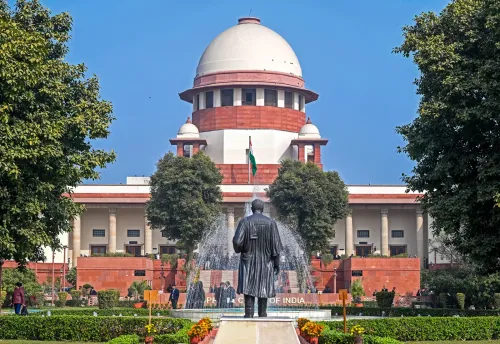
A bench comprising Chief Justice of India (CJI) Surya Kant, Justice Joymalya Bagchi, and Justice Vipul M. Pancholi passed the notice order while hearing the petition filed by an NGO. During the hearing, the CJI-led bench orally remarked, 'This is very deceptive', after advocate-on-record Vipin Nair, appearing for the petitioner, informed the court that certain alcoholic beverages were being packaged in containers resembling fruit juices — complete with fruit imagery and flavour branding.
Key Concerns Raised in the PIL
The petition contends that divergent definitions under various State Excise Acts — including those in Uttar Pradesh, Punjab, Maharashtra, Karnataka, and Andhra Pradesh — permit alcohol to be sold in 'flasks', 'pots', 'wrappers', and similar receptacles, creating a patchwork of inconsistent standards.
According to the plea, such portable and easily concealable packaging 'poses various risks, including consumption by juveniles, drinking in a moving vehicle, health risks, increased ease of smuggling, ease of public consumption, and environmental risks.' The petition further noted that, unlike tobacco products, these alcohol packs do not carry prominent health warnings — any cautionary text is reportedly printed in small, barely visible font.
The Deceptive Marketing Angle
A central argument in the PIL is that these products are frequently marketed using fruit names and colourful designs, making them deceptively similar to non-alcoholic beverages. The petition argued this 'facilitates easy access and concealment, encourages underage consumption, promotes public drinking and drunk driving.' This is particularly concerning given the appeal such packaging reportedly holds for younger consumers.
What the Petitioner Is Seeking
The petitioner organisation, which has reportedly been campaigning against drunk driving and underage drinking for over two decades, has urged the apex court to direct the Union government and all states to adopt a uniform definition of 'bottle' restricted to clearly identifiable containers. It has also sought the framing of harmonised national guidelines governing liquor packaging, with public health, road safety, and environmental concerns as guiding principles.
The plea argues that without such intervention, states will continue to prioritise revenue considerations over public health — a pattern the petitioner contends has persisted due to the absence of central oversight on packaging norms.
What Happens Next
With the Supreme Court having issued formal notice, the Centre and all state governments are now required to file their responses. The case is expected to test the boundaries of federal excise authority against the court's power to mandate uniform public health standards — a question with significant implications for India's liquor industry and regulatory framework.
Point of View
At a time when tobacco warnings are near-inescapable, is a glaring inconsistency that Parliament has not addressed. If the court proceeds to mandate uniform packaging standards, it will effectively be doing the legislative work that the Centre and states have avoided — raising the deeper question of why it took a PIL, rather than policy, to get here.
NationPress
3 Oct 2026
Frequently Asked Questions
What is the Supreme Court PIL about liquor in tetra packs and sachets?
The PIL seeks uniform national guidelines to regulate the sale of alcohol in inconspicuous packaging such as tetra packs, plastic sachets, and PET bottles. The petitioner, an NGO, argues such packaging enables underage drinking, drunk driving, and public consumption by making alcohol easy to conceal and deceptively similar to fruit juice.
What did the Supreme Court say during the hearing?
A bench led by Chief Justice of India Surya Kant orally remarked 'This is very deceptive' after being informed that certain alcoholic beverages are packaged in containers resembling fruit juices, complete with fruit imagery. The court then issued formal notice to the Centre and all state governments.
Why is alcohol in tetra packs and sachets considered dangerous?
According to the petition, such packaging poses risks including consumption by minors, drinking in moving vehicles, smuggling, and public consumption. The products are reportedly marketed with fruit names and colourful designs, making them indistinguishable from non-alcoholic beverages, which increases their appeal among younger consumers.
What relief has the petitioner sought from the Supreme Court?
The petitioner has sought directions to the Union government and all states to adopt a uniform definition of 'bottle' restricted to clearly identifiable containers, and to frame harmonised packaging guidelines keeping public health, road safety, and environmental concerns in view.
Which states are named in the PIL for permissive liquor packaging laws?
The petition references excise laws in Uttar Pradesh, Punjab, Maharashtra, Karnataka, and Andhra Pradesh, which define 'bottle' and 'bottling' broadly enough to include sachets, wrappers, flasks, and similar containers — effectively permitting alcohol to be sold in packaging that can be easily concealed.