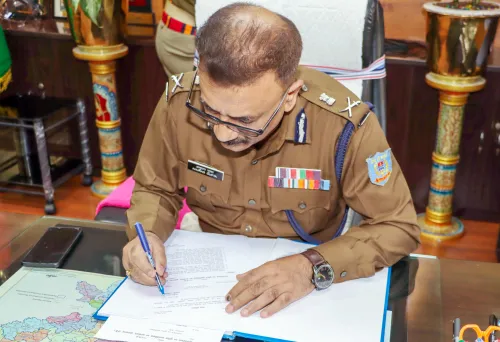
SC questions Jharkhand DGP appointment rules, notices Tadasha Mishra

Synopsis
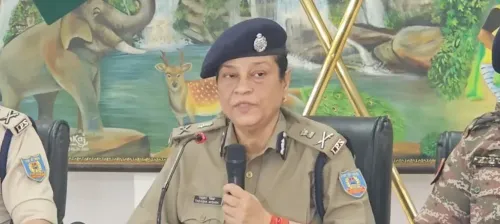
The Supreme Court has put Jharkhand's DGP appointment rules under a legal microscope — and the sitting DGP's tenure may not survive the scrutiny. The court found a key provision prima facie inconsistent with its own Prakash Singh directives and warned that Tadasha Mishra's appointment, made the day after the state quietly dropped a residual-service requirement, could be annulled.
Key Takeaways
The Supreme Court on 8 October 2026 found Jharkhand's DGP appointment regulations prima facie inconsistent with the Prakash Singh vs Union of India guidelines.
Incumbent DGP Tadasha Mishra was issued notice; the court warned her appointment could be invalidated if the rules are struck down.
Mishra was appointed on 30 December 2025 — one day after the state removed the minimum six months' residual service requirement; she was due to retire on 31 December 2025 .
The Centre challenged the 2025 Jharkhand regulations , saying they were framed without Supreme Court approval and violate Prakash Singh directives.
Former DGP Anurag Gupta's appointment on 2 February 2025 , with only about three months of service left, was also questioned by the Centre.
The next hearing is scheduled within one week ; the outcome may prompt scrutiny of similar rules in other states.
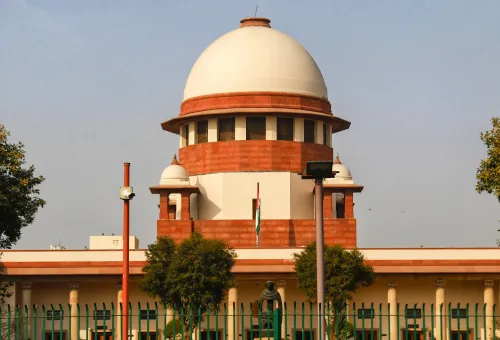
The Supreme Court on Thursday, 8 October 2026, raised serious doubts over the legality of Jharkhand's Director General of Police (DGP) appointment rules, observing prima facie that a key provision is inconsistent with the law laid down in the landmark Prakash Singh vs Union of India case. The court warned that if the rules are ultimately struck down, the appointment of incumbent DGP Tadasha Mishra could also stand invalidated — and issued notice to her to present her case.
What the Supreme Court Observed
A Bench comprising Chief Justice Surya Kant and Justices Joymalya Bagchi and V. Mohana heard arguments on the Jharkhand DGP and Inspector General of Police (Head of Police Force) Selection and Appointment Regulations, 2025, notified on 8 January 2025. The court found the disputed provision prima facie at odds with the Prakash Singh guidelines — a set of binding directions the Supreme Court had issued to reform police appointments across India.
Noting the possibility that the regulation may be set aside, the court directed that Mishra be given an opportunity to be heard and asked the Jharkhand government to serve notice on her. The state was also granted liberty to reconsider the impugned regulation and file its response. The matter has been posted for further hearing after one week.
Centre's Challenge and the DGP Appointments in Question
The Central government has challenged the validity of the 2025 Jharkhand regulations, contending that they were framed without the Supreme Court's approval and do not fully comply with the Prakash Singh guidelines. Solicitor General Tushar Mehta, appearing for the Centre, submitted that the Union government had repeatedly flagged to the Jharkhand government that its DGP appointment process violated those guidelines.
The Centre also questioned the appointment of former Jharkhand DGP Anurag Gupta, who was named to the post on 2 February 2025 despite having only approximately three months of service remaining before his retirement on 30 April 2025.
Mishra's appointment on 30 December 2025 — just one day after the state government amended the regulations to remove a requirement of a minimum six months' residual service for DGP candidates — has drawn particular scrutiny. She was due to retire on 31 December 2025, making the timing of the amendment a central point of contention.
Sibal's Counter: Was Jharkhand Singled Out?
Senior advocate Kapil Sibal, representing Jharkhand, questioned whether the Centre was selectively targeting the state, arguing that similar — and in some instances more questionable — provisions exist in several other states. Sibal contended that applying scrutiny exclusively to Jharkhand raised concerns about equal treatment across states.
Responding to the charge of selective action, Mehta maintained that the Union government was not targeting Jharkhand specifically and reiterated that any state rules inconsistent with the Supreme Court's directions should be removed regardless of which state enacted them.
Background: The Prakash Singh Judgment
The Prakash Singh vs Union of India case produced a series of Supreme Court directives aimed at insulating police leadership from political interference. Among its key mandates are requirements for minimum residual service for DGP appointees and a consultative process involving the Union Public Service Commission (UPSC). States have long been criticised for circumventing these norms through last-minute rule changes — a pattern the Centre argues Jharkhand has now repeated.
What Happens Next
Both Tadasha Mishra and the Jharkhand government are expected to place their submissions before the court at the next hearing, scheduled within a week. The outcome could have implications beyond Jharkhand, potentially prompting a broader review of DGP appointment rules in other states where similar provisions are in force.
Point of View
However, is undermined by Kapil Sibal's inconvenient point: if similar provisions exist in other states and go unchallenged, this looks less like principled enforcement and more like selective pressure on a non-BJP government. The Supreme Court's broader challenge is to use this case not as a one-off corrective but as the trigger for a nationwide audit of DGP appointment rules — something the Prakash Singh framework has never fully achieved in over two decades.
NationPress
8 Oct 2026
Frequently Asked Questions
Why has the Supreme Court questioned Jharkhand's DGP appointment rules?
The Supreme Court found a key provision of Jharkhand's DGP Selection and Appointment Regulations, 2025 prima facie inconsistent with its own binding directives in the Prakash Singh vs Union of India case. The court is hearing a Central government challenge that argues the regulations were framed without Supreme Court approval and do not comply with police reform guidelines.
How does this affect incumbent DGP Tadasha Mishra?
The Supreme Court warned that if the regulations are ultimately struck down, Mishra's appointment as DGP could also be annulled. It has issued notice to her, giving her an opportunity to present her case at the next hearing scheduled within one week.
Why is Mishra's appointment considered controversial?
Mishra was appointed DGP on 30 December 2025 — just one day after the Jharkhand government amended its regulations to remove a mandatory minimum six months' residual service requirement for DGP candidates. She was due to retire on 31 December 2025, making the amendment appear tailored to facilitate her appointment.
What is the Prakash Singh vs Union of India case?
It is a landmark Supreme Court judgment that issued binding directives to reform police appointments across India, including requirements for minimum residual service for DGP appointees and involvement of the Union Public Service Commission in the selection process. States are obligated to frame DGP appointment rules in conformity with these guidelines.
Did the Centre challenge only Jharkhand's rules?
The Centre's challenge focuses on Jharkhand's 2025 regulations, but senior advocate Kapil Sibal, appearing for the state, argued that similar provisions exist in several other states and questioned whether Jharkhand was being selectively targeted. Solicitor General Tushar Mehta maintained that the Centre's position applies to all states with non-compliant rules.