Supreme Court rejects Mahua Moitra's virtual appearance plea, cites freedom fighters

Synopsis
The Supreme Court refused to let TMC MP Mahua Moitra join a police investigation via video call, with the bench invoking freedom fighters who 'took bullets' to question her fear of eggs. The petition was swiftly withdrawn — and Moitra must now appear in person or risk losing High Court protection.
Key Takeaways
The Supreme Court on 7 August refused to entertain Mahua Moitra 's plea for virtual appearance before the investigating officer.
The bench of Justice Dipankar Datta and Justice Sheel Nagu questioned why an MP should be exempt from in-person cooperation.
Moitra's counsel cited fear of a mob attack and a prior egg-throwing incident; the court was not persuaded.
The petition was withdrawn after the bench's sharp oral remarks.
The Calcutta High Court had earlier granted interim protection from arrest until 5 October , conditional on Moitra's cooperation.
The state government told the High Court that Moitra had been served notices on four occasions without appearing.
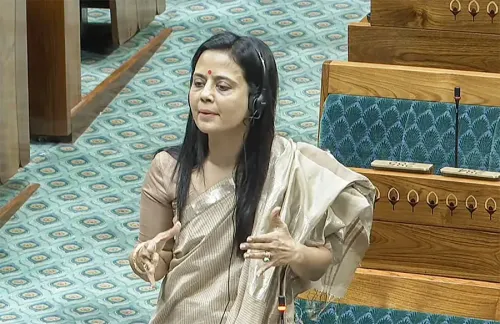
The Supreme Court on Friday, 7 August refused to entertain a plea by All India Trinamool Congress (TMC) MP Mahua Moitra seeking permission to appear before the investigating officer via video-conferencing in a case linked to her alleged violence-inciting public statements. The bench made pointed oral remarks questioning the basis of her request, and the petition was ultimately withdrawn.
What the Court Said
A bench of Justice Dipankar Datta and Justice Sheel Nagu questioned why a sitting Member of Parliament should be permitted to join a police investigation remotely. When senior advocate Gopal Sankaranarayanan, appearing for Moitra, submitted that she had no objection to cooperating but preferred to do so virtually, the bench asked pointedly: 'Why virtually? Because you are an MP?'
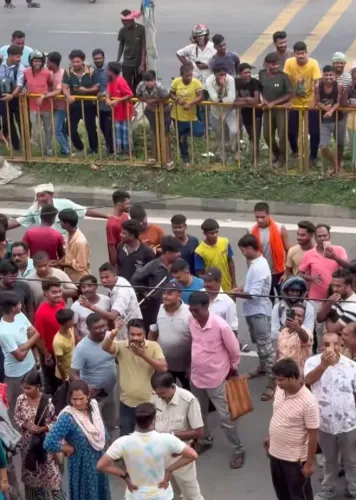
Moitra's counsel cited apprehensions of a mob attack if she appeared physically, referring to an earlier incident in which eggs were allegedly thrown at her. The court was not persuaded. 'You are a Member of Parliament? Having taken the plunge into politics, you fear eggs? When our freedom fighters have taken bullets on their chest? These are applications that should not come before this court at all,' the Justice Datta-led bench orally observed.
Petition Withdrawn
Following the bench's sharp remarks, Sankaranarayanan sought leave to withdraw the petition. The apex court accordingly dismissed it as withdrawn. The episode marks a setback for Moitra, who had approached the Supreme Court after her request for virtual participation in interrogation was not settled at the Calcutta High Court level to her satisfaction.
Background: Calcutta High Court Protection
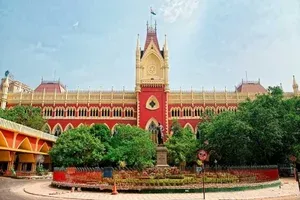
Earlier, a single-judge bench of Justice Sougata Bhattacharya of the Calcutta High Court had granted Moitra interim protection from coercive police action — including arrest — until 5 October, conditional on her extending full cooperation with the investigation. The state government had told the High Court that Moitra had been served notices on four occasions but did not appear for interrogation, citing parliamentary engagements.
The High Court had directed the police to ensure that no unpleasant situation arose at the police station when Moitra appeared for questioning, while making clear that the investigation could proceed unhindered.
What the Case Is About
Mahua Moitra, a two-time TMC MP from Krishnanagar, has been accused of making violence-inciting public statements. The exact nature of the statements is the subject of the ongoing police investigation. The Calcutta High Court's interim protection remains in force, meaning no coercive action can be taken against her during the protected period, subject to her cooperation with investigators.
With the Supreme Court declining to provide an alternative route, Moitra will now need to appear in person before the investigating officer — or risk jeopardising the High Court's conditional protection.
Point of View
Not just a legal ruling. What the bench left unaddressed is whether the state machinery has an obligation to ensure a safe environment for any citizen appearing before police, regardless of political profile. The egg-throwing incident Moitra cited is not trivial context. Courts routinely direct police to maintain order during high-profile appearances; the bench's dismissiveness on that point deserves scrutiny. More broadly, the case tests where parliamentary privilege ends and ordinary citizen duty to cooperate with investigators begins — a line Indian courts have not drawn with consistency.
NationPress
21 Sept 2026
Frequently Asked Questions
Why did the Supreme Court reject Mahua Moitra's plea?
The Supreme Court refused to entertain Moitra's request because it found no sufficient legal basis for a sitting MP to appear before an investigating officer via video-conferencing instead of in person. The bench questioned whether being an MP alone justified the exemption, and made clear that such pleas should not reach the apex court.
What is the case against Mahua Moitra?
Mahua Moitra, a two-time TMC MP from Krishnanagar, has been accused of making violence-inciting public statements. The case is under active police investigation, and the Calcutta High Court has granted her interim protection from arrest until 5 October, subject to her cooperating with investigators.
What did the Supreme Court bench say about freedom fighters?
The bench orally remarked: 'You are a Member of Parliament? Having taken the plunge into politics, you fear eggs? When our freedom fighters have taken bullets on their chest? These are applications that should not come before this court at all.' The remarks came after Moitra's counsel cited fear of a mob attack as grounds for virtual appearance.
What happens now after the plea was withdrawn?
With the Supreme Court declining to intervene, Moitra is expected to appear in person before the investigating officer. Failure to cooperate could jeopardise the conditional interim protection granted by the Calcutta High Court, which runs until 5 October.
What did the Calcutta High Court order earlier in this case?
Justice Sougata Bhattacharya of the Calcutta High Court granted Moitra interim protection from coercive police action, including arrest, until 5 October. The protection is conditional on her extending full cooperation with the investigation; the court also directed police to ensure her safety when she appears for questioning.