Supreme Court rejects PIL for anti-bullying law in schools, cites prior ruling
Synopsis
The Supreme Court has shut the door on a PIL demanding a dedicated anti-bullying law for Indian schools, saying the matter was already addressed in an earlier ruling. The dismissal lays bare a striking legal asymmetry: university students have a statutory anti-ragging framework, but school children — where bullying is reportedly most prevalent — have none.
Key Takeaways
The Supreme Court declined to entertain a PIL seeking a central anti-bullying law for schools on 29 September .
A bench led by CJI Surya Kant held that an earlier apex court judgment had already dealt with the issues raised.
The petitioner, Yadavi Aditya Rasiwasiya , was permitted to submit a representation before the concerned authorities.
The PIL had cited NCPCR's 2024 guidelines , which noted that bullying is 'not technically illegal' in India's schools.
Higher educational institutions are covered by the UGC Regulations on Ragging, 2009 ; no equivalent statutory framework exists for schools.
The petition named the Union of India , all states and UTs, CBSE , and CISCE as respondents.
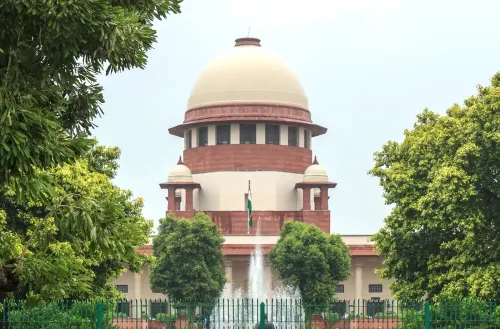
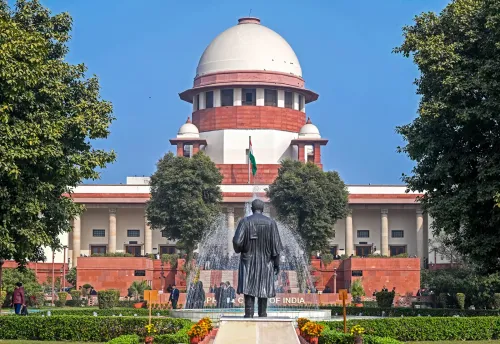
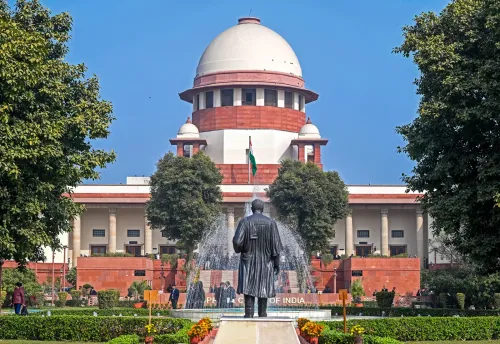
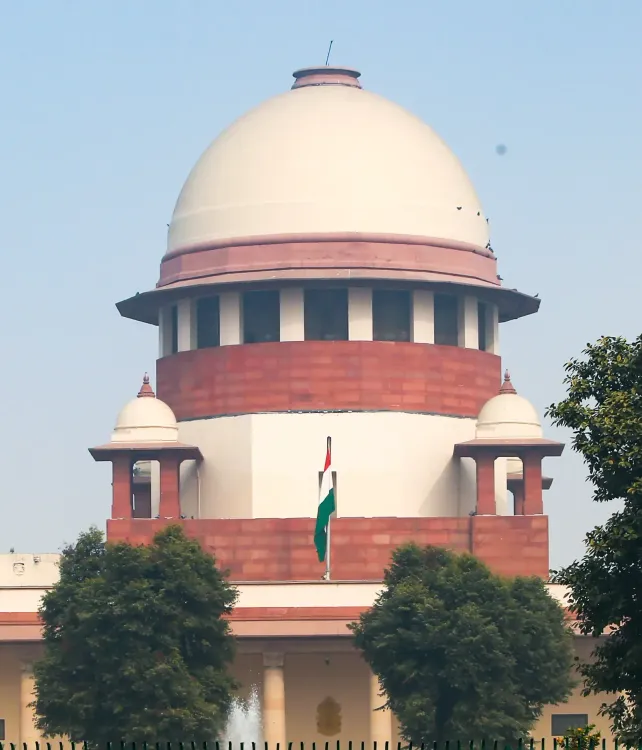
The Supreme Court of India on Tuesday, 29 September declined to entertain a public interest litigation (PIL) that sought a comprehensive central law and uniform national guidelines to combat bullying and ragging in schools and pre-university institutions across the country. A bench led by Chief Justice of India (CJI) Surya Kant, along with Justices Joymala Bagchi and V. Mohana, held that the apex court had already addressed the issues raised in the petition through an earlier judgment, and that a fresh PIL could not be admitted solely for the purpose of implementing directions already issued.
What the Court Decided
The bench made clear that re-litigating settled matters through a new PIL was not permissible under established judicial practice. However, the CJI-led bench did offer limited relief, permitting counsel for petitioner Yadavi Aditya Rasiwasiya to submit a representation directly before the concerned authorities for necessary action. The PIL had been filed through advocate Sujata Kurdukar.
What the PIL Demanded
The petition sought a writ of mandamus directing the Union government, all states, and Union Territories (UTs) to enact suitable and comprehensive legislation specifically targeting child bullying and ragging in primary and secondary schools. It also called for binding guidelines modelled on the University Grants Commission (UGC) Regulations on Curbing the Menace of Ragging in Higher Educational Institutions, 2009 — a framework that currently applies only to colleges and universities.
Additionally, the PIL sought the constitution of anti-bullying committees and grievance redressal mechanisms in schools, along with mandatory reporting protocols and institutional safeguards for children facing harassment.
The Legal Gap the Petitioner Highlighted
The petitioner argued that no comprehensive statutory framework specifically governs bullying in primary and secondary schools in India, and that existing measures remain largely advisory or directory in nature. The plea cited the National Commission for Protection of Child Rights (NCPCR) Guidelines on Preventing Bullying and Cyberbullying, 2024, which reportedly observed that 'in India, there are no laws that could handle bullying in schools. In other words, bullying is not technically illegal.'
The petition contended that existing laws — including the Right to Education Act, 2009, the Protection of Children from Sexual Offences Act, 2012, the Juvenile Justice Act, 2015, and the Information Technology Act, 2000 — do not collectively provide a proactive, comprehensive mechanism for preventing and addressing school-level bullying and ragging.
Historical and International Context
The petitioner drew a pointed contrast: while higher educational institutions are governed by a statutory anti-ragging regime that emerged from earlier Supreme Court interventions and eventually produced the UGC Regulations of 2009, school-going children have no equivalent nationwide statutory protection. The PIL also invoked India's ratification of the United Nations Convention on the Rights of the Child (UNCRC), citing the country's international obligations to protect children from physical and mental violence and to ensure a safe educational environment.
The petition arrayed the Union of India, all states and UTs, the Central Board of Secondary Education (CBSE), and the Council for the Indian School Certificate Examinations (CISCE) as respondents. Academic research documenting the prevalence of bullying among school children in India was also annexed to the plea.
What Happens Next
With the Supreme Court declining to admit the PIL, the immediate legal avenue is closed. The petitioner may now pursue the matter through a representation to the Ministry of Education or the NCPCR, as permitted by the bench. Notably, the court's refusal does not preclude Parliament or state legislatures from independently taking up the issue — a legislative route that child rights advocates have long urged. Whether the representation route yields any policy response remains to be seen.
Point of View
Built on earlier Supreme Court mandates, but nothing comparable for the far larger population of school-going children. The NCPCR's own 2024 guidelines concede that bullying is not technically illegal at the school level — a gap that Parliament, not the judiciary, must now fill. The representation route the bench has offered is a thin substitute for legislative action.
NationPress
29 Sept 2026
Frequently Asked Questions
Why did the Supreme Court reject the PIL on school bullying?
The Supreme Court rejected the PIL because it held that the apex court had already passed a judgment addressing the issues raised in the petition. The bench ruled that a fresh PIL could not be entertained merely to seek implementation of directions already issued.
What was the PIL on school bullying seeking?
The PIL sought a comprehensive central law and uniform national guidelines to prevent bullying and ragging in schools and pre-university institutions. It also asked for anti-bullying committees, grievance redressal mechanisms, and mandatory reporting protocols in schools across India.
Is bullying illegal in Indian schools?
According to the NCPCR's Guidelines on Preventing Bullying and Cyberbullying, 2024, cited in the PIL, there are no laws in India that specifically handle bullying in schools, meaning bullying is not technically illegal at the school level. Existing laws such as the Right to Education Act and the Juvenile Justice Act do not provide a dedicated, proactive framework for school bullying.
What legal protection do university students have against ragging that school students lack?
University and college students are protected by the UGC Regulations on Curbing the Menace of Ragging in Higher Educational Institutions, 2009, a statutory framework that emerged from earlier Supreme Court interventions. No equivalent nationwide statutory mechanism exists for primary and secondary school students.
What can the petitioner do after the Supreme Court's refusal?
The bench permitted the petitioner's counsel to submit a representation before the concerned authorities — such as the Ministry of Education or the NCPCR — for necessary action. This is an administrative route rather than a judicial one, and any outcome depends on the response of the relevant government bodies.