SC restores election petition against BJP MP Kripanath Mallah to Gauhati HC
Synopsis
The Supreme Court has revived a direct legal challenge to BJP MP Kripanath Mallah's 2024 Lok Sabha win from Karimganj, ruling that the Gauhati High Court was wrong to dismiss the petition at the door on technical attestation grounds. The case now goes back for a full hearing — and the allegations of rigging and booth capturing across 47 polling stations will be on the table.
Key Takeaways
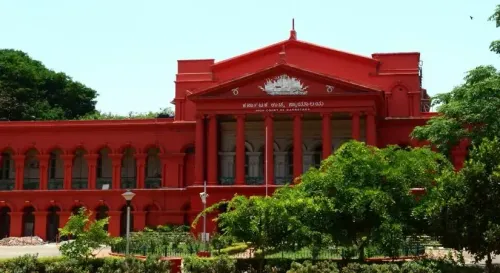
The Supreme Court on 24 August set aside the Gauhati High Court order dismissing the election petition against BJP MP Kripanath Mallah from Karimganj .
Mallah had defeated Congress candidate Hafiz Rashid Ahmed Choudhury by 18,360 votes in the 2024 Lok Sabha elections .
The petition alleged rigging, booth capturing across 47 polling stations , voter intimidation, and bribery.
A Bench of Justices J.B.
Vinod Chandran ruled that attestation defects do not warrant automatic dismissal under Section 86 of the Representation of the People Act.
The Gauhati High Court is directed to verify Form-25 attestation in the original and proceed on merits accordingly.
The Supreme Court on Monday, 24 August restored an election petition filed by defeated Congress candidate Hafiz Rashid Ahmed Choudhury, setting aside a Gauhati High Court order that had dismissed the petition at the threshold. The petition challenges the 2024 Lok Sabha victory of Bharatiya Janata Party (BJP) MP Kripanath Mallah from Assam's Karimganj Parliamentary Constituency.
Background: What the Case Is About
Mallah defeated Choudhury by 18,360 votes in the 2024 Lok Sabha elections. Choudhury's election petition alleged serious corrupt practices, including rigging, booth capturing, voter intimidation through undue influence, and bribery. The petition specifically alleged booth capturing across 47 polling stations.
The Gauhati High Court had dismissed the petition at the threshold under Section 86 of the Representation of the People Act, 1951, citing objections over the attestation of petition copies, a defect in the Form-25 affidavit, and an allegation that four pages were missing from the petition.
Key Legal Findings of the Supreme Court
A Bench of Justices J.B. Pardiwala and K. Vinod Chandran addressed each objection in turn. On the attestation issue under Section 81(3) of the Representation of the People Act, the court held that no particular form of attestation is prescribed. The signature of the election petitioner at the foot of every page, affirming the copy as true, is sufficient.
The Bench also ruled that the phrases 'attested to be true copy' and 'certified to be true copy', appearing on different pages of the petition, carry the same legal meaning. Concurring with the earlier judgment in F.A. Sapa v Singora, the court reversed the High Court's contrary finding on this point.
The Form-25 Affidavit Question
On the Form-25 affidavit — which accompanies allegations of corrupt practices and must be signed by the petitioner and attested by a Magistrate of the First Class, a Notary, or a Commissioner of Oaths — the Supreme Court drew a critical distinction. Referring to earlier Constitution Bench precedents, the court held that a defect in Form-25 does not automatically warrant dismissal of the entire election petition under Section 86.
'Obviously, the defect under Section 83 does not entail peremptory dismissal under Section 86 of the RoP Act,' the Bench observed.
The court noted that in the original petition filed before the court, Form-25 had been affirmed before a Commissioner of Affidavits. It directed the Gauhati High Court to verify whether due attestation exists in the original. If attestation is found, the High Court must proceed on merits; if not, it must exclude the corrupt practices allegations but continue examining other grounds.
Missing Pages Allegation Rejected
The Supreme Court upheld the Gauhati High Court's finding that the allegation of four missing pages was an afterthought, stating there was 'absolutely no reason to interfere' with that finding.
What Happens Next
The election petition has been restored to the Gauhati High Court's file for fresh consideration in line with the Supreme Court's directions. The court clarified it had not adjudicated on the truth or otherwise of the substantive allegations. The High Court must now examine the petition on merits — a process that could have direct implications for Mallah's continued membership of the Lok Sabha.
Point of View
The legal victory for Choudhury may arrive after Mallah has already served his full term — a structural flaw that no single judgment can fix.
NationPress
9 Oct 2026
Frequently Asked Questions
Why did the Supreme Court restore the Karimganj election petition?
The Supreme Court found that the Gauhati High Court wrongly dismissed the petition at the threshold on technical grounds related to attestation of copies and a Form-25 affidavit defect. The court held that such defects do not automatically warrant dismissal under Section 86 of the Representation of the People Act, 1951, and directed the High Court to hear the petition on merits.
Who is Kripanath Mallah and what is the allegation against him?
Kripanath Mallah is the BJP Member of Parliament from the Karimganj Parliamentary Constituency in Assam, elected in the 2024 Lok Sabha elections with a margin of 18,360 votes. The election petition filed against him alleges corrupt practices including rigging, booth capturing across 47 polling stations, voter intimidation, and bribery.
What is a Section 86 dismissal under the Representation of the People Act?
Section 86 of the Representation of the People Act, 1951 empowers a High Court to dismiss an election petition at the threshold — without a full hearing — if it does not comply with certain procedural requirements. The Supreme Court has now clarified that not every technical defect, such as an attestation irregularity or a Form-25 issue, meets the bar for such a dismissal.
What will the Gauhati High Court do next?
The Gauhati High Court must first verify whether the Form-25 affidavit in the original petition carries due attestation. If attestation is in order, it will proceed to hear all grounds on merits. If not, it will exclude the corrupt practices allegations but still examine the remaining grounds of the petition.
Did the Supreme Court rule on whether the election was actually rigged?
No. The Supreme Court explicitly clarified that it had not adjudicated on the truth or otherwise of the substantive allegations in the petition. Its ruling was confined to the procedural question of whether the Gauhati High Court was right to dismiss the petition at the threshold — and it found that it was not.