CM Fadnavis joins FM Sitharaman at 57th GST Council meet
Synopsis
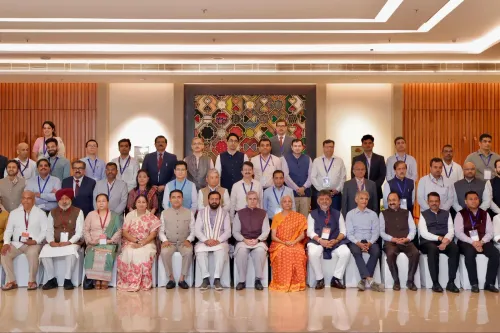
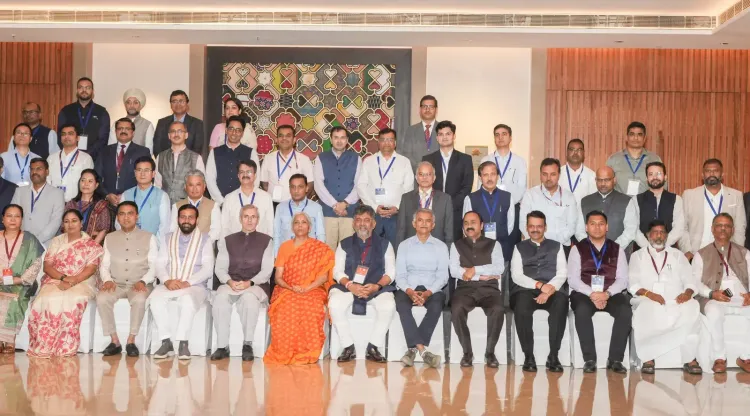
Maharashtra CM Devendra Fadnavis joined Union Finance Minister Nirmala Sitharaman and senior ministers from across India for the 57th GST Council meeting in New Delhi on 9 October 2026, with the CMO sharing the official group photograph from the session.
Key Takeaways
The 57th GST Council meeting was held in New Delhi on 9 October 2026 .
Union Finance Minister Nirmala Sitharaman chaired the session as constitutional head of the GST Council.
Maharashtra CM Devendra Fadnavis attended in person, representing India's largest state economy.
Union Ministers, Chief Ministers, Deputy Chief Ministers, Finance Ministers of states and UTs, and senior officials were all present.
The Chief Minister's Office of Maharashtra shared the official group photograph from the meeting on X.
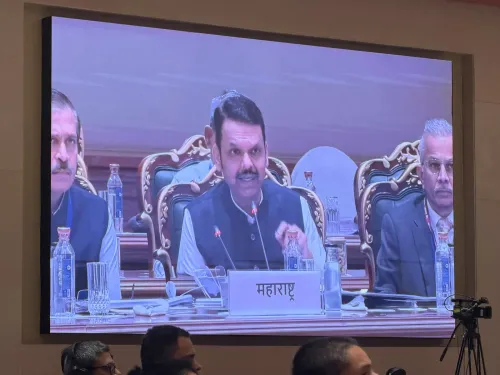
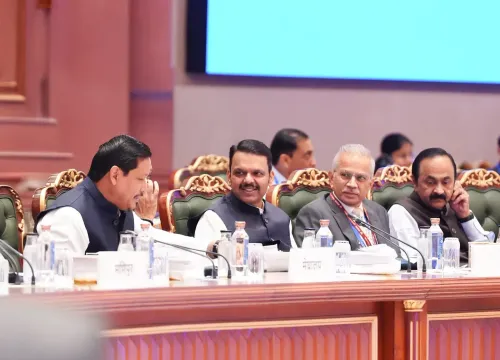
The corridors of federal fiscal policy lit up in New Delhi on 9 October 2026 as top financial stewards from across India gathered for the 57th meeting of the Goods and Services Tax (GST) Council — and Maharashtra Chief Minister Devendra Fadnavis was squarely in the frame, flanked by Union Finance Minister Nirmala Sitharaman and a constellation of Union Ministers, Chief Ministers, Deputy Chief Ministers, Finance Ministers, and senior officials from states and Union Territories.
Who assembled in New Delhi for the 57th GST Council
The GST Council is India's apex constitutional body for indirect-tax governance, bringing together the Union Finance Minister as chairperson and the finance ministers of all 28 states and 8 Union Territories. The 57th meeting continued this tradition of cooperative federalism, drawing a rare single-frame gathering of Chief Ministers, Deputy Chief Ministers, and Finance Ministers — a visual that signals how consequential the agenda was deemed across party lines.
CM Devendra Fadnavis represented Maharashtra, India's largest economy by GDP and one of the biggest contributors to GST collections nationally. His presence alongside FM Nirmala Sitharaman at the head of proceedings underlines Maharashtra's weight in any national tax-policy conversation.
Why the 57th Council meeting matters for India's tax architecture
The GST Council convenes periodically to revise rate structures, resolve classification disputes, address revenue-sharing between Centre and states, and respond to emerging economic conditions. Each numbered meeting carries a specific agenda, and the 57th session drew enough senior state leadership — including Chief Ministers rather than just finance ministers — to signal that the subjects on the table carried political as well as fiscal weight.
Maharashtra, as a net-contributor state to the GST pool, has a direct stake in decisions around compensation, rate rationalisation, and inter-state settlement mechanisms. Fadnavis's attendance at the Council, rather than deputing only the state's finance minister, reflects the administration's intent to engage at the highest level on tax-revenue questions that bear directly on the state budget.
Cooperative federalism on display
The group photograph shared by the Chief Minister's Office of Maharashtra is more than a ceremonial snapshot — it is a public record of who was at the table when the 57th GST Council deliberated. With representatives cutting across the ruling coalition and opposition-governed states, the frame is a rare image of India's fiscal federalism in practice: competing political mandates, one shared revenue architecture.
As the Council's decisions filter through into rate notifications and state budgets, Maharashtra's direct participation at the top level ensures the state's fiscal position is represented from the opening gavel.
Frequently Asked Questions
What is the 57th GST Council meeting?
The 57th GST Council meeting is the 57th session of India's apex indirect-tax body, held in New Delhi on 9 October 2026, to deliberate on GST rate structures, revenue sharing, and related fiscal matters.
Why did CM Devendra Fadnavis attend the GST Council meeting?
CM Devendra Fadnavis attended to represent Maharashtra — India's largest state economy — directly at the federal tax-policy table, signalling the state's active stake in GST decisions on rates and revenue distribution.
Who chairs the GST Council?
The Union Finance Minister chairs the GST Council. In the 57th meeting, Nirmala Sitharaman presided over the session alongside state finance ministers and chief ministers.
Which states and officials attended the 57th GST Council?
Union Ministers, Chief Ministers, Deputy Chief Ministers, and Finance Ministers from multiple states and Union Territories, along with senior officials, attended the 57th GST Council meeting in New Delhi.
What does the GST Council decide?
The GST Council revises tax rates on goods and services, resolves classification disputes, manages the Centre-state revenue split, and addresses compensation and settlement mechanisms under India's unified indirect-tax framework.