Jaishankar Calls on Côte d'Ivoire President Ouattara
Synopsis
External Affairs Minister Dr. S. Jaishankar called on Côte d'Ivoire President Alassane Ouattara on 9 October 2026, conveying personal greetings from President Murmu and PM Modi and reaffirming a development-anchored bilateral partnership.
Key Takeaways
Jaishankar met President Alassane Ouattara of Côte d'Ivoire on 9 October 2026 .
He conveyed personal greetings from President Droupadi Murmu and Prime Minister Narendra Modi .
The India–Côte d'Ivoire partnership was described as 'anchored in mutual respect and common commitment to development and prosperity.' President Ouattara shared his vision for a 'strong, enduring and mutually beneficial partnership.' Côte d'Ivoire is West Africa's largest economy, making this engagement significant to India's Africa outreach strategy.
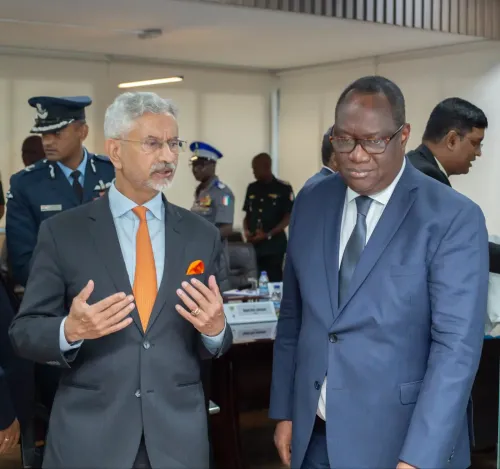
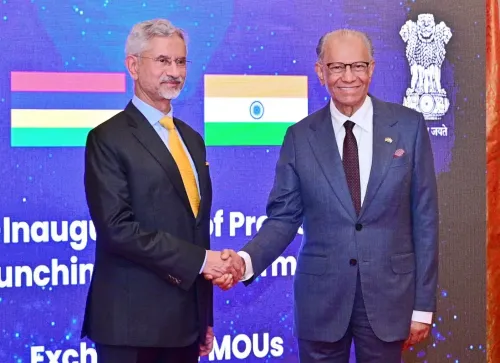
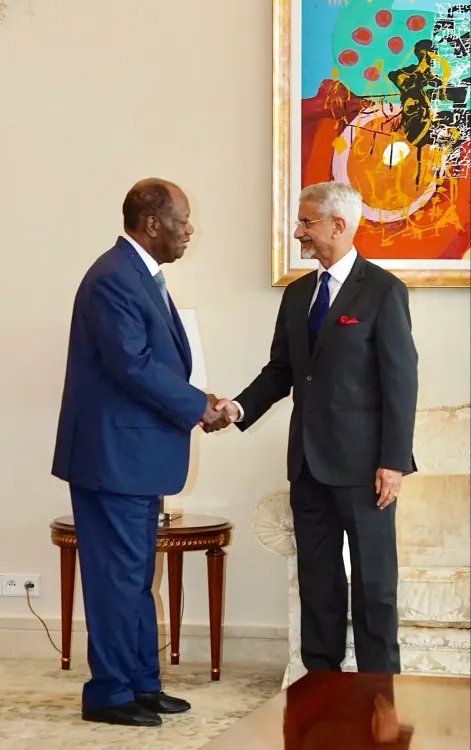
Union External Affairs Minister Dr. S. Jaishankar met President Alassane Ouattara of the Republic of Côte d'Ivoire on Friday, 9 October 2026, carrying personal greetings from President Droupadi Murmu and Prime Minister Narendra Modi — a gesture that signals New Delhi's intent to deepen its West African engagements at the highest level.
What Jaishankar Told President Ouattara
Dr. Jaishankar described the India–Côte d'Ivoire partnership as 'anchored in mutual respect and common commitment to development and prosperity.' He also thanked President Ouattara for articulating a vision for a 'strong, enduring and mutually beneficial partnership' — language that points toward structured, long-term bilateral engagement rather than a one-off diplomatic courtesy call.
Why Côte d'Ivoire Matters in India's Africa Calculus
Côte d'Ivoire is West Africa's largest economy and the world's top producer of cocoa, making it a significant node in global commodity and trade networks. For India — whose Africa outreach has accelerated through frameworks like the India-Africa Forum Summit — engaging Abidjan at ministerial level fits a broader pattern of elevating ties with economically consequential African states beyond the traditional East African focus.
Personal greetings conveyed from both the President and the Prime Minister carry protocol weight: it signals that the visit was coordinated at the apex of India's executive, not merely a routine minister-level stop on a multi-country tour.
The Diplomatic Moment
India has been expanding its diplomatic footprint across Francophone Africa, a region historically dominated by European powers. A ministerial call on President Ouattara — a respected statesman with deep ties to international financial institutions — offers New Delhi an opportunity to position itself as a development partner of choice for a rapidly growing sub-region.
The twin flags — 🇮🇳 🇨🇮 — at the close of Jaishankar's post are small but deliberate: a visual affirmation of sovereign equality and bilateral warmth that diplomats read carefully.
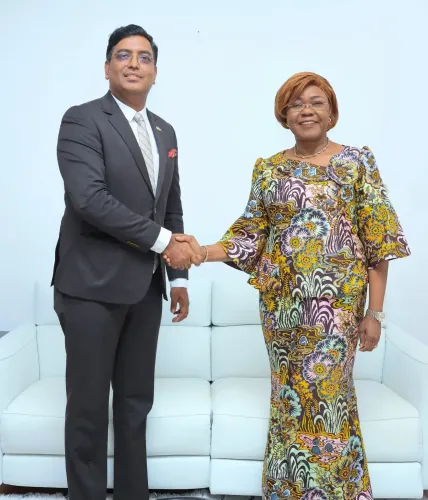
If the shared vision translates into concrete deliverables, this handshake in Abidjan could quietly become a landmark in India's Francophone Africa strategy.
Point of View
Signalling coordinated intent at the apex of India's executive. For a region where traditional European influence is being increasingly contested, India's positioning as a development-focused partner — free of historical baggage — gives New Delhi a genuine diplomatic opening. Whether this visit produces institutional frameworks or remains a warm handshake will be the real test of the 'enduring' vision both sides invoked.
NationPress
9 Oct 2026
Frequently Asked Questions
Why did Jaishankar visit Côte d'Ivoire in October 2026?
Dr. Jaishankar called on President Alassane Ouattara to strengthen the India–Côte d'Ivoire bilateral partnership, conveying personal greetings from President Droupadi Murmu and Prime Minister Narendra Modi and discussing a vision for long-term mutual cooperation.
What did Jaishankar say about India–Côte d'Ivoire relations?
He described the partnership as 'anchored in mutual respect and common commitment to development and prosperity,' and thanked President Ouattara for sharing his vision for a strong, enduring and mutually beneficial relationship.
Who is President Alassane Ouattara of Côte d'Ivoire?
Alassane Ouattara is the President of the Republic of Côte d'Ivoire, a respected statesman with deep ties to international financial institutions and the leader of West Africa's largest economy.
What is India's diplomatic strategy in West Africa?
India has been expanding its diplomatic footprint in Francophone West Africa, positioning itself as a development partner of choice through forums like the India-Africa Forum Summit and increasing high-level ministerial engagement with key economies in the region.
What is the significance of Côte d'Ivoire for India?
Côte d'Ivoire is West Africa's largest economy and the world's top cocoa producer, making it an important node in global trade networks and a strategically significant partner for India's expanding Africa policy.