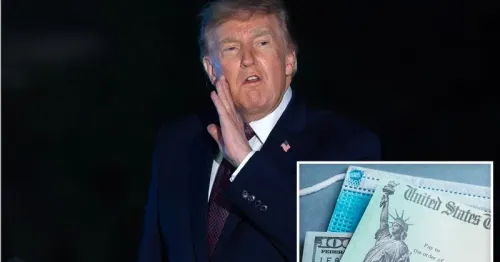
White House: 21 Million Medicare Fund Payments Sent Under Trump
Synopsis
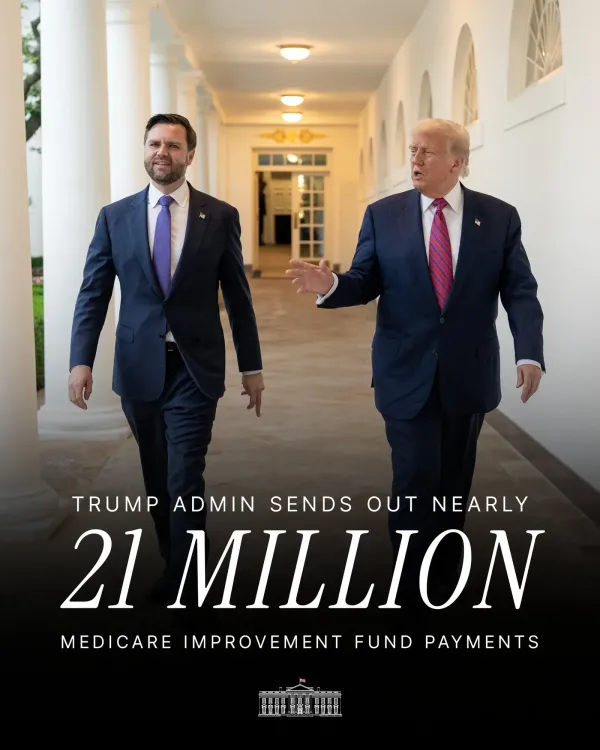
The White House announced the Trump Administration has disbursed nearly 21 million Medicare Improvement Fund payments alongside Obamacare refund checks, citing President Trump's promise to lower healthcare costs and return money to American patients.
Key Takeaways
The Trump Administration has sent out almost 21 million Medicare Improvement Fund payments , the White House announced on October 8, 2026 .
Separately, Obamacare (ACA) refund checks have also been dispatched to eligible policyholders.
The White House frames both disbursements as fulfilment of President Trump's promise to lower healthcare costs.
The stated goal is ensuring 'American patients come away with more money in their pockets.' The announcement bundles Medicare and ACA relief into a single political narrative ahead of open-enrolment season.
A sweeping pair of financial disbursements is now reaching tens of millions of Americans — and the White House wants every recipient to know exactly who signed the cheque. On Thursday, October 8, 2026, the official White House account announced that the Trump Administration has distributed nearly 21 million Medicare Improvement Fund payments, alongside a separate round of Obamacare refund checks, framing both as proof of a kept promise on healthcare costs.
Two Programmes, One Political Message
The post bundles two distinct payment streams into a single narrative of consumer relief. The Affordable Care Act — still widely known as Obamacare — has long carried provisions that require insurers to rebate policyholders when administrative and profit costs exceed a set share of premium revenue. Those are the 'refund checks' the White House references. The Medicare Improvement Fund, a separate congressional reserve, channels money toward Medicare fee-for-service improvements. Cutting checks from both simultaneously is a deliberate showcase of breadth: no demographic pocket of the American healthcare system is left out of the headline.
The '21 Million' Figure and What It Signals
Scale is the story here. 21 million is not a bureaucratic rounding — it is a number large enough to touch a visible share of the 65-and-older population that Medicare primarily serves, plus any near-elderly or disabled beneficiaries enrolled in the programme. Sending that volume of payments in a single announced wave is a logistical statement as much as a political one: it signals that the administration's healthcare machinery is processing claims at pace. The White House frames it explicitly as delivering on President Donald Trump's promise to 'lower costs and ensure American patients come away with more money in their pockets.'
Why India Is Watching U.S. Healthcare Policy
For Indian readers, U.S. Medicare and insurance-refund mechanics may seem distant — but the policy direction carries real downstream weight. India's pharmaceutical industry, one of the world's largest generic-drug suppliers, is deeply sensitive to shifts in American healthcare spending and reimbursement architecture. A U.S. administration that campaigns visibly on consumer cost-relief tends to apply parallel pressure on drug-pricing negotiations, which directly affects export margins for Indian generics firms. Every headline from the White House on healthcare affordability is, indirectly, a data point for Dalal Street's pharma counters.
The administration's decision to publicise both disbursements together — rather than as separate agency announcements — underscores a re-election-era communication strategy: make the benefit tangible, put a number on it, and stamp the president's name on the envelope. Whether the 21 million figure translates into durable voter goodwill is the question every political analyst in Washington D.C. is now running the numbers on.
With open-enrolment season approaching for both Medicare Advantage plans and ACA marketplace coverage, the timing of this announcement is anything but accidental — the next policy move will be watched just as closely.
Point of View
Concrete number in the public domain ahead of an enrolment cycle. Branding ACA-era rebate mechanisms as an administration win is a notable rhetorical move, given the Republican party's historic opposition to the Affordable Care Act. The '21 million' figure is calibrated to resonate with senior voters, the demographic most likely to decide competitive congressional and presidential races. For Indian observers, the subtext is straightforward: sustained U.S. pressure on healthcare affordability ripples into pharma trade dynamics that touch Mumbai as much as they touch Miami.
NationPress
9 Oct 2026
Frequently Asked Questions
What is the Medicare Improvement Fund?
The Medicare Improvement Fund is a congressional reserve created to finance improvements in Medicare fee-for-service payments. The Trump Administration announced it has sent nearly 21 million payments from this fund to beneficiaries.
What are Obamacare refund checks?
Under the Affordable Care Act (ACA), insurers must refund policyholders if they spend less than 80-85% of premium revenue on actual medical care. These are called Medical Loss Ratio rebates, commonly referred to as Obamacare refund checks.
How many Americans received Medicare Improvement Fund payments under Trump?
The White House stated that almost 21 million Medicare Improvement Fund payments have been sent out by the Trump Administration as of October 2026.
Why does US healthcare policy matter for India?
India is one of the world's largest suppliers of generic drugs to the United States. U.S. healthcare cost and reimbursement policies directly affect demand and pricing for Indian pharmaceutical exports, making American health-policy shifts a significant concern for Indian pharma companies.
Is the Trump Administration changing Medicare rules?
The White House announcement focuses on payments already being disbursed under existing Medicare and ACA frameworks, framing them as delivery on President Trump's promise to lower costs, rather than announcing a structural rule change.