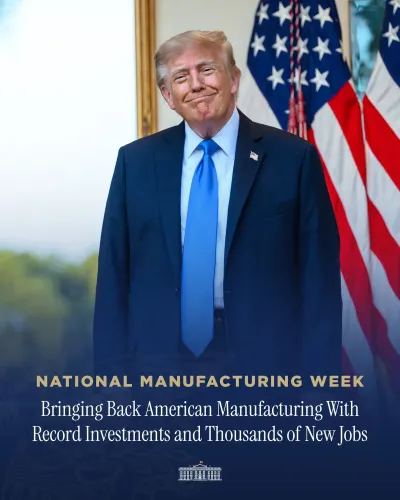
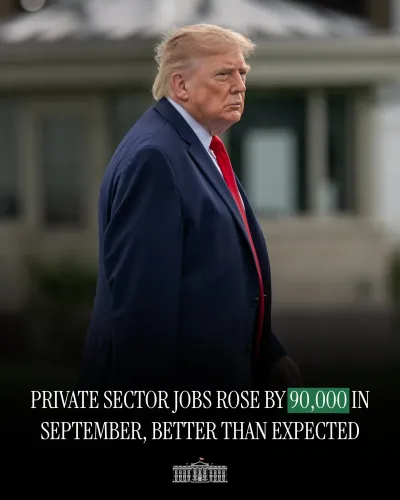
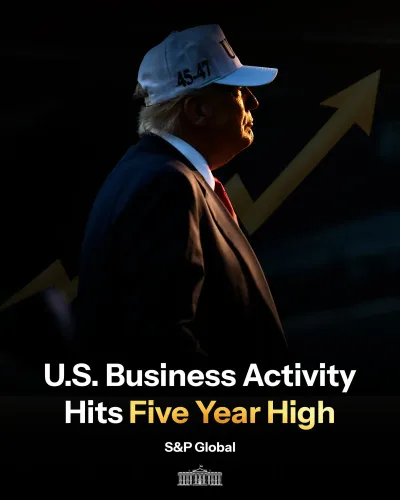
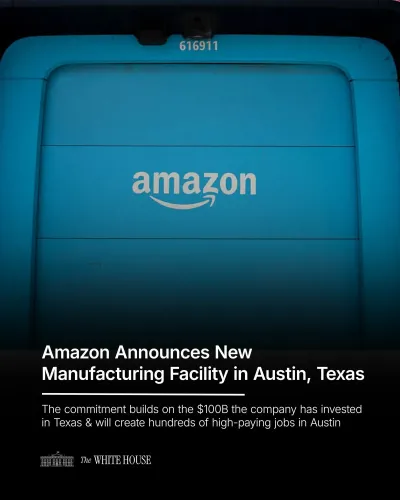
White House Says Trump Is Reviving American Industry and Jobs
Synopsis
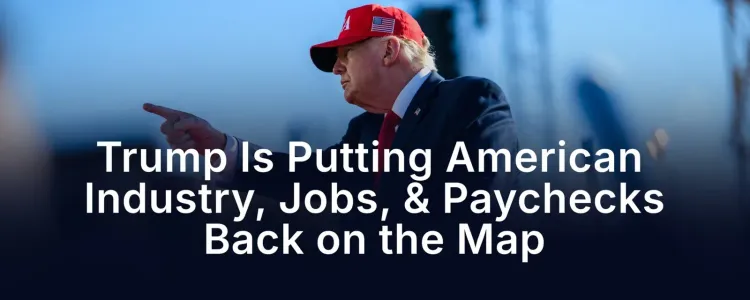
The White House posted on Oct 8, 2026, that President Trump is putting American industry, jobs, and paychecks 'back on the map' — a sweeping economic-revival claim that signals continued US focus on manufacturing, wage growth, and trade protection.
Key Takeaways
The White House declared on October 8, 2026 that President Trump is reviving American industry, jobs, and paychecks.
The phrase 'back on the map' frames US industrial capacity as something that had declined and is now being restored.
The statement bundles three economic pillars — industry, employment, and wage growth — into a single revival narrative.
The word 'paychecks' signals a targeted message to blue-collar and working-class voters, a core Trump constituency since 2016.
For global trade partners including India, a US focus on domestic manufacturing typically implies continued tariff pressure and supply-chain realignment.
No specific legislation or data was cited — the post functions as a policy signal and political assertion rather than a detailed announcement.
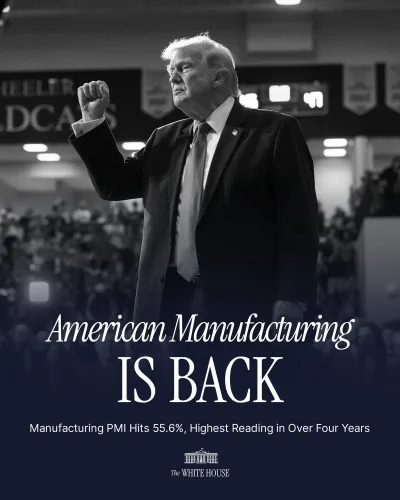
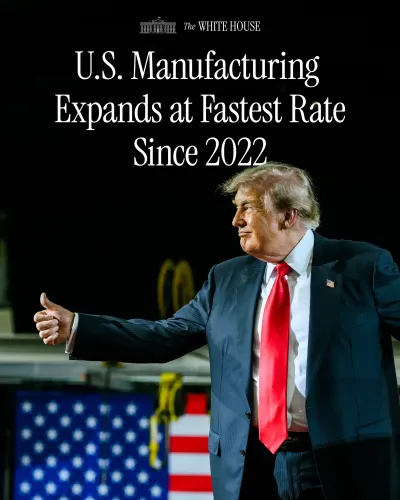
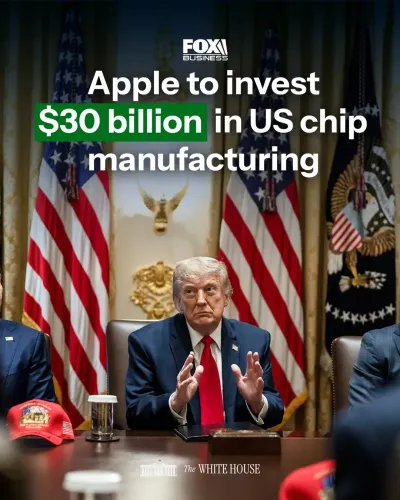
The American factory floor is back at the centre of Washington's agenda. The White House declared on Thursday, October 8, 2026, that President Donald Trump is actively putting 'American industry, jobs, and paychecks back on the map' — a bold headline claim that frames the administration's economic push as a national revival moment.
The Revival Pitch and What It Signals
The post's language — 'back on the map' — is deliberate. It implies that American industrial capacity had slipped off the radar and is now being restored. For an administration that has staked much of its political identity on a manufacturing renaissance and trade protection, this kind of statement is both a policy signal and a campaign-style assertion of progress.
The framing zeroes in on three interlocking pillars: industry (factories and production capacity), jobs (employment numbers and labour participation), and paychecks (real-wage growth). By bundling all three, the White House is making a comprehensive prosperity argument — not just a headline jobs figure, but the idea that the quality and pay of those jobs is improving.
Why 'Paychecks' Is the Loaded Word Here
Wage stagnation has been one of the defining anxieties of American working-class politics for decades. Invoking 'paychecks' specifically is a rhetorical move aimed squarely at blue-collar voters in industrial states — the constituency that has been the primary audience for the Trump economic message since 2016. When an administration highlights paychecks alongside jobs, it is countering the critique that growth only benefits the wealthy.
For Indian observers and trade partners, a renewed American industrial push carries direct implications. Tariff regimes, supply-chain realignment, and bilateral trade negotiations are all downstream of how aggressively Washington pursues domestic manufacturing. An American administration loudly championing 'American industry' typically signals continued pressure on imports and incentives for reshoring — dynamics that shape investment decisions across South and Southeast Asia.
The Bigger Political Backdrop
With no specific policy detail attached to this post, the statement functions as a headline marker — a declaration of intent rather than a legislative announcement. It is consistent with the broader rhetoric the Trump administration has deployed around tariffs, industrial subsidies, and energy production. The message reinforces a running narrative: that the White House sees economic nationalism not as a phase but as a permanent posture.
Whether the data on manufacturing output, employment, and real wages backs up the claim is the question hanging in the air. The assertion itself, however, is unambiguous — and loud.
The next test will be in the numbers: jobs reports, factory output data, and wage growth figures that either validate the revival story or complicate it.
Point of View
Assertive, and light on specifics, designed to reinforce a governing identity rather than announce a discrete policy. For an administration that has built its brand around blue-collar revival, the deliberate bundling of 'industry, jobs, and paychecks' is a reminder that the Trump economic pitch is as much cultural as it is fiscal. Globally, when Washington signals industrial self-sufficiency this loudly, trade partners from New Delhi to Brussels read it as a cue to expect continued tariff pressure and a harder line on import competition. The real test of the claim arrives in the data — but in politics, the narrative often travels faster than the numbers.
NationPress
9 Oct 2026
Frequently Asked Questions
What did the White House say about Trump and American jobs in October 2026?
The White House posted on October 8, 2026, that President Trump is putting 'American industry, jobs, and paychecks back on the map,' framing it as a broad economic revival effort.
What does Trump's industrial revival claim mean for India?
A US push for domestic manufacturing typically signals continued tariff pressure and supply-chain reshoring, which can affect Indian exporters and influence bilateral trade negotiations with Washington.
What is the significance of the word 'paychecks' in the White House post?
Invoking 'paychecks' signals a focus on real-wage growth for workers, not just job numbers — a message aimed at blue-collar voters who have been central to the Trump political coalition since 2016.
Did the White House announce a specific policy along with this statement?
No specific legislation or policy detail was attached to the post. It functioned as a broad declaration of the administration's economic direction rather than a concrete policy announcement.
What is Trump's broader economic policy on manufacturing?
The Trump administration has pursued economic nationalism through tariffs on imports, incentives for domestic production, and rhetoric centred on reviving American factory jobs — a posture the White House has described as a permanent governing philosophy.