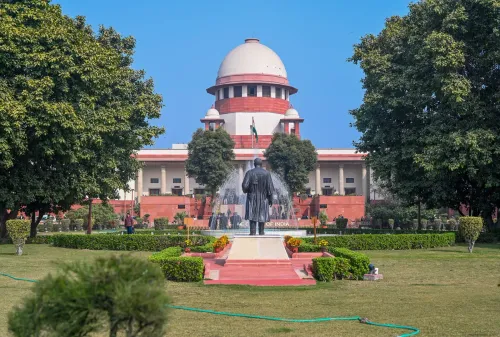
SC seeks Delhi govt reply on exclusion of transgender persons from teaching posts
Synopsis
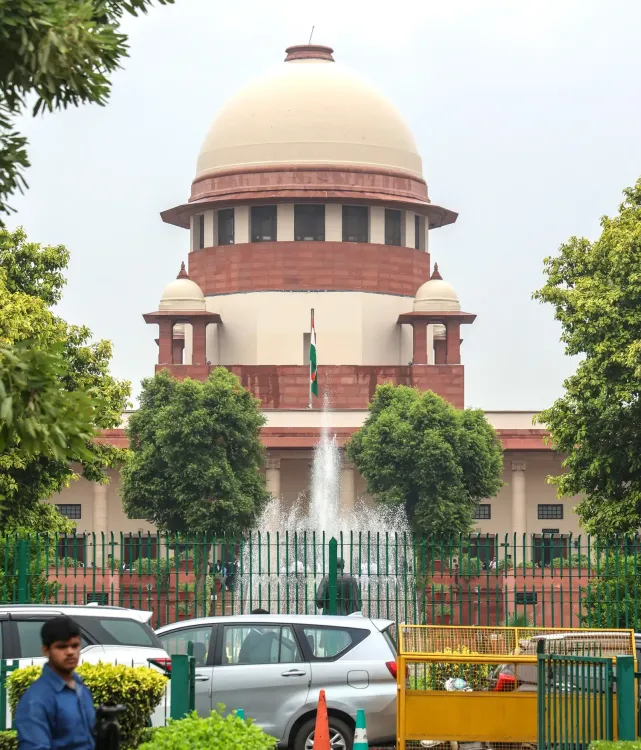
The Supreme Court has put the Delhi government on notice over a structural gap in DSSSB teaching recruitment: transgender persons can register online but risk being locked out at appointment because advertisements only specify male or female. With affidavits due in 15 days, the court's pointed questions may force a rewrite of how state selection boards frame public-sector vacancies nationwide.
Key Takeaways
The Supreme Court on 20 October 2026 sought responses from the Delhi government on exclusion of transgender persons from DSSSB teaching recruitment notifications.
A bench of Justice J.B.
Pardiwala and Justice K.
Vinod Chandran directed affidavits to be filed within 15 days .
The court questioned the legal basis for binary male/female vacancy classifications and asked how the third gender can be accommodated in public employment.
The case stems from petitions by Jane Kaushik and Praveen Singh ; Kaushik had challenged a 18 December 2025 Delhi High Court judgment.
The apex court earlier allowed Kaushik to apply under the transgender category for any DSSSB vacancy regardless of the gender specified in the advertisement.
An advisory committee chaired by former Justice Asha Menon has been constituted to examine broader equal-opportunity and accommodation issues for gender-diverse persons.
The Supreme Court on 20 October 2026 issued notice to the Delhi government, seeking its formal response on the non-inclusion of transgender persons in recruitment notifications for teaching posts advertised by the Delhi Subordinate Services Selection Board (DSSSB). The bench raised pointed questions about the legal basis for restricting vacancies to male and female categories — and what recourse exists for members of the third gender seeking public employment.
Key Directions from the Bench
A bench of Justice J.B. Pardiwala and Justice K. Vinod Chandran directed all respondents to file affidavits within 15 days. The Justice Pardiwala-led bench specifically questioned whether existing recruitment rules mandate advertising teaching posts separately for male and female candidates and, if not, what objective such a classification serves. It further asked whether authorities propose to include the third gender in future DSSSB notifications and how transgender persons could practically be accommodated in public employment.
Background: The Petitions Before the Court
The proceedings arise from two connected matters. The first is a petition filed by Praveen Singh, concerning transgender persons' access to public employment and age relaxation. The second stems from a petition by Jane Kaushik, who had challenged a 18 December 2025 judgment of the Delhi High Court. Kaushik had sought separate vacancies for transgender persons in teaching roles, relaxation of minimum qualifications and age requirements, and a dedicated recruitment policy for transgender persons in government appointments.
In an earlier order, the Supreme Court observed that the High Court had prima facie erred in disposing of Kaushik's petition by directing her to approach an advisory committee — a body that, the apex court noted, does not possess adjudicatory powers. The court had also allowed Kaushik to apply under the transgender category for any DSSSB vacancy irrespective of the gender specified in the advertisement, continuing relief that the Delhi High Court had previously granted during the pendency of her writ petition.
The Core Concern: Exclusion at Appointment Stage
Kaushik had argued that despite being registered on the DSSSB's Online Application Registration System (OARS) portal, she risked exclusion at the appointment stage because recruitment advertisements specify either male or female candidates. The structural gap — registration permitted but appointment blocked — was central to the apex court's concern. This is not merely a procedural lacuna; it effectively renders the registration window meaningless for transgender applicants.
Broader Legal Framework
The Supreme Court noted that several issues raised in these petitions had been addressed in its earlier judgment in Jane Kaushik v. Union of India, which dealt with the implementation of the Transgender Persons (Protection of Rights) Act, 2019 and rules framed under it. Separately, the apex court had constituted an advisory committee chaired by former Justice Asha Menon to examine a range of issues including an equal opportunity policy, reasonable accommodation, grievance redressal mechanisms, gender and name change procedures, inclusive medical care, and safeguards for gender-diverse persons. Notably, this committee's advisory role is distinct from the adjudicatory function the High Court had appeared to conflate.
What Happens Next
With affidavits due within 15 days, the Delhi government and DSSSB must now place on record their legal position on third-gender inclusion. The court's questions signal that a status quo of binary-only recruitment notifications may face direct judicial scrutiny. The outcome could have implications not just for Delhi's teaching cadre but for transgender persons seeking public employment across state governments that rely on similar selection-board frameworks.
Point of View
The bench is signalling that the burden of proof now lies with the state. The structural irony the court has surfaced — that a transgender applicant can register on the DSSSB portal but be blocked at appointment — exposes a policy architecture that absorbed the language of inclusion without reworking the machinery. If the Delhi government cannot furnish a compelling rationale within 15 days, this case could set a precedent that forces every state selection board to audit its recruitment frameworks under the Transgender Persons (Protection of Rights) Act, 2019.
NationPress
20 Oct 2026
Frequently Asked Questions
Why has the Supreme Court issued notice to the Delhi government over transgender teaching vacancies?
The Supreme Court issued notice because DSSSB teaching recruitment notifications specify only male or female candidates, effectively excluding transgender persons from appointment even if they are registered on the application portal. The bench sought the Delhi government's legal justification for this binary classification and asked how the third gender can be accommodated in public employment.
Who is Jane Kaushik and what did she petition for?
Jane Kaushik is a petitioner who challenged a 18 December 2025 Delhi High Court judgment, seeking separate vacancies for transgender persons in teaching roles, relaxation of minimum qualifications and age requirements, and a dedicated transgender recruitment policy for government appointments. The Supreme Court found that the High Court had prima facie erred in directing her to an advisory committee that lacked adjudicatory powers.
Can transgender persons currently apply for DSSSB teaching posts?
Yes, in an earlier order the Supreme Court allowed Jane Kaushik — and by extension transgender applicants — to apply under the transgender category for DSSSB vacancies irrespective of the gender specified in the advertisement. However, the risk of exclusion at the appointment stage remains, which is the core issue the court is now pressing the Delhi government to address.
What is the Transgender Persons (Protection of Rights) Act, 2019?
It is a central law that protects the rights of transgender persons in India, covering identity recognition, non-discrimination, and access to education and employment. The Supreme Court noted that several issues in the ongoing petitions have been addressed through its earlier judgment in Jane Kaushik v. Union of India, which dealt with the implementation of this Act and its rules.
What is the advisory committee chaired by former Justice Asha Menon?
The Supreme Court constituted this advisory committee to examine issues including equal opportunity policy, reasonable accommodation for transgender persons, grievance redressal, gender and name change procedures, inclusive medical care, and safeguards for gender-diverse individuals. The committee has an advisory, not adjudicatory, role — a distinction the apex court has already underlined in these proceedings.