Supreme Court mulls consolidating all pleas against Transgender Amendment Act 2026
Synopsis
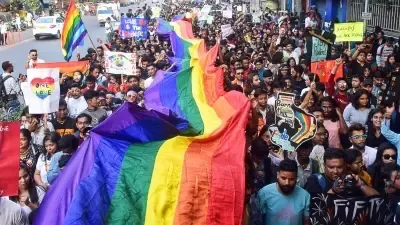
The Supreme Court has frozen proceedings in four High Courts and issued notice on the Centre's plea to pull all constitutional challenges to the Transgender Persons Amendment Act 2026 into a single forum. With petitioners arguing the law has 'no medical basis' and violates Articles 14, 19 and 21, the apex court's next move on 3 August could determine whether India's landmark NALSA gender-identity protections survive the 2026 amendments.
Key Takeaways
The Supreme Court issued notice on 15 June on the Centre's plea to transfer all petitions challenging the Transgender Persons (Protection of Rights) Amendment Act, 2026 .
A bench of CJI Surya Kant and Justice V.
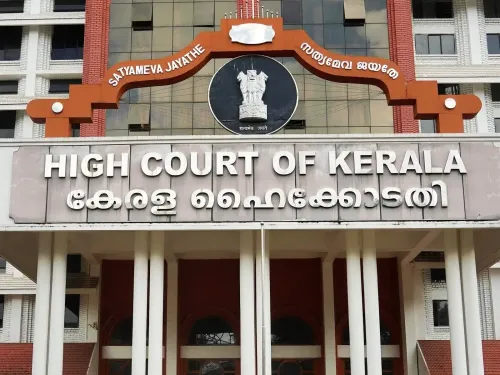
Mohana stayed further proceedings before the Rajasthan, Karnataka, Kerala, and Delhi High Courts .
Solicitor General Tushar Mehta invoked the landmark NALSA judgment and flagged the risk of conflicting rulings across High Courts.
Petitioners argue the amendment introduces medical certification and state-controlled verification of gender identity, violating Articles 14, 19(1)(a), and 21 .
The matter is next listed for hearing on 3 August , when the court will decide on consolidation.
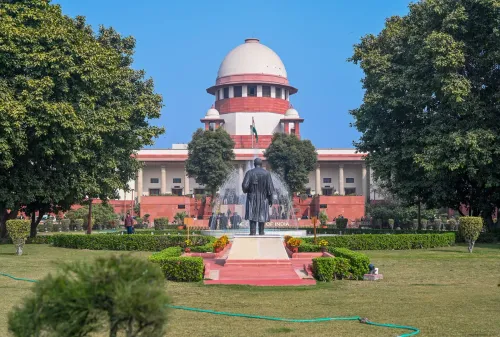
The Supreme Court on Monday, 15 June issued notice on a plea filed by the Centre seeking the transfer of petitions pending before multiple High Courts that challenge the constitutional validity of the Transgender Persons (Protection of Rights) Amendment Act, 2026. The apex court simultaneously stayed further proceedings in the matters pending before the Rajasthan, Karnataka, Kerala, and Delhi High Courts, and listed the case for the next hearing on 3 August.
What the Supreme Court Said
A bench comprising Chief Justice of India (CJI) Surya Kant and Justice V. Mohana sought responses from petitioners who have challenged the amended law before different High Courts. The bench observed that the top court would either hear all the matters itself or entrust them to a single High Court — the aim being to prevent conflicting judicial opinions on the same constitutional questions.
This comes after Solicitor General Tushar Mehta, appearing for the Union government, pointed out that the constitutional validity of a Central legislation was being litigated simultaneously across several High Courts, even as related proceedings were already pending before the Supreme Court.
The Centre's Case for Transfer
Solicitor General Mehta, the Centre's second-highest law officer, referred to the landmark NALSA judgment — the 2014 Supreme Court ruling that recognised the right to self-identification of gender — and argued that High Courts may find it difficult to rule contrary to principles already laid down by the apex court. He suggested the issue may ultimately require consideration by a larger Bench of the Supreme Court.
Last month, Mehta had mentioned the transfer petition before the apex court, urging an early hearing and stressing the risk of divergent rulings. At that stage, CJI Surya Kant had noted that differing High Court opinions can sometimes serve a useful purpose, while indicating the request for urgent listing would be considered.
Petitioners Push Back
Counsel appearing for one of the petitioners opposed the Centre's transfer plea, contending that the challenge to the amended law does not rest solely on the NALSA ruling. The petitioner's counsel argued that the legislation is 'not only unconstitutional but also has no medical basis' — a broader framing that goes beyond the self-identification principles the Centre invoked.
Petitioners across the various High Courts have argued that the 2026 amendment dilutes the principle of self-identification of gender recognised in NALSA and replaces it with a framework of medical certification and state-controlled verification of gender identity. They contend this violates fundamental rights under Articles 14, 19(1)(a), and 21 of the Constitution by subjecting gender identity to official scrutiny and undermining the right to self-perceived identity.
Background: How the Legal Challenge Spread
The transfer plea comes amid a wave of petitions filed before multiple High Courts and the Supreme Court questioning the validity of the amended law. The Delhi High Court had earlier issued notice to the Centre on a PIL challenging the legislation. Similar petitions are pending before the Rajasthan, Karnataka, and Kerala High Courts.
The Supreme Court had previously issued notice on a separate petition challenging the amendment and directed that the matter be placed before a three-judge Bench to be constituted by the CJI — signalling the constitutional weight the court has already assigned to the questions involved.
What Happens Next
With proceedings in four High Courts now stayed, the constitutional challenge to the Transgender Persons (Protection of Rights) Amendment Act, 2026 will effectively be centralised before the Supreme Court. The next date of hearing is 3 August, when the court is expected to decide whether it will hear all matters itself or designate a single High Court. The outcome will shape how gender identity rights are adjudicated in India for years to come.
Point of View
The government avoids the risk of a High Court striking down the amendment before the apex court can set the terms of review — but it also concentrates scrutiny at the highest level. The core tension is real: the 2026 amendment's medical-certification framework sits in direct conflict with NALSA's self-identification principle, and the Supreme Court cannot easily sidestep that contradiction. Petitioners are right that the challenge is broader than NALSA alone — the Articles 14 and 21 arguments on bodily autonomy and equality are independently potent. The 3 August hearing will signal whether the court sees this as a routine legislative review or a constitutional moment for transgender rights in India.
NationPress
19 Sept 2026
Frequently Asked Questions
What is the Transgender Persons (Protection of Rights) Amendment Act, 2026?
It is a 2026 amendment to the original Transgender Persons (Protection of Rights) Act that critics say replaces the principle of self-identification of gender — recognised by the Supreme Court in the 2014 NALSA judgment — with a framework requiring medical certification and state-controlled verification of gender identity. Multiple petitions across High Courts have challenged it as unconstitutional.
Why is the Supreme Court considering consolidating all petitions?
The Centre argued that having the same constitutional questions litigated simultaneously before multiple High Courts risks producing conflicting judgments. The Supreme Court agreed to examine whether to hear all matters itself or assign them to a single High Court, and has stayed proceedings in four High Courts in the meantime.
What did the Supreme Court order on 15 June?
The bench of CJI Surya Kant and Justice V. Mohana issued notice on the Centre's transfer plea, stayed further proceedings before the Rajasthan, Karnataka, Kerala, and Delhi High Courts, and listed the matter for the next hearing on 3 August.
What are petitioners' main arguments against the amendment?
Petitioners contend that the 2026 amendment dilutes the NALSA judgment's self-identification principle and violates fundamental rights under Articles 14, 19(1)(a), and 21 of the Constitution. One petitioner's counsel also argued the legislation 'has no medical basis', framing the challenge beyond constitutional law alone.
What is the significance of the NALSA judgment in this case?
The NALSA judgment of 2014 is a Supreme Court ruling that recognised transgender persons' right to self-identify their gender without requiring medical or surgical procedures. The Centre's Solicitor General cited it to argue High Courts may be constrained by its principles, while petitioners say the 2026 amendment directly contradicts it.