Kolkata's Queer Community Criticizes New Transgender Bill
Synopsis
The queer community in Kolkata is voicing strong objections to the Transgender Persons (Protection of Rights) Amendment Bill, 2026, arguing it threatens self-identification rights for transgender individuals. Activists and legal experts are calling for a reassessment of the bill to ensure it aligns with established rights.
Key Takeaways
Proposed Bill limits self-identification rights.
Introduces medical proof requirements for legal recognition.
Contradicts the NALSA Supreme Court ruling.
Activists demand re-evaluation by Parliament.
Concerns about discrimination and marginalization.
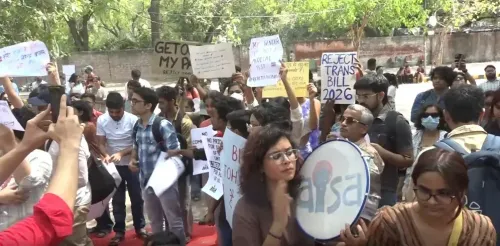
Kolkata, March 21 (NationPress) Members of the queer community in Kolkata, alongside legal professionals, have expressed grave concerns regarding the proposed Transgender Persons (Protection of Rights) Amendment Bill, 2026. They argue that this legislation could undermine the right to self-identification for transgender individuals.
The Bill, which was recently presented in Parliament by Union Minister for Social Justice and Empowerment, Virendra Kumar, has faced backlash for allegedly limiting the definition of transgender identity and introducing more bureaucratic hurdles for legal acknowledgment.
Activists and legal analysts contend that this proposed law contradicts the historic National Legal Services Authority v. Union of India (NALSA) verdict, which affirmed the right to self-identify one's gender without the need for medical validation.
They also question why it is the transgender community that is often required to provide proof of gender identity, unlike their cisgender counterparts. A diverse group of queer rights activists and legal experts discussed the implications of the new bill, highlighting its opposition to fundamental identity rights.
Pawan Dhall, a prominent queer author and advocate, noted that the Bill seeks to restrict the definition of a transgender individual and mandates medical documentation for legal recognition of that identity.
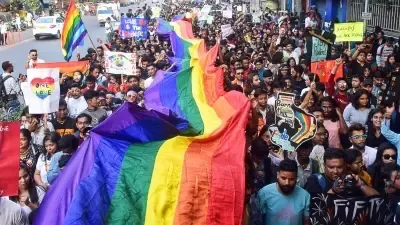
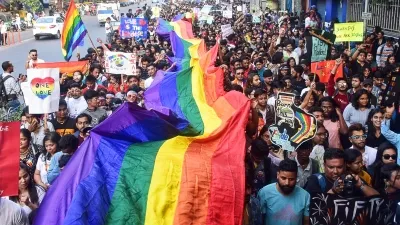
“The proposed legislation attempts to strip away the autonomy of transgender individuals by imposing a requirement for medical evidence for legal acknowledgment. We believe the Bill should be reassessed by the Parliamentary Standing Committee,” Dhall stated. He is also a co-founder of Kolkata’s annual LGBTQ Pride Walk, which is the oldest pride march in South-East Asia.
Dhall further explained that the new Bill stands in stark contrast to the NALSA ruling of 2014, wherein the Supreme Court clearly stated that all citizens of India, regardless of gender, have the right to determine their gender identity.
“This Bill seeks to eliminate that choice, requiring anyone identifying as transgender to undergo an administrative process. It introduces a medical board for screening, which reflects outdated and unethical medicalization. The history shows that anything outside societal norms has often been pathologized,” Dhall added.
Kaushik Gupta, a senior advocate at the Calcutta High Court, fully supports Dhall's views. He pointed out that the Supreme Court's 2014 decision emphasized self-identification and condemned the necessity of sex reassignment surgery as immoral and illegal.
“The revised definition of a ‘transgender’ person in this Bill largely excludes the trans-man community, making them particularly vulnerable. Additionally, the proposed screening process to confirm a ‘transgender’ identity is inherently discriminatory. The government should have consulted with transgender groups to gather insights, which did not happen,” Gupta explained during the interview.
Social media influencer and queer rights advocate, Debika Barua, questioned why only the transgender community is required to validate their identity, unlike “men” or “women.”
“Do cisgender men or women need to provide proof of their biological gender? Why must transgender individuals submit medical documentation? This violates their human rights and undermines their privacy. It is unfortunate that the government is stripping away the rights of the transgender community, denying them social benefits. Many of us, especially from rural areas, cannot afford sex reassignment surgeries, and not everyone is physically able to undergo such transformations. How can they provide proof?” Barua questioned.
Dr. Ranjita Sinha, a recognized transgender rights activist, warned that the proposed Bill could fundamentally weaken constitutional principles that support transgender rights and may exclude a significant portion of gender-diverse individuals from recognition and protection.
“Gender identity is not merely a medical diagnosis or a bureaucratic formality. It is a deeply personal issue tied to dignity and self-determination. India's transgender communities have faced generations of stigma, violence, and systemic discrimination. Legislation should expand recognition and protection, not restrict it. While the original Transgender Persons (Protection of Rights) Act, 2019 has been widely critiqued for not fully realizing the NALSA judgment, any reform must enhance constitutional safeguards rather than diminish them,” Sinha stated.
Point of View
The proposed Transgender Persons (Protection of Rights) Amendment Bill, 2026 raises crucial questions about the rights of transgender individuals in India. The concerns voiced by activists and legal professionals highlight the need for inclusive dialogue and reform that upholds dignity and self-identification for all genders.
NationPress
21 Sept 2026
Frequently Asked Questions
What are the main concerns about the new Transgender Bill?
Activists argue it undermines the right to self-identification and introduces unnecessary medical proof requirements, which could marginalize the transgender community.
How does this Bill conflict with previous legal rulings?
It contradicts the NALSA verdict, which affirmed the right to self-identify without medical intervention.
What do activists want regarding the Bill?
They call for the Bill to be sent to the Parliamentary Standing Committee for re-evaluation and greater input from transgender groups.
Why is medical proof for gender identity controversial?
It is seen as an outdated practice that infringes on personal rights and dignity, potentially pathologizing non-normative identities.
What is the historical context of transgender rights in India?
Transgender communities in India have faced systemic discrimination and violence, leading to ongoing struggles for recognition and protection.