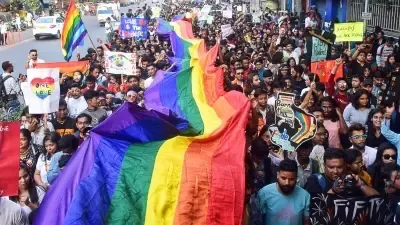
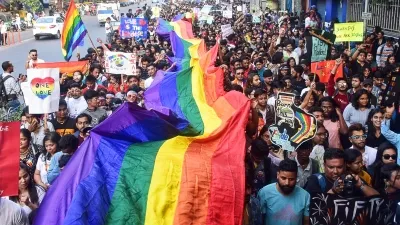
Centre moves SC to consolidate Transgender Amendment Act 2026 pleas
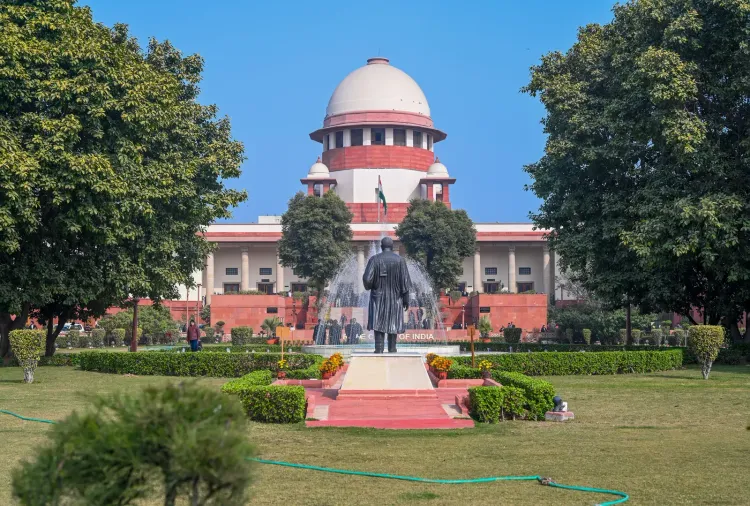
Synopsis
The Union government wants one court — the Supreme Court — to decide the fate of the Transgender Amendment Act 2026, not five. With petitions piling up in Delhi, Rajasthan, Kerala, and Karnataka High Courts, all attacking the same core issue — whether the Act's medical-certification regime violates the NALSA self-identification principle — the Centre is racing to consolidate before divergent rulings complicate its defence.
Key Takeaways
The Union government on 27 May filed a transfer petition urging the Supreme Court to consolidate all High Court challenges to the Transgender Persons (Protection of Rights) Amendment Act, 2026 .
Solicitor General Tushar Mehta cited the risk of conflicting judgments from multiple High Courts as the basis for the request.
CJI Surya Kant noted that divergence of judicial opinion can sometimes be beneficial, while agreeing to consider urgent listing.
A three-judge Bench is to be constituted to hear the Supreme Court petition; responses have been sought from the Centre, states, and UTs .
Challenges are pending before the Delhi , Rajasthan , Kerala , and Karnataka High Courts, all contesting the Act's medical-certification requirement as a violation of the NALSA self-identification principle.
The Union government on Wednesday, 27 May urged the Supreme Court to transfer to itself all petitions pending before various High Courts that challenge the constitutional validity of the Transgender Persons (Protection of Rights) Amendment Act, 2026. The move is aimed at preventing conflicting verdicts from different courts on the same legislation.
What the Centre Argued
Solicitor General Tushar Mehta mentioned the transfer petition before Chief Justice of India (CJI) Surya Kant, flagging that simultaneous challenges before multiple High Courts risk producing contradictory rulings. 'We have filed petitions to transfer the challenge to the Transgender Amendment Act here in this court. Can the transfer petition be listed on Friday? If notice also goes, we can ask High Courts to wait,' Mehta submitted.
The CJI, while indicating the apex court would consider the request for urgent listing, offered a notable caveat. 'Sometimes it is better to have divergence of opinions,' CJI Kant remarked — signalling that the court is not automatically inclined to consolidate proceedings.
Where the Legal Challenges Stand
The Supreme Court earlier this month issued notice on a petition challenging the amended law and directed that the matter be placed before a three-judge Bench to be constituted by the CJI. A Bench of CJI Kant and Justice Joymalya Bagchi has already sought responses from the Union government, states, and Union Territories (UTs) on a plea alleging that the amended provisions violate the fundamental rights of transgender persons.
The Delhi High Court has issued notice to the Centre on a public interest litigation challenging the Act. Similar challenges are pending before the Rajasthan, Kerala, and Karnataka High Courts.
Core Constitutional Objections
Petitioners across forums have raised overlapping grounds. The central argument is that the amendment dilutes the principle of self-identification of gender recognised by the Supreme Court in the landmark NALSA judgment, replacing it with a regime of medical certification and state-controlled verification of gender identity.
The Delhi High Court plea specifically contends that the amended law infringes Articles 14, 19(1)(a), and 21 of the Constitution by subjecting gender identity to official scrutiny rather than recognising self-perceived identity. Before the Karnataka High Court, two transwomen have challenged provisions that allegedly exclude persons asserting self-identification from the legal definition of a 'transgender person'.
The Rajasthan High Court, while hearing a PIL filed by NGO Nai Bhor Sanstha, has sought the Centre's response on claims that the amended law undermines privacy, dignity, and autonomy of transgender persons. The Kerala High Court is also examining pleas contending that the Act narrows the definition of transgender persons and mandates medical testing for identity certificates.
Why This Matters
The NALSA judgment of 2014 is widely regarded as the constitutional bedrock of transgender rights in India, recognising self-identification without requiring medical intervention. Critics argue the 2026 amendment reverses that position, making state-controlled verification the operative standard. This is the most significant legal challenge to transgender rights legislation since the original Transgender Persons (Protection of Rights) Act, 2019 itself faced judicial scrutiny.
Whether the Supreme Court consolidates the petitions or allows High Courts to rule independently will shape both the pace and the breadth of the constitutional review. The apex court is expected to take up the Centre's transfer request as early as this Friday.
Point of View
And no amount of procedural consolidation changes that substantive tension. The government will need more than a venue advantage to defend a law that critics say walks back a decade of judicially recognised transgender rights.
NationPress
10 Oct 2026
Frequently Asked Questions
What is the Transgender Persons (Protection of Rights) Amendment Act, 2026?
It is a 2026 amendment to the original Transgender Persons (Protection of Rights) Act, 2019, which critics allege replaces the self-identification principle recognised in the NALSA judgment with a system of medical certification and state-controlled verification of gender identity. Multiple High Courts and the Supreme Court are currently examining its constitutional validity.
Why is the Centre seeking to transfer all petitions to the Supreme Court?
The Union government argues that simultaneous challenges before the Delhi, Rajasthan, Kerala, and Karnataka High Courts risk producing conflicting judgments on the same law. Consolidating the cases in the Supreme Court would ensure a single, authoritative ruling on the Act's constitutional validity.
What did CJI Surya Kant say about the transfer request?
CJI Kant remarked that divergent opinions from High Courts can sometimes be beneficial, while indicating the Supreme Court would consider the Centre's request for urgent listing of the transfer petition, possibly as early as Friday.
What is the NALSA judgment and why is it central to these cases?
The NALSA judgment is a 2014 Supreme Court ruling that recognised the right of transgender persons to self-identify their gender without requiring medical procedures or state verification. Petitioners argue the 2026 amendment directly contradicts this precedent by mandating medical certification for identity certificates.
Which courts are currently hearing challenges to the Transgender Amendment Act, 2026?
Active challenges are pending before the Delhi, Rajasthan, Kerala, and Karnataka High Courts, as well as the Supreme Court. The Supreme Court has already directed that its petition be heard by a three-judge Bench and has sought responses from the Union government, states, and Union Territories.