Rahul Gandhi assets case: SC sets aside HC directions

Synopsis
The Supreme Court has set aside Allahabad High Court directions concerning agency verification of disproportionate-assets allegations against Rahul Gandhi. The High Court must hear him afresh, including on whether the petition can be entertained.
Key Takeaways
The Supreme Court set aside Allahabad High Court directions concerning CBI and ED verification of allegations against Rahul Gandhi .
Vignesh Shishir , a Karnataka -based BJP worker, filed the petition alleging disproportionate assets.
The bench led by Chief Justice Surya Kant sent the petition back for fresh consideration, including on maintainability.
On 17 August , the Supreme Court had directed the High Court to defer proceedings and restrained the CBI and ED from submitting reports under the earlier directions.
Gandhi also filed a separate petition seeking transfer of the proceedings to the Delhi High Court .
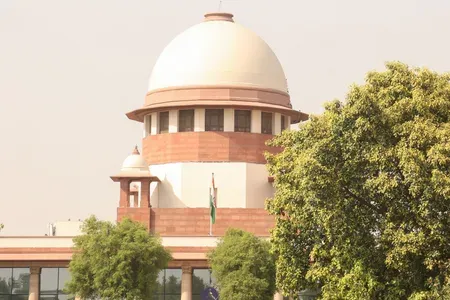
The Supreme Court on 25 November set aside the Allahabad High Court directions concerning verification by central agencies of disproportionate-assets allegations against Rahul Gandhi, the Leader of the Opposition in the Lok Sabha. The court in New Delhi sent the petition back to the High Court for fresh consideration, including a hearing for Gandhi.
A bench led by Chief Justice of India Surya Kant, and comprising Justices Joymalya Bagchi and V. Mohana, directed the High Court to consider all issues arising from the petition, including whether it is maintainable. The allegations were made by S. Vignesh Shishir, a Karnataka-based worker of the Bharatiya Janata Party (BJP).
Allegations and the High Court proceedings
Shishir filed a criminal writ petition alleging that Gandhi possessed assets disproportionate to his known sources of income. He sought an investigation by central agencies; the allegation remains a claim made in the petition.
In May, the Lucknow Bench of the Allahabad High Court directed the Central Bureau of Investigation (CBI), the Enforcement Directorate (ED), the Serious Fraud Investigation Office (SFIO) and other authorities to respond to the allegations.
During those proceedings, counsel for the CBI told the High Court that the agency had received the complaint and would file a response within eight weeks. The ED also informed the bench led by Justice Chauhan that it had received the complaint and “may verify the allegations”.
Recording those submissions, the High Court observed that, if the agencies had received the complaint, “the allegations of the complaints may be verified as per law”. It also said the CBI and ED could take appropriate steps permissible under the law.
Gandhi's challenge and Supreme Court intervention
Gandhi challenged the High Court's directions before the Supreme Court. He also filed a separate transfer petition seeking to move the proceedings from the Allahabad High Court to the Delhi High Court.
On 17 August, the Supreme Court issued notice on his plea and directed the High Court to defer further proceedings. It also restrained the CBI and ED from submitting reports to the High Court pursuant to the earlier directions.
During the hearing, the Supreme Court observed that investigative agencies could act independently if they had information about disproportionate assets belonging to any individual, without needing a court direction. That observation addressed the agencies' ability to act independently, separate from the directions that Gandhi challenged.
Fresh hearing and issues ahead
The latest order returns the petition to the Allahabad High Court, where Gandhi must be given an opportunity to be heard on all issues arising from it. These include maintainability, or whether the petition can be entertained by the court.
The source does not specify the outcome of Gandhi's separate transfer petition or a date for the fresh High Court hearing. The next stage will be the High Court's reconsideration of Shishir's petition in accordance with the Supreme Court's directions.
Point of View
Without treating an allegation as a finding.
NationPress
25 Nov 2026
Frequently Asked Questions
What did the Supreme Court decide in the Rahul Gandhi assets case?
The Supreme Court set aside Allahabad High Court directions concerning CBI and ED verification of disproportionate-assets allegations against Rahul Gandhi. It sent the petition back to the High Court for fresh consideration.
Who filed the disproportionate-assets petition against Rahul Gandhi?
Karnataka-based BJP worker S. Vignesh Shishir filed the criminal writ petition. He alleged that Gandhi possessed assets disproportionate to his known sources of income and sought a central-agency probe.
What will the Allahabad High Court consider next?
The High Court must hear Rahul Gandhi afresh on all issues arising from the petition, including its maintainability. No date for that hearing was specified in the source.
Can the CBI and ED act without a court direction?
The Supreme Court observed that investigative agencies could act independently if they had information about disproportionate assets belonging to any individual. It said a court direction was not required for such independent action.
Did Rahul Gandhi seek to transfer the case to Delhi?
Yes, Gandhi filed a separate petition seeking to transfer the proceedings from the Allahabad High Court to the Delhi High Court. The source does not specify the outcome of that request.