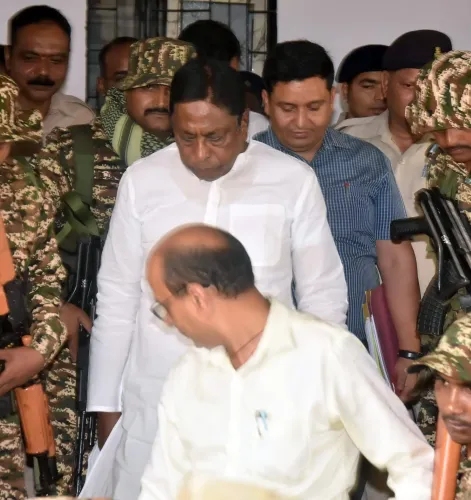
SC refuses to quash Alamgir Alam's discharge plea in ED money laundering case

Synopsis
The Supreme Court has shut the door on former Jharkhand minister Alamgir Alam's bid to exit a PMLA case — the third court in a row to reject his discharge plea. With ₹37.55 crore allegedly recovered in May 2024 searches and a 3.2% commission mechanism alleged in the Rural Works Department, the trial in Ranchi will now proceed, marking a major moment in ED's enforcement push against political figures in Jharkhand.
Key Takeaways
The Supreme Court on 16 September 2026 refused to quash proceedings against former Jharkhand minister Alamgir Alam in an ED money laundering case.
A bench of Justice Dipankar Datta and Justice Sheel Nagu declined to interfere with the Jharkhand High Court order dismissing Alam's discharge plea.
The ED allegedly recovered approximately ₹37.55 crore in cash during searches at multiple locations in May 2024 .
The agency alleged commissions of about 3.2 per cent of tender value were collected, with 1.5 per cent allegedly earmarked for the then minister.
The PMLA trial before the special court in Ranchi will now proceed after rejections at all three judicial levels.
The Supreme Court on Wednesday, 16 September 2026, declined to interfere with a Jharkhand High Court order that had dismissed former minister Alamgir Alam's discharge plea in a Prevention of Money Laundering Act (PMLA) case linked to a tender scam. The ruling is a significant setback for Alam, meaning the money laundering proceedings against him will continue.
What the Supreme Court Ruled
A bench comprising Justice Dipankar Datta and Justice Sheel Nagu heard the matter and refused to grant any relief to the former minister. The court declined to override the High Court's judgment, leaving intact the rejection of Alam's bid to be discharged from the case. With this order, his discharge application stands conclusively rejected at every judicial tier so far.
The Chain of Legal Proceedings
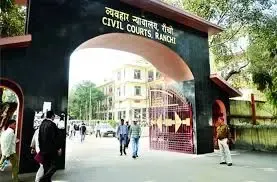
The case has traversed multiple courts. A special PMLA court in Ranchi first rejected Alam's discharge application. The Jharkhand High Court upheld that decision in its judgment dated 6 May, finding that the material placed by the Enforcement Directorate (ED) — including documents and statements relating to alleged commission collection in exchange for tender awards — was sufficient to establish a prima facie case. The High Court clarified that its observations did not constitute findings of guilt but were limited to assessing whether adequate material existed to proceed to trial. The Supreme Court has now declined to disturb that finding.
What the ED Alleged
According to the ED, searches conducted at multiple locations in May 2024 led to the alleged recovery of approximately ₹37.55 crore in cash. Investigators reportedly uncovered a mechanism for collecting commissions from contractors in return for the allotment of tenders under the Rural Works Department. The agency alleged that commissions amounting to roughly 3.2 per cent of the total tender value were collected, of which about 1.5 per cent was allegedly earmarked for the then minister. These are allegations at the investigation stage and have not been adjudicated as findings of fact.
Legal Standard Applied
Courts at every stage reiterated a consistent legal principle: at the discharge-plea stage, the threshold is only whether a prima facie case exists — not whether guilt is established beyond doubt. The High Court held that, on the basis of available material, Alam's alleged involvement could not be ruled out at this stage. This standard, established under PMLA jurisprudence, makes it difficult for accused persons to secure discharge before trial unless the prosecution's case is manifestly unsustainable.
What Happens Next
With the Supreme Court refusing to interfere, the trial before the special PMLA court in Ranchi will now proceed against Alamgir Alam. The case is part of a broader pattern of ED enforcement actions targeting political figures in Jharkhand in recent years. The outcome of the trial will determine whether the allegations translate into conviction — a process that could take several years given the complexity of money laundering prosecutions under PMLA.
Point of View
In legal terms, narrow — it only means a prima facie case exists, not that guilt is established. But politically, it matters enormously: three courts have now found sufficient material to proceed, lending credibility to the ED's probe and keeping a senior Jharkhand political figure under a cloud ahead of the trial. The broader pattern is notable — Jharkhand has seen a cluster of high-profile ED actions in recent years, and courts have consistently declined to short-circuit these proceedings at the discharge stage. Critics of the ED argue that this reflects how the low prima facie threshold can keep politically inconvenient figures entangled in proceedings for years; defenders counter that the agency's documented recoveries — ₹37.55 crore in cash in a single operation — speak for themselves. The trial will be the real test of whether the alleged commission mechanism holds up under scrutiny.
NationPress
16 Sept 2026
Frequently Asked Questions
What is the Alamgir Alam ED case about?
The case relates to alleged money laundering linked to a tender scam in Jharkhand's Rural Works Department. The Enforcement Directorate alleged that commissions of about 3.2 per cent of tender value were collected from contractors in exchange for tender awards, with 1.5 per cent allegedly earmarked for Alam as the then minister.
What did the Supreme Court decide on 16 September 2026?
The Supreme Court declined to interfere with the Jharkhand High Court order that had dismissed Alamgir Alam's discharge plea in the PMLA case. A bench of Justice Dipankar Datta and Justice Sheel Nagu refused to grant any relief, meaning the money laundering trial against him will proceed.
How much cash did the ED allegedly recover in the case?
The ED reportedly recovered approximately ₹37.55 crore in cash during searches conducted at multiple locations in May 2024 as part of its investigation into the alleged tender scam.
What is a discharge plea under PMLA and why was it rejected?
A discharge plea is a legal application by an accused person seeking to be removed from a case before trial begins, arguing that insufficient evidence exists against them. Courts rejected Alam's plea because the standard at this stage only requires a prima facie case — that is, enough material to warrant a trial — not proof of guilt, and the ED's documents and statements met that threshold.
What happens next in the Alamgir Alam PMLA case?
With the Supreme Court refusing to quash proceedings, the trial will now proceed before the special PMLA court in Ranchi. The court's earlier observations do not constitute findings of guilt and are limited to establishing that sufficient prima facie material exists; the actual determination of guilt or innocence will take place during the full trial.