Flood-hit South Gujarat orchards get scientific revival push from farm experts
Synopsis
Rather than waiting for floodwaters to recede, joint teams from Navsari Agricultural University and Gujarat's Horticulture Department are already in the fields of South Gujarat, showing farmers how to revive uprooted mango and other fruit trees using Copper Oxychloride paste, Trichoderma drenches, and slow-lift techniques — methods that saved 70–80% of Cyclone Tauktae-hit trees for one Navsari farmer.
Key Takeaways
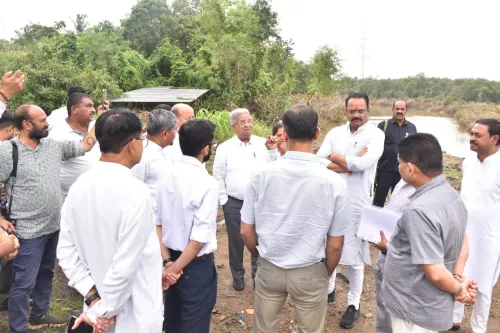
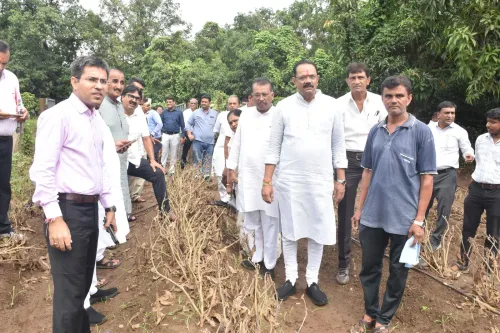
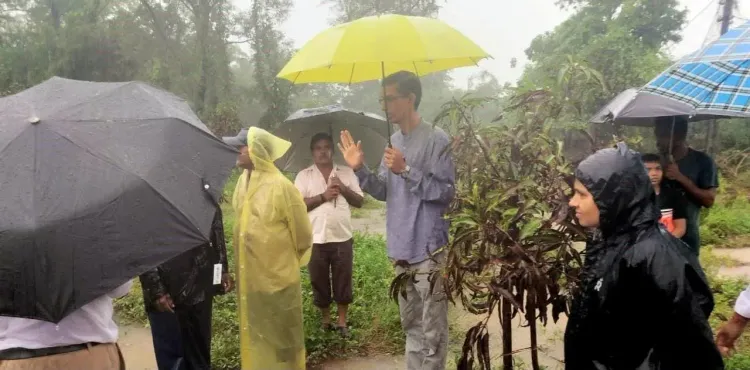
Joint teams from the State Horticulture Department and Navsari Agricultural University have been visiting flood-affected orchards in Valsad, Navsari, Surat, Dang , and Tapi districts since last Friday.
The field initiative was launched on directions from Gujarat Agriculture Minister Jitu Vaghani .
Farmer Mohan Patel of Ghej village, Navsari, reported a 70–80% recovery rate for uprooted mango trees using the same methods after Cyclone Tauktae .
Experts recommend slow-lifting uprooted trees, pruning drooping branches, and treating cut surfaces with Copper Oxychloride (COC) paste .
Root rot prevention involves a monthly soil drench of Trichoderma viride and urea solution, applied two to three times a month .
Farmers are advised to build protective bunds at least two feet high around saplings before each monsoon season.
Agricultural scientists and horticulture officials have launched field visits across South Gujarat to help fruit growers restore orchards damaged by heavy monsoon flooding, with experts confirming that many horticultural trees can be saved if their roots remain connected to the soil and are treated using proven scientific methods. The initiative, covering Valsad, Navsari, Surat, Dang, and Tapi districts, began on last Friday and is ongoing despite continued rainfall in the region.
What Triggered the Initiative
Acting on directions from Gujarat State Agriculture Minister Jitu Vaghani, joint teams from the State Horticulture Department and Navsari Agricultural University have been conducting hands-on field demonstrations without waiting for floodwaters to recede. The teams are training farmers directly in their orchards on techniques to minimise long-term crop losses. This comes amid widespread damage to fruit orchards across several South Gujarat districts following exceptionally heavy monsoon rainfall this season.
A Farmer's Proof of Concept
Progressive farmer Mohan Patel of Ghej village in Navsari district said the same scientific approach had already proved its worth after Cyclone Tauktae, when several small and large mango trees in his orchard were uprooted. With guidance from scientists at the Horticulture Department and Navsari Agricultural University, he attempted restoration rather than replanting.
'As a result, nearly 70 to 80 per cent of the uprooted mango trees recovered successfully, and today it is difficult to even identify which trees had once fallen,' Patel said. He urged fellow farmers to adopt scientific methods rather than abandoning flood-damaged trees, noting that orchards represent years of accumulated effort and investment.
Key Restoration Techniques Advised
Dr Ankur Patel, Associate Research Scientist at Navsari Agricultural University, advised farmers against abruptly lifting uprooted saplings, as sudden force can sever roots. Instead, he recommended raising each tree slowly — pausing briefly after partial lifting before continuing until it stands upright. Drooping and overgrown branches should be pruned to reduce the tree's nutrient demand, retaining only a limited number of leaves to allow new shoots to develop.
Pruned surfaces must be treated with a Copper Oxychloride (COC) paste to prevent rotting and encourage fresh growth. For soil and root treatment, Dr Patel cautioned against applying cow dung manure immediately after flooding during the monsoon season. Instead, he recommended mixing 50 grams of Carbendazim powder with one kilogram of vermicompost, turning the mixture for four to five days before applying it around the tree base.
To counter root rot — a common post-flood threat — he advised drenching the soil with a solution of one kilogram of Trichoderma viride and two kilograms of urea dissolved in 200 litres of water, applying one litre per sapling two to three times a month.
Preparing for Future Floods
Dr Patel also stressed the importance of pre-monsoon preparedness, recommending that farmers construct protective bunds at least two feet high around saplings before the rainy season, factoring in the direction of water flow from nearby rivers or streams. Such bunds, he explained, shield young trees from flowing water, provide structural support, and significantly reduce the risk of uprooting during heavy rainfall. Notably, this guidance positions the current crisis as an opportunity to build more resilient orchards ahead of future monsoon seasons.
Point of View
A combination that rarely functions this smoothly. The Cyclone Tauktae precedent cited by farmer Mohan Patel is the strongest argument for scaling this approach, yet it also raises a question mainstream coverage skips: if these methods worked after Tauktae, why did it take another flood event for the outreach to happen? Building pre-monsoon orchard resilience — the bund-construction advice buried at the end of every field visit — deserves a dedicated campaign, not a footnote to a disaster response.
NationPress
18 Sept 2026
Frequently Asked Questions
How can flood-uprooted fruit trees in Gujarat be revived?
Experts from Navsari Agricultural University advise lifting uprooted trees slowly and carefully to avoid root damage, then pruning drooping branches and treating cut surfaces with Copper Oxychloride paste. The soil around the base should be treated with a Carbendazim-vermicompost mix, and a Trichoderma viride drench applied two to three times a month to prevent root rot.
Which districts in South Gujarat are covered by the orchard restoration drive?
The joint teams from the State Horticulture Department and Navsari Agricultural University are currently visiting farms in Valsad, Navsari, Surat, Dang, and Tapi districts. Field visits began last Friday and are continuing despite ongoing rainfall.
Has this scientific restoration method worked before?
Yes. Farmer Mohan Patel of Ghej village in Navsari district used the same approach after Cyclone Tauktae and reported that 70 to 80 per cent of his uprooted mango trees recovered successfully. He said it is now difficult to identify which trees had once fallen.
Why should farmers avoid cow dung manure immediately after flooding?
Applying cow dung manure right after monsoon flooding can worsen root rot conditions in waterlogged soil. Dr Ankur Patel of Navsari Agricultural University instead recommends a Carbendazim-vermicompost mixture, turned for four to five days before application, as a safer alternative during the post-flood recovery period.
How can farmers protect orchards from future flood damage?
Agricultural experts recommend constructing protective bunds at least two feet high around saplings before the monsoon season, aligned with the direction of water flow from nearby rivers or streams. These bunds reduce the risk of uprooting by shielding young trees from flowing water and providing structural support.