Sealdah Division deploys 20 USFD machines to safeguard 1,375 km of track
Synopsis
Sealdah Division is running 20 USFD machines around the clock across 1,375 km of track, with testing frequencies as tight as every 20 days on its busiest corridors — a data-driven safety push protecting the 1.5–1.8 million passengers who ride its trains daily.
Key Takeaways
Sealdah Division, Eastern Railway has deployed 20 USFD machines to inspect 1,375 track km in Kolkata .
10 machines test rails; the remaining 10 focus on weld inspection across 761.24 km of 60 kg rails and 613.76 km of 52 kg rails .
Testing is integrated with the Track Management System (TMS) ; B-Scan reports are archived for up to three months .
High-traffic routes carrying over 80 GMT annually are inspected every 20 days ; light-traffic routes every two years .
Divisional Railway Manager Rajeev Saxena confirmed passenger safety is the division's top priority.
Sealdah serves nearly 1.5–1.8 million passengers daily , operating trains including the Rajdhani , Duronto , and Darjeeling Mail .
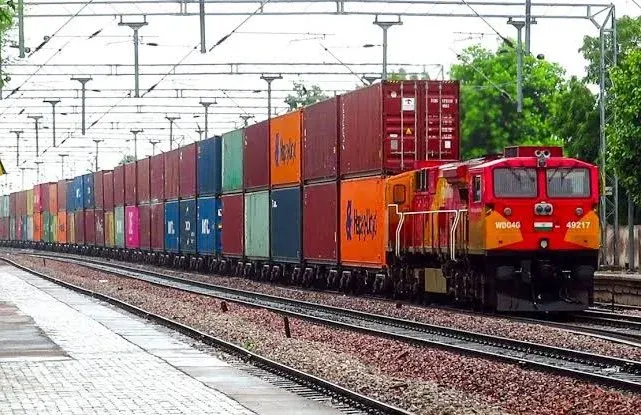
The Sealdah Division of Eastern Railway (ER) has deployed 20 Ultrasonic Flaw Detection (USFD) machines across its 1,375 track km network in Kolkata to detect hidden rail defects before they escalate into fractures capable of derailing trains. The move marks a significant upgrade in proactive track safety for one of Indian Railways' busiest divisions, which serves nearly 1.5 to 1.8 million passengers daily.
What USFD Technology Does
USFD is a non-destructive testing method that uses ultrasonic waves to identify internal flaws in rails and welds — defects invisible to the naked eye that can silently worsen under traffic load and temperature stress. Track fractures are particularly common during winter months in the region, when temperature fluctuations cause rail contraction. Physical inspection alone cannot catch these hidden cracks before they become dangerous.
Of the 20 machines deployed, 10 are dedicated to rail testing and the remaining 10 focus exclusively on weld inspection. The division's track comprises 761.24 km of 60 kg rails and 613.76 km of 52 kg rails, each with different load tolerances and testing requirements.
Digital Backbone: TMS and B-Scan Integration
To eliminate human error and ensure no section is overlooked, the entire testing programme is integrated with the Track Management System (TMS) software. TMS automatically schedules inspections based on annual traffic measured in Gross Million Tonnes (GMT) and rail specifications, issuing reminders and alerts to field teams.
'Immediately after testing, operators upload digital B-Scan reports directly from the field into the TMS for real-time monitoring. All reports are securely archived for up to three months, ensuring transparency and easy review,' a senior ER official said.
A two-layer verification system adds further rigour: divisional supervisors independently re-examine uploaded B-Scan data to catch subtle defects that field operators may have missed.
Testing Frequency Calibrated to Traffic Load
Testing intervals are not uniform — they are calibrated to the intensity of track usage. Light-traffic routes are tested once every two years, while heavily loaded routes carrying more than 80 GMT annually are inspected every 20 days. Every weld undergoes an immediate initial test upon installation, followed by structured periodic checks thereafter.
What the Divisional Railway Manager Said
Rajeev Saxena, Divisional Railway Manager, Sealdah, said passenger safety remains the division's foremost priority. 'By combining the expertise of our field operators with USFD machines and smart digital monitoring like TMS and B-Scan analysis, Sealdah Division ensures robust track health and reliable train services every single day,' he said.
Scale of Operations at Sealdah
The Sealdah Division is among the most heavily trafficked in the Indian Railways network. Beyond suburban services connecting Kolkata to the northern and southern districts of West Bengal, the division operates premium trains including the Rajdhani and Duronto, and provides connectivity to north Bengal through services such as the heritage Darjeeling Mail. The sheer passenger volume makes proactive track maintenance not just an operational priority but a public safety imperative.
With the USFD rollout now fully operational, the division is expected to further reduce the risk of track-related incidents on one of the country's most critical rail corridors.
Point of View
But the real test is consistency of execution on a network this dense. Sealdah's 1,375 km carries some of the highest suburban traffic density in India, and the 20-day inspection cycle on heavy-load corridors is aggressive — the question is whether staffing and machine availability can sustain it year-round, including during monsoon disruptions. Integrating B-Scan data with TMS is a genuine step forward, but archiving reports for only three months limits long-term trend analysis that could predict failure-prone zones before incidents occur. Indian Railways' safety record has improved, but high-passenger-density divisions like Sealdah are where the margin for error is smallest.
NationPress
9 Oct 2026
Frequently Asked Questions
What is USFD technology and why is Eastern Railway using it?
Ultrasonic Flaw Detection (USFD) is a non-destructive testing method that uses ultrasonic waves to identify hidden internal defects in rails and welds before they become dangerous fractures. Eastern Railway's Sealdah Division is using it to proactively detect flaws that physical inspection cannot catch, reducing the risk of derailments on a network serving 1.5–1.8 million passengers daily.
How many USFD machines has the Sealdah Division deployed?
The Sealdah Division has deployed 20 USFD machines in total — 10 dedicated to rail testing and 10 to weld inspection — covering its entire 1,375 track km network.
How often are Sealdah's tracks tested using USFD machines?
Testing frequency is calibrated to traffic load. Heavily used routes carrying over 80 Gross Million Tonnes annually are inspected every 20 days, while light-traffic routes are tested once every two years. Every weld is also tested immediately upon installation.
What is the Track Management System (TMS) and how does it support safety?
The Track Management System (TMS) is software that automates inspection scheduling based on annual traffic volume and rail specifications. Field operators upload B-Scan reports directly into TMS from the field for real-time monitoring, and divisional supervisors conduct a secondary review to catch any missed defects. Reports are archived for three months.
Why is track safety especially critical for the Sealdah Division?
Sealdah is one of the busiest divisions in Indian Railways, handling 1.5–1.8 million passengers daily across suburban services, premium trains like the Rajdhani and Duronto, and long-distance services such as the Darjeeling Mail. The high traffic density makes undetected rail defects a serious public safety risk, particularly during winter when temperature fluctuations increase the likelihood of track fractures.