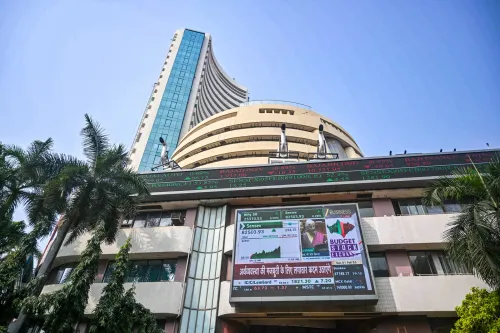
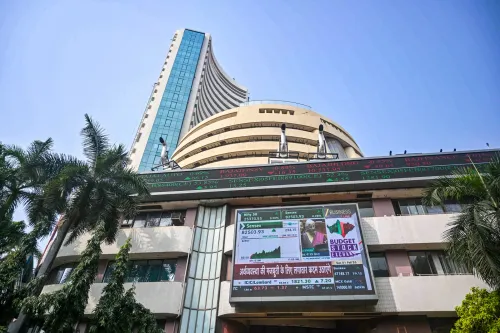
Sensex, Nifty slide as Brent crude tops $96 on West Asia tensions

Synopsis
Brent crude topping $96 a barrel — driven by Houthi attacks on Saudi tankers in the Red Sea — dragged Indian equities lower at the open on 23 July, with Oil & Gas stocks bearing the brunt. Analysts warn India's macro vulnerability to high oil prices is back in focus, even as some see the dip as a long-term buying opportunity.
Key Takeaways
Sensex opened at 76,515.10 , down 239.95 points (0.31%) , on 23 July .
Nifty opened at 23,904.80 , slipping 91.45 points (0.38%) .
Nifty Oil & Gas was the worst-performing sector, falling nearly 1 per cent .
Brent crude climbed 2.57 per cent to above $96 per barrel ; WTI gained over 2 per cent to $88.67 .
Dr Reddy's , IndiGo , Infosys , Bajaj Finance , Cipla , Tata Steel , and L&T fell up to 4 per cent .
Analysts view the correction as a potential accumulation opportunity for long-term investors in quality growth stocks.
BSE Sensex and NSE Nifty opened sharply lower on Thursday, 23 July, as surging crude oil prices and escalating West Asia geopolitical tensions rattled domestic equity markets. The Sensex opened at 76,515.10, down 239.95 points or 0.31 per cent, while the Nifty started the session at 23,904.80, slipping 91.45 points or 0.38 per cent.
Sectors Under Pressure
Nifty Oil & Gas was the worst-hit sector, declining nearly 1 per cent at the open. It was followed by Nifty Pharma, Nifty Realty, Nifty PSU Bank, Nifty 500 Healthcare, Nifty Cement, and Nifty Private Bank, all of which traded in the red. Nifty FMCG and Nifty MidSmall IT & Telecom bucked the trend, managing to hold in positive territory.
Top Losers on Nifty
Among individual stocks, Dr Reddy's Laboratories, IndiGo, Infosys, Bajaj Finance, Cipla, Tata Steel, and Larsen & Toubro were the top laggards, falling up to 4 per cent in early trade.
What Is Driving the Selloff
According to market experts, the Houthis' aggressive entry into the Iran-US conflict — specifically, attacks on Saudi Arabian tankers in the Red Sea — has intensified the West Asia crisis and pushed Brent crude prices sharply higher. International benchmark Brent crude climbed 2.57 per cent to trade above $96 per barrel, while US West Texas Intermediate (WTI) crude gained more than 2 per cent to $88.67 per barrel.
'When Brent crude trades above $95 a barrel, as it is now, it is bound to have a sentimental impact on the Indian market. India's vulnerability to high oil prices is once again becoming a macro concern,' market experts noted. Analysts believe the negative sentiment is likely to keep stock prices largely subdued in the near term.
Global Market Cues
Across Asia, markets were mixed. Japan's Nikkei traded marginally higher, while Hong Kong's Hang Seng and South Korea's KOSPI surged by nearly 3 per cent. Taiwan's Weighted Index declined around 1 per cent, and Singapore's Straits Times slipped 0.8 per cent. In the US, the S&P 500 ended 0.14 per cent lower and the Nasdaq fell 0.57 per cent in the previous session.
Outlook for Investors
Despite the bearish near-term sentiment, analysts see the current correction as an opportunity for long-term investors to gradually accumulate high-quality stocks in growth segments at attractive valuations. The trajectory of crude oil prices and any further escalation in West Asia will remain the key variables to watch in the sessions ahead.
Point of View
India's equity market re-learns the same lesson: the economy's oil import bill is a structural vulnerability that no amount of domestic growth momentum fully offsets. The Houthi escalation in the Red Sea is a reminder that West Asia risk is not a tail event for Indian markets — it is a recurring macro shock. What is underreported is the sectoral asymmetry: while Oil & Gas and aviation absorb the direct hit, the broader inflation pass-through to consumers could yet pressure RBI's rate-cut calculus. The FMCG and mid-cap IT resilience today looks fragile if crude stays elevated beyond a fortnight.
NationPress
21 Oct 2026
Frequently Asked Questions
Why did Sensex and Nifty fall on 23 July?
Sensex and Nifty opened lower on 23 July due to surging crude oil prices and escalating West Asia tensions. Houthi attacks on Saudi Arabian tankers in the Red Sea pushed Brent crude above $96 a barrel, dampening investor sentiment across domestic equity markets.
How much did Sensex and Nifty fall at open?
The Sensex opened down 239.95 points (0.31%) at 76,515.10, while the Nifty slipped 91.45 points (0.38%) to 23,904.80 at the start of Thursday's session.
Which sectors were worst hit by the market fall?
Nifty Oil & Gas was the worst performer, falling nearly 1 per cent. Nifty Pharma, Nifty Realty, Nifty PSU Bank, Nifty 500 Healthcare, Nifty Cement, and Nifty Private Bank also declined. Nifty FMCG and Nifty MidSmall IT & Telecom traded in positive territory.
How high did Brent crude rise and why?
Brent crude climbed 2.57 per cent to trade above $96 per barrel on the back of Houthi attacks on Saudi Arabian tankers in the Red Sea, which intensified the broader Iran-US conflict in West Asia. WTI crude also gained over 2 per cent to $88.67 per barrel.
Should investors buy during this market correction?
Market analysts suggest the current dip may present an opportunity for long-term investors to gradually accumulate high-quality stocks in growth segments at relatively attractive valuations. However, they caution that near-term sentiment is likely to remain subdued as long as crude prices stay elevated and West Asia tensions persist.