Amit Shah: Kashmir, Northeast, Left-wing extremism hotspots now peaceful
Synopsis
Home Minister Amit Shah used Police Commemoration Day to declare three of India's longest-running internal security crises — Kashmir, the Northeast, and Left-wing extremism — effectively resolved, and unveiled a new national goal: a drug-free India by 31 December 2029, framing it as an even bigger challenge than the three hotspots combined.
Key Takeaways
Home Minister Amit Shah on 21 October 2026 declared Kashmir , the Northeast , and Left-wing extremism zones all peaceful at Police Commemoration Day in New Delhi .
Shah credited the CAPF and the CoBRA Battalion for 'completely eliminating' the Naxal problem , which had persisted across states for five decades .
The Union Home Ministry has announced a united campaign against drugs lasting three-and-a-half years , targeting a drug-free India by 31 December 2029 .
Shah described the drug menace as 'even more important' to address than the three long-standing security hotspots.
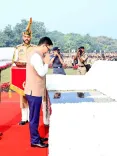
Tributes were paid to police martyrs by the Shahid Pushtika Rakshak Toli ; CRPF DG Gyanendra Pratap Singh briefed the Home Minister before a motorcycle rally was flagged off.
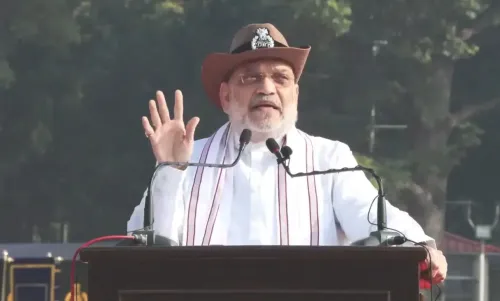
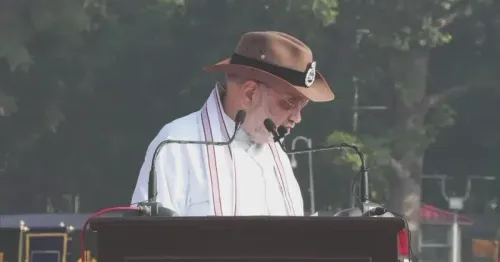
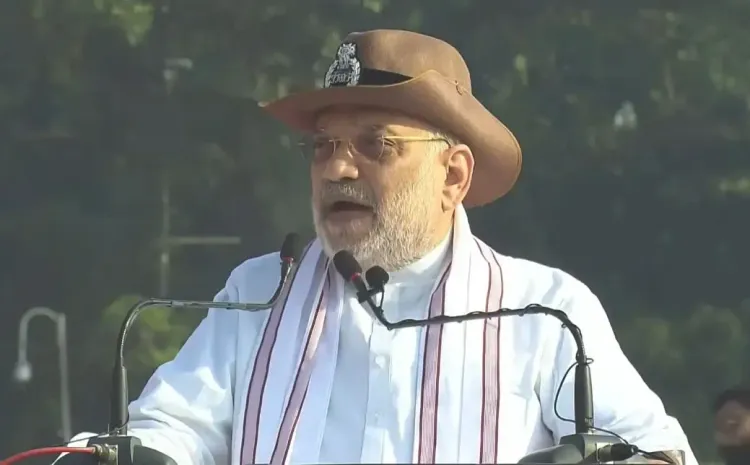
Union Home Minister Amit Shah on Wednesday, 21 October 2026 declared that India has made decisive progress on three of its most persistent internal security challenges — Kashmir, the Northeast, and Left-wing extremism — asserting that all three regions, once considered critical hotspots, are now peaceful and positioned for development. He was speaking at the Police Commemoration Day event in New Delhi.
Three Decades of Conflict, Now Calm
Addressing the gathering, Shah said, 'In recent years, the country has faced several challenges, including three major problems that we had endured for decades and which were considered critical hotspots for our internal security: Kashmir, the Northeast and the entire region affected by Left-wing extremism. Today, all three hotspots are peaceful, an atmosphere conducive to development has emerged, and these regions are ready to compete with the rest of the country in development.'
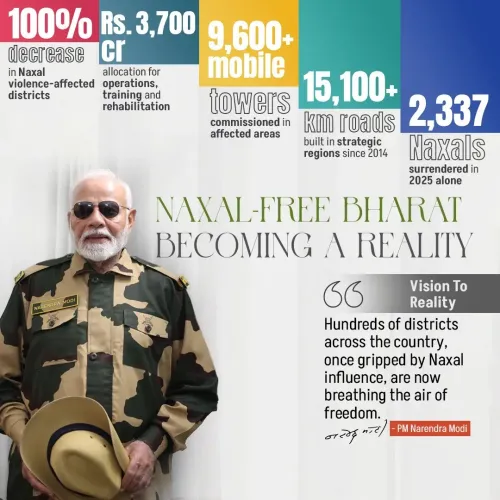
On Kashmir, Shah said terrorism had been 'largely' curbed. On the Northeast, he credited several peace agreements and the laying down of arms by thousands of militants. On Naxalism, he declared significant success in 'completely eliminating' the problem, which had spread across multiple states over five decades.
Shah specifically commended the Central Armed Police Forces (CAPF) and the CoBRA Battalion for their role in ending Naxal violence, describing their contribution as pivotal.
Tributes to Martyrs and CAPF Personnel
The event saw tributes paid to fallen personnel by the Shahid Pushtika Rakshak Toli, a ceremonial police squad responsible for safeguarding and presenting the Martyrs' Book during commemorative services. CRPF Director General Gyanendra Pratap Singh briefed the Home Minister ahead of the flagging off of a motorcycle rally from the national capital.
Shah also made a point of thanking CAPF personnel deployed at India's borders and across the country's interior, noting their round-the-clock vigil during elections, festivals, protests, and security operations. 'Whether it is protecting the country's democracy or ensuring the smooth conduct of democratic processes, we cannot imagine doing so without the CAPF,' he said.
Drug-Free India by 2029: A New National Target
Shah announced a major new security priority: a concerted, three-and-a-half-year campaign against drugs, to run through the remainder of 2026 and across 2027, 2028, and 2029, with a stated goal of making India drug-free by 31 December 2029. He described this as a directive from the Union Home Ministry.
'This is a very important goal for us, even more important than tackling the three hotspots. The drug problem hollows out our future generations, places an undue burden on our economy and provides financial support to organisations engaged in anti-national activities,' Shah said.
He called upon police forces across the country to work towards the target set by Prime Minister Narendra Modi, framing the drug menace as simultaneously a public health, economic, and national security threat.
Context and Significance
The claims on all three fronts carry political weight. In Kashmir, militant violence has declined significantly since the abrogation of Article 370 in 2019, though security forces continue to conduct operations in the Valley. In the Northeast, a series of peace deals — including agreements with Bodo and NLFT factions — have reduced armed group activity substantially, though some outfits remain outside the peace process. On Naxalism, government data indicates a steep fall in incidents and casualties over the past decade; security analysts note that Left-wing extremist influence has shrunk from over 200 districts at its peak to a far smaller geographic footprint. The drug-free India by 2029 pledge is the most forward-looking commitment Shah made on Wednesday and will face scrutiny on enforcement capacity and coordination between state police forces and central agencies.
Point of View
And 'eliminated' is a higher bar than reduced. The more substantive announcement is the drug-free India pledge by 2029: it sets a hard, measurable deadline tied to Prime Minister Modi, which means accountability is now baked in. Whether state police forces — many stretched thin and lacking forensic infrastructure — can execute a coordinated national anti-narcotics drive in three-and-a-half years is the real question mainstream coverage may underplay.
NationPress
21 Oct 2026
Frequently Asked Questions
What did Amit Shah say about Kashmir, Northeast and Naxalism at Police Commemoration Day?
Home Minister Amit Shah declared on 21 October 2026 that all three regions — Kashmir, the Northeast, and Left-wing extremism-affected areas — are now peaceful and ready for development. He said terrorism in Kashmir had been largely curbed, the Northeast had moved towards peace through agreements and surrenders, and the Naxal problem had been significantly eliminated after five decades.
What is India's drug-free target announced by Amit Shah?
The Union Home Ministry has set a goal of making India drug-free by 31 December 2029, running a concerted campaign over the remaining months of 2026 and through 2027, 2028, and 2029. Shah called it an even greater priority than the three internal security hotspots, citing the drug problem's impact on future generations, the economy, and anti-national financing.
Which security forces did Amit Shah commend for ending Naxalism?
Shah specifically commended the Central Armed Police Forces (CAPF) and the CoBRA Battalion for their role in tackling and largely eliminating Left-wing extremism, which had spread across several Indian states over five decades.
What is Police Commemoration Day and why is it significant?
Police Commemoration Day is observed annually in India to honour police personnel who died in the line of duty. The event includes tributes by ceremonial squads and serves as a platform for senior government leaders to address the nation's police and paramilitary forces on security priorities.
Why does the drug problem matter to India's internal security according to Amit Shah?
Shah argued that drug trafficking hollows out future generations, burdens the economy, and provides financial resources to anti-national organisations. He framed a drug-free India as a national security imperative, not just a public health goal, calling on all state police forces to follow the Home Ministry's roadmap.