Amit Shah launches ₹815 crore projects in Gujarat: bridges, barrages, health centres
Synopsis
Amit Shah virtually flagged off over ₹815 crore in projects across Gandhinagar and Sabarkantha on 21 July — the headline item being two Sabarmati barrages worth ₹716 crore that promise to store river water for eight months and lift groundwater levels by five to ten feet across North Gujarat, a region that has long battled water stress.
Key Takeaways
Amit Shah virtually inaugurated and laid foundation stones for projects worth over ₹815 crore in Gandhinagar and Sabarkantha districts on 21 July .
The ₹89 crore Aluva–Sadra bridge over the Sabarmati River was inaugurated, boosting connectivity for residents and pilgrims.
Foundation stones were laid for the Hirak barrage (₹413.63 crore) and Rakhiyal barrage (₹302.51 crore) — a combined ₹716.14 crore water infrastructure push.
The barrages are designed to store river water for up to eight months and raise groundwater levels by five to ten feet .
A new Community Health Centre at Charada will serve over one lakh people with dialysis, an operation theatre, and a NICU.
Free cochlear implant surgeries worth ₹8–10 lakh per procedure are now available for children through Civil Hospitals in Gujarat.
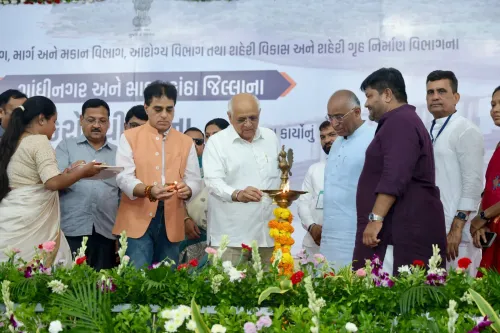
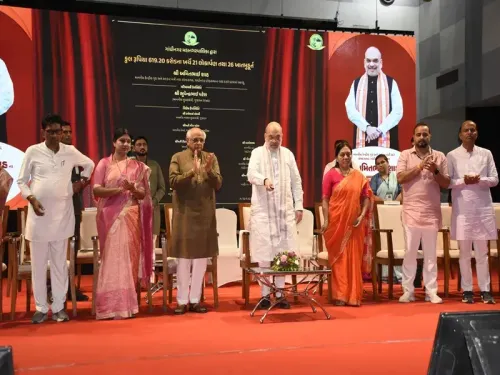
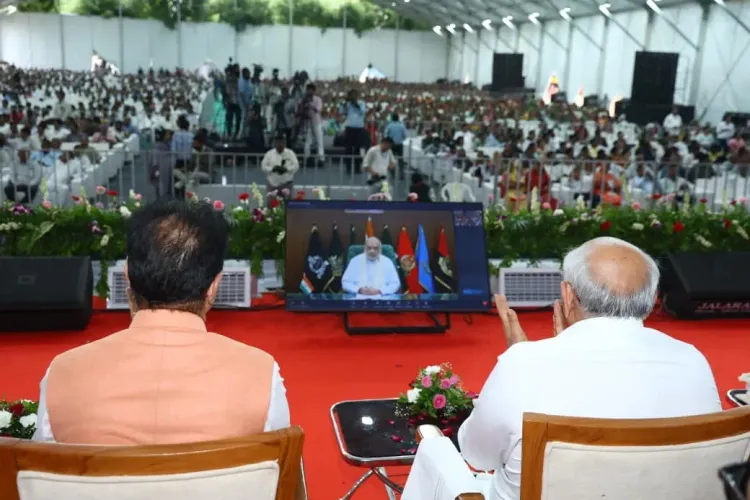
Union Home and Cooperation Minister Amit Shah on Tuesday, 21 July virtually inaugurated and laid foundation stones for development projects worth over ₹815 crore across Gandhinagar and Sabarkantha districts of Gujarat, covering healthcare infrastructure, transport connectivity, water conservation, and public amenities. The programme spanned constituencies in Mansa and Prantij, with the bulk of the investment directed at reviving the Sabarmati River corridor.
Key Projects Inaugurated
The centrepiece of Tuesday's event was the inauguration of the ₹89 crore Aluva–Sadra bridge over the Sabarmati River, which is expected to improve connectivity for residents, students, and pilgrims visiting the Jakshini Mata Temple, while also supporting local tourism. A new Community Health Centre at Charada was also inaugurated, equipped with 24-hour dialysis services, an operation theatre, a neonatal intensive care unit (NICU), and other advanced medical facilities — services that will reportedly be accessible to more than one lakh people in the surrounding area.
Shah also inaugurated a community hall at Raniyapur in Mansa, an elevated service reservoir (ESR) water tank at Alkapuri, and the new Sanskar Bhavan Trust building at Bapupura village, the latter named after Padma Shri and Jnanpith Award recipient Raghuveer Chaudhari. Paying tribute to the noted author, Shah said: 'The noted author, despite emerging from a family of farmers and livestock rearers, remained humble throughout his life. The Sanskar Bhavan named after Chaudhari would become a source of inspiration for future generations.'
Sabarmati Barrages: A ₹716 Crore Water Push
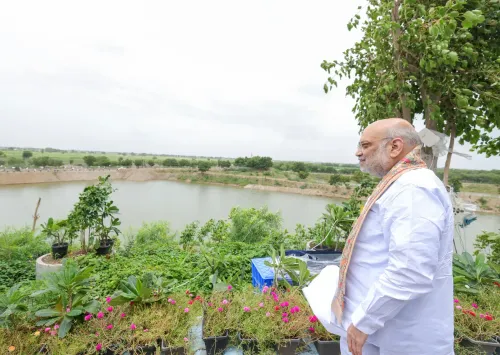
The single largest component of the package was the laying of foundation stones for two new barrages on the Sabarmati River — the ₹413.63 crore Hirak barrage and the ₹302.51 crore Rakhiyal barrage — together accounting for an outlay of ₹716.14 crore. According to Water Resources Minister Ishwarsinh Patel, the barrages are part of a broader effort to rejuvenate the Sabarmati between the Dharoi Dam and the Gulf of Khambhat.
Shah said the two barrages would store river water for up to eight months, providing a long-term solution to irrigation and drinking water needs in areas including Charada, Mansa, and Ridrol. The projects are also expected to raise groundwater levels by five to ten feet, benefiting farmers and livestock rearers, and supporting tourism and wildlife conservation in the region.
What the Government Said
Addressing the gathering virtually, Shah said the development momentum initiated in Gujarat under Prime Minister Narendra Modi had continued under Chief Minister Bhupendra Patel. He noted that development works worth around ₹817 crore had been dedicated to the public across the Mansa and Prantij constituencies.
Chief Minister Bhupendra Patel said Gujarat had remained at the forefront of implementing Modi's vision of a 'developed India', recording significant progress over the past 12 years in infrastructure, rural development, education, healthcare, and connectivity. 'Development is not limited to brick-and-mortar structures, but is a powerful medium for bringing convenience, security and prosperity into people's lives,' Patel said.
Minister of State for Health Praful Pansheriya said new primary and community health centres had been constructed at a cost of ₹1.50 crore, while free cochlear implant surgeries — costing between ₹8 lakh and ₹10 lakh per procedure — were now available for hearing and speech-impaired children through Civil Hospitals. He added that a cleanliness drive across more than 12,000 hospitals had brought 1,800 rooms back into active patient use.
Healthcare and Agricultural Schemes Highlighted
An advanced Civil Hospital is also reportedly under construction in the Mansa region to reduce the need for residents to travel to Gandhinagar for treatment, intended to function in coordination with nearby Community Health Centres. Pansheriya noted that under the SAUNI Yojana and the world's largest underground pipeline network, water supply had been extended to farmers and livestock rearers in Saurashtra and Kutch. He added that farmers who once borrowed at interest rates of 18 per cent could now access loans of up to ₹3 lakh at zero per cent interest, while electricity connections previously costing ₹1.77 lakh were being provided for ₹100 and ₹1,350 in tribal areas.
Chief Minister Patel also highlighted a large-scale tree plantation campaign in the Gandhinagar Lok Sabha constituency, noting that around 1.25 crore trees had recently been planted, with lakhs more planted within a single hour using the Miyawaki method.
What Comes Next
With the Hirak and Rakhiyal barrages now at the foundation stage, implementation timelines and tendering processes will be closely watched. The broader Sabarmati rejuvenation plan, if executed on schedule, could significantly alter water availability patterns across North Gujarat — a region that has historically faced acute groundwater stress.
Point of View
And storage infrastructure alone cannot substitute for demand-side reform in agricultural water use. The claim that barrages will raise groundwater by five to ten feet is a projection, not a guarantee, and past Sabarmati rejuvenation efforts have delivered uneven results downstream. What is notable here is the concentration of high-value projects in constituencies that fall within Shah's own Gandhinagar Lok Sabha seat — a pattern that, while not unusual in Indian infrastructure politics, warrants transparency on project selection criteria. The health infrastructure announcements, including the Charada NICU and cochlear implant access, are the less-scrutinised but arguably more durable wins in Tuesday's package.
NationPress
20 Oct 2026
Frequently Asked Questions
What projects did Amit Shah inaugurate in Gujarat on 21 July?
Amit Shah virtually inaugurated and laid foundation stones for development projects worth over ₹815 crore in Gandhinagar and Sabarkantha districts on 21 July. Key projects included the ₹89 crore Aluva–Sadra bridge, a Community Health Centre at Charada, and foundation stones for two Sabarmati River barrages worth ₹716.14 crore.
What are the Hirak and Rakhiyal barrages on the Sabarmati River?
The Hirak barrage (₹413.63 crore) and Rakhiyal barrage (₹302.51 crore) are two water infrastructure projects for which foundation stones were laid on 21 July. Together costing ₹716.14 crore, they are designed to store Sabarmati River water for up to eight months to meet irrigation and drinking water needs across North Gujarat.
How will the Charada Community Health Centre benefit local residents?
The new Community Health Centre at Charada will provide 24-hour dialysis services, an operation theatre, a neonatal intensive care unit (NICU), and other advanced medical facilities to more than one lakh people in the surrounding area. It is part of a broader effort to reduce the need for patients to travel to Gandhinagar for specialist care.
Who is Raghuveer Chaudhari and why was a building named after him?
Raghuveer Chaudhari is a Padma Shri and Jnanpith Award-winning author from Gujarat. The Sanskar Bhavan Trust building inaugurated at Bapupura village was named in his honour; Shah described it as a future source of inspiration for generations, noting Chaudhari's humble origins in a farming and livestock-rearing family.
What is the SAUNI Yojana mentioned at the Gujarat event?
The SAUNI Yojana is a Gujarat government water supply scheme that, along with what officials describe as the world's largest underground pipeline network, extends water access to farmers and livestock rearers in Saurashtra and Kutch. The scheme was highlighted at Tuesday's event as an example of rural water infrastructure delivery under the current government.