Amit Shah: New criminal laws built on technology, timeline, trust
Synopsis
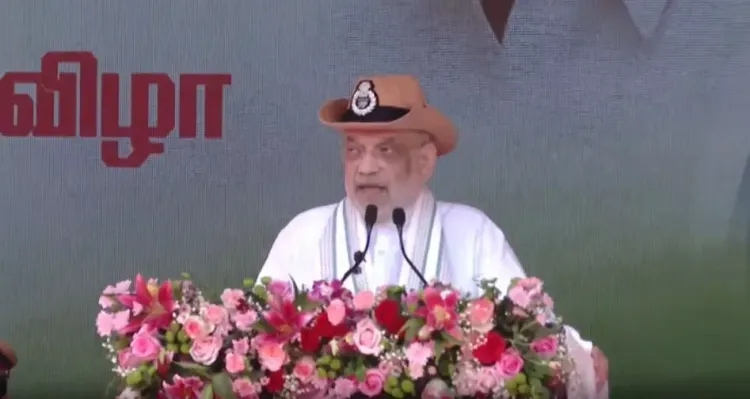
Amit Shah used the President's Colour ceremony in Puducherry to frame India's sweeping criminal law overhaul around three pillars — technology, timeline, and trust — while the Puducherry Police became only the 18th force in the country to receive the nation's highest police honour, despite a strength of under 5,000.
Key Takeaways
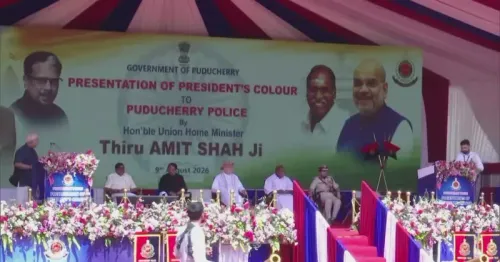
Home Minister Amit Shah addressed the President's Colour ceremony for the Puducherry Police on 9 August at the Police Training School, Gorimedu .
Shah said the three new criminal laws are built on technology , timeline , and trust , replacing the colonial-era legal framework.
The Bharatiya Nyaya Sanhita , Bharatiya Nagarik Suraksha Sanhita , and Bharatiya Sakshya Adhiniyam replaced the IPC, CrPC, and Indian Evidence Act respectively.
Puducherry is now the 18th State or Union Territory to receive the President's Colour — the highest honour for a police force.
The Puducherry Police has a strength of fewer than 5,000 personnel .
Shah was also scheduled to flag off a Har Ghar Tiranga Yatra in Puducherry the same day.
Union Home Minister Amit Shah on Sunday, 9 August said the three new criminal laws enacted by the Narendra Modi government rest on three foundational pillars — technology, timeline, and trust — and are designed to deliver faster, more effective justice to every citizen. Shah made the remarks while addressing a ceremony at the Police Training School ground in Gorimedu, Puducherry, after presenting the President's Colour to the Puducherry Police.
A Break from the Colonial Justice Framework
Shah described the new legal framework as a decisive departure from India's colonial-era criminal justice architecture. He said that embedding technology into investigative and judicial procedures, and fixing clear timelines at every stage, would make the system more efficient, transparent, and citizen-centric. Building public trust in the justice delivery mechanism was an equally non-negotiable component, he added.
The three laws — the Bharatiya Nyaya Sanhita, the Bharatiya Nagarik Suraksha Sanhita, and the Bharatiya Sakshya Adhiniyam — replaced the Indian Penal Code, the Code of Criminal Procedure, and the Indian Evidence Act respectively, completing a wholesale overhaul of the country's criminal statutes.
Puducherry Police Receives President's Colour
Congratulating the force on the honour, Shah called it one of the proudest moments in the history of any disciplined police organisation. He noted that despite a strength of fewer than 5,000 personnel, the Puducherry Police shoulder the responsibility of maintaining law and order, ensuring internal security, and protecting the Union Territory and its residents.
With this conferment, Puducherry has become the 18th State or Union Territory in the country to receive the prestigious recognition. The President's Colour is widely regarded as the highest honour that can be bestowed upon a police force in acknowledgement of its distinguished service and professional excellence.
Dignitaries Present at the Ceremony
The event was attended by Lieutenant Governor K. Kailashnathan, Chief Minister N. Rangasamy, state Home Minister A. Namassivayam, Director General of Police Shalini Singh, and other senior officials.
What Comes Next for Shah in Puducherry
Shah was also scheduled to flag off a Har Ghar Tiranga Yatra at the Muruga Theatre Signal in Puducherry later the same day, as part of a broader drive promoting the national flag and civic participation ahead of Independence Day. The visit underscores the Centre's focus on Puducherry ahead of the patriotic observance, with the criminal law reforms serving as a key policy message for the Union Territory's law enforcement community.
Point of View
Timeline, and trust. The colonial-era critique is a well-worn BJP narrative, but the harder question is implementation: defined timelines mean little without court capacity and police infrastructure to match. Puducherry, with under 5,000 officers managing a Union Territory, is a pointed reminder of the resource gap between legislative ambition and ground reality. The President's Colour ceremony gave Shah a disciplined, apolitical platform to push a message that will travel well ahead of Independence Day.
NationPress
23 Sept 2026
Frequently Asked Questions
What are the three new criminal laws Amit Shah referred to?
The three laws are the Bharatiya Nyaya Sanhita, the Bharatiya Nagarik Suraksha Sanhita, and the Bharatiya Sakshya Adhiniyam. They replaced the Indian Penal Code, the Code of Criminal Procedure, and the Indian Evidence Act respectively, overhauling India's colonial-era criminal justice statutes.
What are the three pillars of the new criminal laws according to Amit Shah?
Shah said the new laws are founded on technology, timeline, and trust. He argued that greater use of technology, clearly defined timelines for investigation and judicial procedures, and strengthened public trust would make the criminal justice system more efficient and citizen-centric.
What is the President's Colour and why did Puducherry receive it?
The President's Colour is the highest honour that can be conferred on a police force in India, recognising distinguished service and professional excellence. Puducherry received it on 9 August, becoming the 18th State or Union Territory in the country to earn the distinction.
Who attended the President's Colour ceremony in Puducherry?
The ceremony was attended by Lieutenant Governor K. Kailashnathan, Chief Minister N. Rangasamy, state Home Minister A. Namassivayam, Director General of Police Shalini Singh, and other senior officials, in addition to Home Minister Amit Shah.
What else did Amit Shah do during his Puducherry visit?
Shah was scheduled to flag off a Har Ghar Tiranga Yatra at the Muruga Theatre Signal in Puducherry on the same day, as part of events promoting the national flag ahead of Independence Day.