Shinde Sena moves cautiously as SC anti-defection ruling complicates Sena (UBT) MP poaching

Synopsis
The Shinde Sena wants Uddhav's MPs — but a Supreme Court ruling from the 2022 Shiv Sena split has made that far harder than a simple headcount. Even if six of nine Sena (UBT) MPs defect, they need the original party organisation's backing to claim merger protection. Without it, disqualification looms — and the Trinamool precedent shows the risk is real.
Key Takeaways
Shinde Sena is cautiously evaluating the possible defection of MPs from Sena (UBT) , which holds nine Lok Sabha seats .
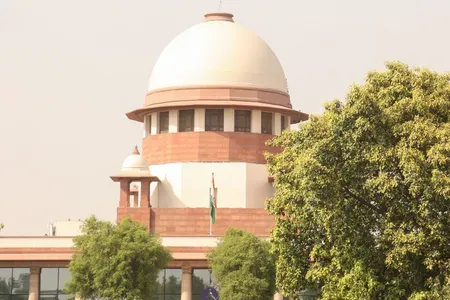
A Supreme Court Constitution Bench verdict of May 2023 , delivered during the Shiv Sena split case , ruled that the original political party's decision is decisive in any merger — not just parliamentary numbers.
Under the Tenth Schedule , a valid merger requires both a party-level decision and support from at least two-thirds of the parliamentary wing.
Legal experts Abhishek Manu Singhvi and PDT Achary warn that a split confined only to the parliamentary wing may not meet the legal threshold.
20 of 28 Trinamool Congress rebel MPs merged with a smaller party to seek protection — yet face disqualification petitions regardless.
Skipping party meetings outside Parliament does not attract disqualification; violating a party whip inside the House does.
The Eknath Shinde-led Shiv Sena is treading carefully over the prospect of inducting Members of Parliament from the rival Uddhav Thackeray-led Shiv Sena (UBT), wary of a landmark Supreme Court ruling that significantly raises the legal bar for any such move. The caution, sources indicate, reflects a calculated reading of constitutional constraints rather than a lack of political intent.
The Supreme Court Ruling That Changed the Game
The legal complexity traces back to the Shiv Sena split of 2022, when Shinde's rebellion triggered a prolonged constitutional battle. A Constitution Bench of the Supreme Court, headed by then Chief Justice of India D.Y. Chandrachud, delivered a pivotal verdict in May 2023 that drew a clear distinction between the original political party and its legislative or parliamentary wing.
Crucially, the bench held that the original political party's decision is decisive in any merger process — not merely the numerical strength of the breakaway lawmakers. This interpretation has fundamentally altered how parties calculate the risk of engineering defections.
Why Two-Thirds Is Not Enough
The Sena (UBT) currently holds nine Lok Sabha seats. Under the Tenth Schedule of the Constitution — the anti-defection law — a merger requires two conditions to be met simultaneously: the original political party must formally decide to merge with another party, and at least two-thirds of its legislative or parliamentary wing must endorse that decision.
According to legal experts, including senior advocate Abhishek Manu Singhvi and former Lok Sabha Secretary General PDT Achary, even if six or seven of the nine Sena (UBT) MPs were to break away, they cannot function as an independent bloc or claim automatic protection from disqualification. A split confined to the parliamentary wing alone — without a corresponding shift in the party's organisational structure — may not clear the legal threshold.
This means any breakaway group would need to formally merge with the Shinde-led Shiv Sena or another recognised political party, and that merger would require the backing of the original party organisation — something the Thackeray camp is unlikely to sanction.
The Trinamool Precedent
The significance of this legal position was underscored by a recent development in a different party. When 20 of the 28 Trinamool Congress MPs who rebelled chose to merge with a smaller regional party rather than operate as a standalone group, it reflected precisely the kind of legal caution experts now advocate. Despite completing that merger, the Trinamool Congress is reportedly preparing disqualification petitions against the rebel MPs — signalling that even a formal merger does not guarantee immunity.
What Triggers Disqualification — and What Does Not
Legal experts point out a critical nuance: merely skipping a party meeting held outside Parliament does not ordinarily attract disqualification under the Tenth Schedule. However, violating a party whip or acting against the party line during proceedings inside the House can trigger immediate disqualification action.
This distinction matters because it determines how much political signalling a dissatisfied MP can engage in before crossing a legal line. The Shinde camp is reportedly factoring in these thresholds as it evaluates its options.
What Happens Next
With the Maharashtra political landscape already shaped by the fallout of the 2022 split, any fresh attempt to peel away Sena (UBT) MPs carries significant legal and reputational risk. The Shinde faction appears to be waiting for a configuration — whether a change in the Sena (UBT)'s organisational standing or a broader political realignment — that would provide firmer legal cover before making a move.
Point of View
Not just its parliamentary one. Until that happens, any MP-poaching attempt is legally precarious. The Trinamool episode reinforces the point: even a technically compliant merger does not guarantee immunity, and disqualification proceedings can proceed regardless.
NationPress
18 Sept 2026
Frequently Asked Questions
Why is the Shinde Sena moving cautiously on inducting Sena (UBT) MPs?
The Shinde Sena is cautious because a Supreme Court Constitution Bench ruling from May 2023 — arising from the Shiv Sena split case — held that a valid merger under the anti-defection law requires the original political party to sanction the merger, not just a two-thirds majority of the parliamentary wing. Without that organisational backing, defecting MPs risk disqualification.
What does the Supreme Court's May 2023 verdict say about mergers under the anti-defection law?
The Constitution Bench, headed by then Chief Justice D.Y. Chandrachud, ruled that a valid merger requires two conditions: the original political party must decide to merge, and at least two-thirds of its legislative or parliamentary wing must support that decision. A split confined only to the parliamentary wing, without a corresponding shift in the party organisation, may not meet the legal threshold.
How many Sena (UBT) MPs would need to defect, and would that be enough?
Sena (UBT) holds nine Lok Sabha seats, so at least six MPs would need to defect to meet the two-thirds numerical requirement. However, according to legal experts including Abhishek Manu Singhvi and PDT Achary, that number alone is insufficient — the original party organisation must also sanction the merger for it to be legally valid.
What is the Trinamool Congress precedent and why does it matter?
Twenty of the 28 Trinamool Congress MPs who rebelled chose to merge with a smaller regional party rather than function as an independent group. Despite completing the merger, the Trinamool Congress is reportedly preparing disqualification petitions against them — demonstrating that even a formal merger does not guarantee protection from anti-defection proceedings.
What actions by an MP can trigger disqualification under the Tenth Schedule?
Violating a party whip or acting against the party line during House proceedings can trigger immediate disqualification. However, merely skipping a party meeting held outside Parliament does not ordinarily attract disqualification under the Tenth Schedule.