SC issues notice to six rebel Shiv Sena(UBT) MPs in anti-defection merger case
Synopsis
The Supreme Court has put the Lok Sabha Speaker on notice over his recognition of six rebel Shiv Sena (UBT) MPs merging with the Shinde faction — a move that slashed the Uddhav Thackeray camp's parliamentary strength from nine to three. With Kapil Sibal simultaneously seeking a constitutional re-examination of the Tenth Schedule's merger loophole, this case could redefine how anti-defection law is applied across India.
Key Takeaways
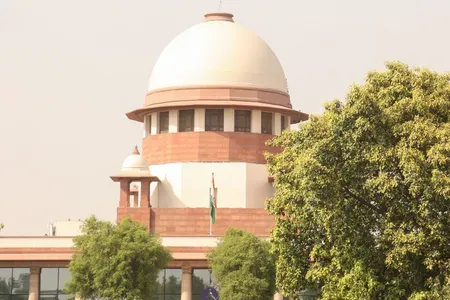
The Supreme Court on 22 July issued notices to Lok Sabha Speaker Om Birla and six rebel Shiv Sena (UBT) MPs over the recognition of their merger with the Shinde-led Shiv Sena .
The bench of Justice P.S.
Narasimha and Justice Alok Aradhe posted the matter for hearing after two weeks ; no stay was granted on the Speaker's order.
The recognition reduced Shiv Sena (UBT)'s Lok Sabha strength from nine MPs to three .
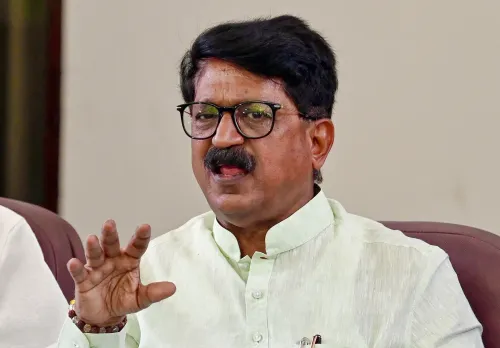
Petitioner Arvind Sawant argues that legislators cannot independently effect a merger under Paragraph 4 of the Tenth Schedule without the original party initiating it.
Senior advocate Kapil Sibal has filed a separate writ petition against the Union of India , seeking a constitutional re-examination of the merger exception under the anti-defection law.
The Supreme Court on Wednesday, 22 July issued notices to the Lok Sabha Speaker's office and six rebel Shiv Sena (UBT) MPs on a petition filed by Shiv Sena (UBT) leader Arvind Sawant, challenging the Speaker's decision to recognise their merger with the Eknath Shinde-led Shiv Sena under the anti-defection law. The court, however, declined to stay the Speaker's order.
What the Court Ordered
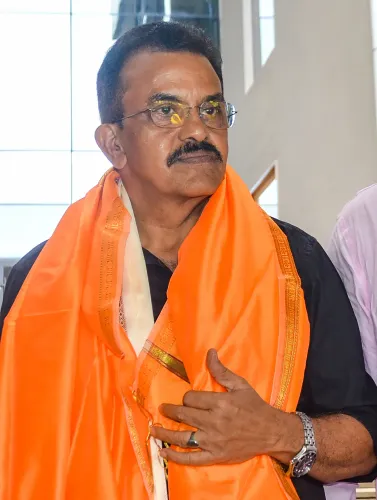
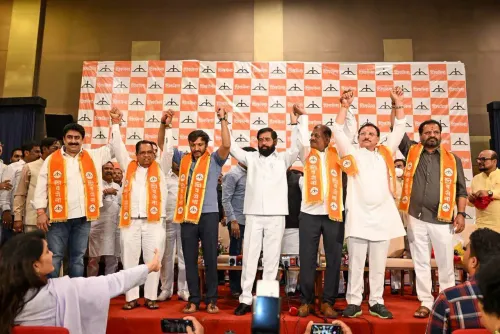
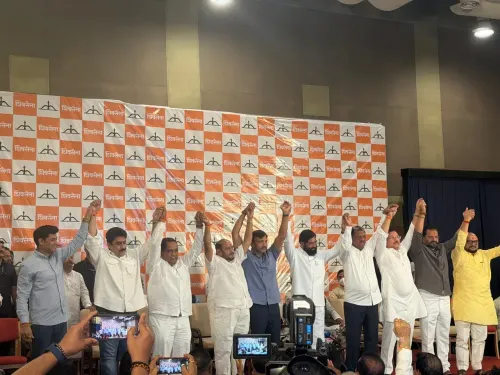
A bench of Justice P.S. Narasimha and Justice Alok Aradhe directed responses from all respondents and listed the matter for further hearing after two weeks. Notices were served on Lok Sabha Speaker Om Birla, the Joint Secretary of the Lok Sabha, and the six MPs: Bhausaheb Waghchaure, Nagesh Patil Ashtikar, Omprakash Raje Nimbalkar, Sanjay Bandu Jadhav, Sanjay Deshmukh, and Sanjay Dina Patil.
Notably, the apex court stopped short of granting interim relief — Speaker Birla's recognition of the merger remains operative for now.
The Core Legal Challenge
Sawant's petition contends that the Speaker's order has gutted Shiv Sena (UBT)'s parliamentary presence, reducing its Lok Sabha strength from nine MPs to three. The legal argument centres on Paragraph 4 of the Tenth Schedule — the constitutional provision governing mergers as an exception to anti-defection disqualification.
Sawant argues that no merger of the original political party was ever initiated or approved by party president Uddhav Thackeray, and that legislators cannot independently engineer a party merger to escape disqualification. The six MPs had approached the Speaker claiming they constituted the requisite two-thirds of the legislature party — a threshold under the Tenth Schedule — and sought recognition of their merger with the Shinde faction.
What Shiv Sena (UBT) Had Argued Before the Speaker
Before Speaker Birla passed his order, the Shiv Sena (UBT) had formally opposed any recognition of the merger, asserting that Paragraph 4 permits legislators only to accept or reject a merger initiated by the original political party — not to independently bring one about. Despite these objections, the Speaker recognised the merger, after which the six MPs ceased to be members of the Shiv Sena (UBT) Parliamentary Party.
Kapil Sibal's Broader Constitutional Challenge
In a parallel development, senior advocate Kapil Sibal has filed a separate writ petition before the Supreme Court challenging the prevailing constitutional interpretation of Paragraph 4 of the Tenth Schedule. Filed against the Union of India, the petition argues that the current reading of the provision allows splinter groups of legislators to sidestep disqualification through mergers, thereby undermining the very purpose of the anti-defection law.
Mentioning the matter before a bench headed by Chief Justice of India Surya Kant, Sibal warned that if the current trend continued, 'the Tenth Schedule will become meaningless.' His petition seeks a fresh constitutional examination of how political mergers are governed under the anti-defection framework.
Why This Case Matters
This dispute is part of the broader Shiv Sena split that has been litigated across courts and constitutional bodies since 2022. The Tenth Schedule has come under repeated scrutiny as successive defection episodes — in Maharashtra, Manipur, and elsewhere — have tested the limits of its merger exception. Critics argue the provision, as currently interpreted, creates a loophole that incentivises organised defection over genuine party mergers. A Supreme Court ruling on the constitutional validity of the Speaker's decision could reset the legal standard governing political mergers across India.
Point of View
But the refusal to stay the Speaker's order is equally telling — it leaves the Shinde faction's parliamentary gains intact while the legal challenge winds through the court. The deeper problem is structural: Paragraph 4 of the Tenth Schedule was designed to accommodate genuine party mergers, not to serve as an escape hatch for organised defections dressed up as mergers. Kapil Sibal's parallel petition targeting the constitutional interpretation of Paragraph 4 is the more consequential filing — if the court takes it up seriously, it could close a loophole that has been exploited in Maharashtra, Manipur, and beyond. The Shiv Sena split has already produced one landmark Supreme Court ruling; a second round may force Parliament to revisit the anti-defection law itself.
NationPress
21 Oct 2026
Frequently Asked Questions
Why did the Supreme Court issue notices in the Shiv Sena (UBT) anti-defection case?
The Supreme Court issued notices after Shiv Sena (UBT) leader Arvind Sawant challenged Lok Sabha Speaker Om Birla's decision to recognise the merger of six rebel MPs with the Eknath Shinde-led Shiv Sena. The petition argues the recognition was unconstitutional under Paragraph 4 of the Tenth Schedule and has reduced the party's Lok Sabha strength from nine to three MPs.
Did the Supreme Court stay the Lok Sabha Speaker's order recognising the merger?
No. While the court issued notices and scheduled a hearing in two weeks, it declined to stay Speaker Om Birla's order. The recognition of the six MPs' merger with the Shinde faction therefore remains in effect for now.
What is Paragraph 4 of the Tenth Schedule and why is it contested?
Paragraph 4 of the Tenth Schedule to the Constitution provides an exception to anti-defection disqualification when a legislative party merges with another party, provided at least two-thirds of its members support the merger. Shiv Sena (UBT) argues that this provision allows only the original political party — not legislators acting independently — to initiate a merger, and that the six MPs' action did not meet this standard.
Who are the six rebel Shiv Sena (UBT) MPs named in the Supreme Court notice?
The six MPs are Bhausaheb Waghchaure, Nagesh Patil Ashtikar, Omprakash Raje Nimbalkar, Sanjay Bandu Jadhav, Sanjay Deshmukh, and Sanjay Dina Patil. They had approached the Lok Sabha Speaker seeking recognition of their merger with the Eknath Shinde-led Shiv Sena, claiming they constituted the requisite two-thirds of the legislature party.
What is Kapil Sibal's separate petition about?
Senior advocate Kapil Sibal has filed a separate writ petition against the Union of India before the Supreme Court, seeking a constitutional re-examination of Paragraph 4 of the Tenth Schedule. He argues that the current interpretation allows splinter groups to escape disqualification through mergers, defeating the purpose of the anti-defection law, and warned Chief Justice Surya Kant that 'the Tenth Schedule will become meaningless' if the trend continues.