Karnataka CM Shivakumar vows to implement socio-economic survey for OBC justice
Synopsis
Karnataka CM D.K. Shivakumar's pledge to implement the state's socio-economic survey is more than a welfare announcement — it is a deliberate political signal on caste census, timed at a national OBC convention, that could reshape the reservation debate in Karnataka and amplify Congress's nationwide caste-count push.
Key Takeaways
Shivakumar committed to implementing Karnataka's socio-economic survey at the 11th National OBC Mahasangh Convention on 7 August in Bengaluru .
He cited Congress leaders Mallikarjun Kharge and Rahul Gandhi as committed to a nationwide caste census .
Two-thirds of Karnataka's cabinet ministers belong to backward classes, scheduled castes/tribes, and minorities, according to Shivakumar.
Backward classes constitute 52 per cent of India's population, the CM noted, calling them the nation's builders.
Shivakumar traced OBC reservation in Karnataka to the era of Nalvadi Krishnaraja Wodeyar and credited the Congress for landmark welfare legislation including the Food Security Act .
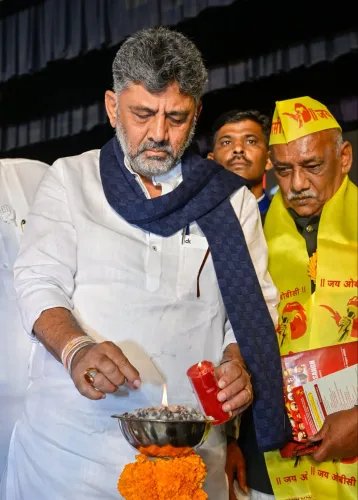
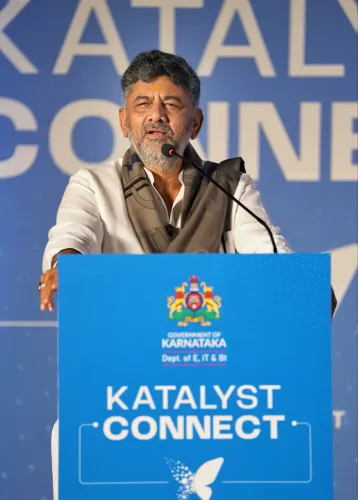
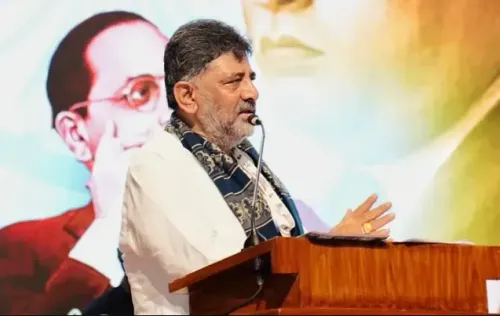
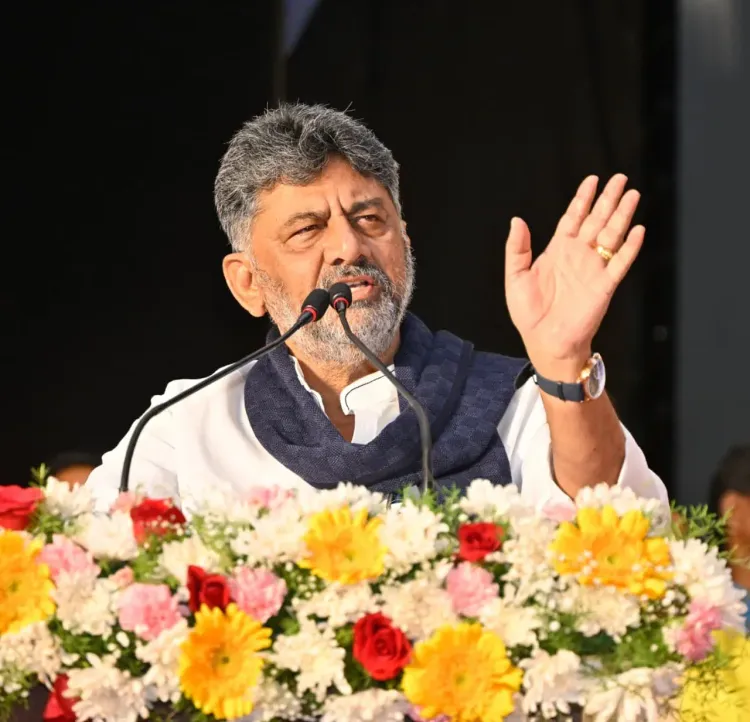
Karnataka Chief Minister D.K. Shivakumar on Friday, 7 August reaffirmed the state Congress government's commitment to implementing the socio-economic survey conducted in Karnataka, framing it as a cornerstone of social justice for backward communities. He made the declaration while inaugurating the 11th National Convention of the National OBC Mahasangh at the Jnana Jyothi Auditorium in Bengaluru.
Key Declarations at the OBC Convention
Addressing delegates, Shivakumar invoked the historical precedent of the 1931 caste census conducted during the British period to argue for a contemporary caste enumeration. He stated that Congress leaders Mallikarjun Kharge and Rahul Gandhi are committed to conducting a nationwide caste census to ensure equal opportunities across all sections of society.
'We are moving forward on the principle of equal life and equal share for all,' Shivakumar said. He added that backward classes account for 52 per cent of the country's population and credited them as the builders of the nation.
Representation in the Karnataka Cabinet
Shivakumar pointed to the composition of the state cabinet as evidence of the government's commitment, noting that two-thirds of the ministers belong to backward classes, scheduled castes and tribes, and minorities. He also highlighted that Karnataka has a separate Department of Backward Classes with dedicated funding.
He recalled a conversation with the late Prime Minister Rajiv Gandhi during the 73rd and 74th Constitutional Amendments, in which Gandhi reportedly said that 'a true leader is one who creates other leaders' — underscoring the Congress party's stated goal of building leadership from the panchayat level upward.
Political Significance and Caste Census Push
The remarks are likely to reignite debate around the caste census issue, which has gained political salience nationally ahead of upcoming elections. Shivakumar noted that the central government has initiated a door-to-door census and argued that a caste census is essential to narrowing socio-economic disparities.
He also referenced the historical roots of OBC reservation in Karnataka, tracing it to the era of Nalvadi Krishnaraja Wodeyar, and praised Babanrao's leadership of the National OBC Mahasangh for working 'without any political motive.'
Congress Legacy and Call for Support
Shivakumar invoked the Congress government's record on social welfare — citing the Food Security Act, employment guarantee schemes, and education reforms under former Prime Minister Manmohan Singh — to make the case that only the Congress party can champion OBC interests at the national level. He urged convention delegates to rally behind the party to ensure the Mahasangh's demands receive national recognition.
With the socio-economic survey's implementation now publicly committed to, attention will turn to how and when the Karnataka government translates the data into concrete policy and reservation adjustments.
Point of View
Withstand legal scrutiny, and translate numbers into revised reservation quotas — steps that previous administrations have deferred.
NationPress
22 Sept 2026
Frequently Asked Questions
What is the Karnataka socio-economic survey that CM Shivakumar referred to?
It is a survey conducted by the Congress government in Karnataka to document the socio-economic status of various communities, including backward classes. CM Shivakumar reaffirmed on 7 August that the government is committed to implementing its findings to advance social justice.
Why is the caste census issue significant in Karnataka?
A caste census would provide updated data on the population share and socio-economic conditions of backward communities, which could inform reservation policies. The last major caste census in India dates to 1931, and renewed calls for one have become a key political issue for the Congress party nationally.
What did CM Shivakumar say about OBC representation in the Karnataka cabinet?
Shivakumar stated that two-thirds of the ministers in the Karnataka cabinet belong to backward classes, scheduled castes and tribes, and minorities, presenting this as evidence of the government's commitment to inclusive governance.
Who is Babanrao and what is the National OBC Mahasangh?
According to CM Shivakumar, Babanrao leads the National OBC Mahasangh, an organisation working for the rights of Other Backward Classes without a stated political motive. The 11th National Convention of the body was held on 7 August at the Jnana Jyothi Auditorium in Bengaluru.
What Congress welfare schemes did Shivakumar highlight at the convention?
Shivakumar cited the Food Security Act, employment guarantee schemes, and education reforms introduced during former Prime Minister Manmohan Singh's tenure as examples of Congress-led social welfare. He used these to argue that the Congress party has historically been the strongest advocate for backward communities.