Siddaramaiah backs internal reservation in Karnataka, vows to fight on
Synopsis
Out of office but not out of the fight — Siddaramaiah used a Bengaluru seminar to stake his clearest claim yet as Karnataka's internal reservation champion, detailing a tangled legislative history of five-group formulas, court battles, and stalled Cabinet decisions, while pledging to personally lobby CM D.K. Shivakumar to break the deadlock.
Key Takeaways
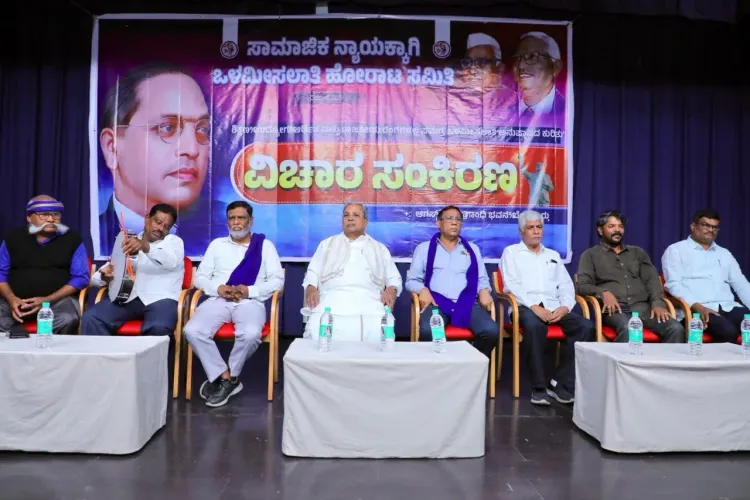
Siddaramaiah reaffirmed support for internal reservation at a seminar in Bengaluru on 25 August , organised by the Internal Reservation Struggle Committee for Social Justice.
He said he would speak to Chief Minister D.K.
Shivakumar and relevant ministers to resolve outstanding issues on internal reservation.
Karnataka's internal reservation framework has passed through a five-group classification, a 6:6:5 formula , and a proposed 5:5:4.5 interim distribution — all facing legal and political hurdles.
Welfare allocations for SC and ST communities rose from around ₹8,000 crore before 2013 to ₹44,636 crore at present, according to Siddaramaiah.
Ambedkar and Basavanna to argue that social and economic equality remain unfinished business nearly 850 years after the reformer's call for an inclusive society.
Siddaramaiah criticised the BJP and questioned Prime Minister Narendra Modi's record on social justice measures.
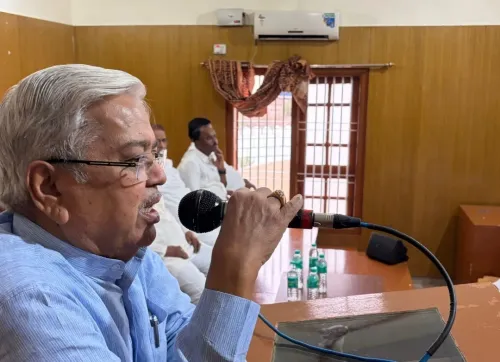
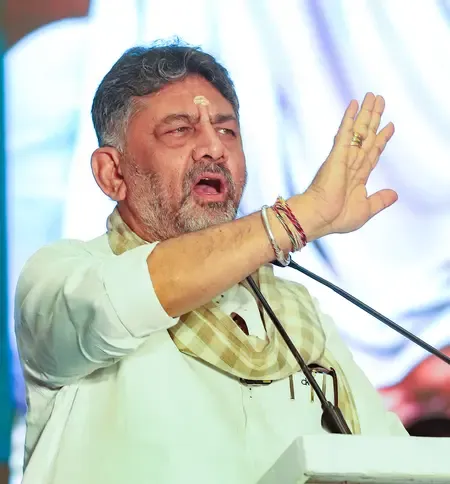
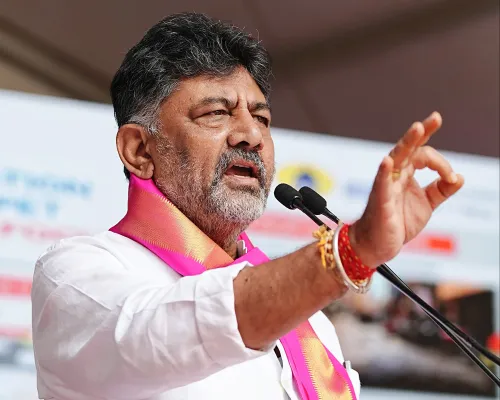
Former Karnataka Chief Minister and Indian National Congress (Congress) Working Committee member Siddaramaiah on Tuesday, 25 August reaffirmed his commitment to internal reservation and social justice, stating he would continue the fight regardless of whether he held political office. Speaking at a seminar in Bengaluru organised by the Internal Reservation Struggle Committee for Social Justice, Siddaramaiah delivered one of his most pointed addresses on caste-based equity since leaving the chief ministership.
Siddaramaiah's Core Stand on Internal Reservation
Siddaramaiah was unequivocal about his personal position. 'I am no longer the head of the government and I do not have power. But I am a person who supports internal reservation, the reservation system and social justice. I have never compromised on this issue and I will not compromise in the future,' he said.
He argued that reservation was not a concession but a corrective — necessary for communities that had historically been denied opportunities due to the caste system. 'We are not fools; we are people who were denied opportunities. We did not get an opportunity to demonstrate our intelligence. The reservation system is providing that opportunity,' he said.
Ambedkar, Basavanna and the Philosophical Anchor
Siddaramaiah grounded his argument in the thought of Dr B.R. Ambedkar, noting that while political equality had been achieved through universal franchise, social and economic equality remained elusive. He cited Ambedkar's warning that unaddressed social and economic inequalities could ultimately erode the foundations of democracy itself.
He also invoked Basavanna, the 12th-century social reformer, who had called for a society where no one was treated as an outsider. 'Basavanna said this nearly 850 years ago, but even today it has not become a reality. This is the true picture of our society,' Siddaramaiah said. He compared the persistence of the caste system to dirt that repeatedly accumulates in a well despite repeated clearing — a metaphor drawn from his own childhood in his village.
Referring to socialist leader Ram Manohar Lohia, he argued that the Indian caste system offered little social mobility, and that economic, social, educational and political empowerment of marginalised communities was the only path forward.
Karnataka's Internal Reservation: A Complicated History
Siddaramaiah detailed the legislative and legal journey of internal reservation in Karnataka. During his tenure as Chief Minister, his government constituted the Nagamohan Das Committee to examine the issue. The committee submitted its report after visiting villages and consulting communities, on the basis of which communities were divided into five groups for internal reservation distribution.
The classification was later revised into three groups under a 6:6:5 formula. However, the inclusion of nomadic communities alongside the Bhovi and Banjara communities triggered objections and legal challenges in the High Court. A subsequent interim arrangement proposed a 15 per cent allocation with Cabinet agreeing to a 5:5:4.5 distribution, but differences and litigation continued.
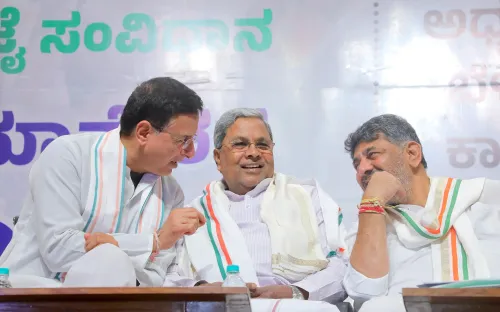
'Whatever the difficulties, internal reservation must be implemented,' Siddaramaiah said, adding that he would speak to Chief Minister D.K. Shivakumar and the relevant ministers to resolve outstanding issues. 'The Chief Minister has said that he will listen to what I say. I have confidence that they will listen to me,' he said.
Welfare Allocations and Legislative Milestones
Siddaramaiah highlighted that his government had enacted the Scheduled Castes Sub-Plan (SCSP) and Tribal Sub-Plan (TSP) legislation in 2013, linking development expenditure to the population share of SC and ST communities. Welfare allocations, which stood at around ₹8,000 crore before 2013, rose to over ₹15,000 crore after the legislation — and have since reached ₹44,636 crore, according to his statement.
He also noted his government's decision to scrap Section 7D of the legislation and extend loans of up to ₹10 crore through the Karnataka State Financial Corporation at an interest rate of four per cent. Reservation in promotions, introduced after a report by a committee headed by then Chief Secretary Ratna Prabha, was challenged in court but upheld, he claimed.
Political Critique and the Road Ahead
Siddaramaiah took direct aim at the Bharatiya Janata Party (BJP), questioning why Prime Minister Narendra Modi had not undertaken comparable measures for social justice. He alleged that organisations representing what he called a 'Manuvadi' ideology had historically opposed the Constitution at the time of its adoption.
He urged activists to remain united and alert to forces attempting to create divisions within the movement. 'The struggle for internal reservation has been going on for three decades. After the Supreme Court's decision, the movement gained momentum across the country,' he said, cautioning that personal differences could weaken the cause.
Siddaramaiah also indicated he would remain politically active even after retiring from electoral politics, saying he would continue to fight for social justice in whatever capacity he held. With the Karnataka Cabinet yet to finalise the internal reservation framework, the coming weeks will test how much political weight his advocacy still carries.
Point of View
He is now building an identity as the uncompromising voice of social justice within the Congress — a role that gives him leverage over the Shivakumar government without requiring a formal title. The internal reservation issue is genuinely complex: three decades of activism, multiple committee reports, and Supreme Court intervention have yet to produce a durable framework in Karnataka. The ₹44,636 crore SCSP-TSP allocation figure is striking, but allocations and actual expenditure are not the same thing — and Siddaramaiah's own government faced criticism on that gap. The harder question is whether his personal lobbying of Shivakumar will move a Cabinet that has its own political calculations on which communities to accommodate.
NationPress
10 Oct 2026
Frequently Asked Questions
What is internal reservation and why is Siddaramaiah supporting it?
Internal reservation refers to sub-categorising the existing Scheduled Caste and Scheduled Tribe reservation quotas to ensure that the most marginalised communities within these groups receive a fairer share of benefits. Siddaramaiah argues that without such sub-categorisation, dominant sub-groups within reserved categories corner most of the opportunities, leaving the most disadvantaged behind.
What is the current status of internal reservation in Karnataka?
Karnataka's internal reservation framework has gone through multiple revisions — from a five-group classification to a 6:6:5 formula and a proposed 5:5:4.5 interim distribution — each facing legal challenges in the High Court. As of 25 August, the matter remains unresolved, with Siddaramaiah pledging to push Chief Minister D.K. Shivakumar to finalise a framework.
What was the Nagamohan Das Committee?
The Nagamohan Das Committee was constituted by the Siddaramaiah government during his tenure as Karnataka Chief Minister to examine the internal reservation issue. The committee visited villages, consulted communities, and submitted a report on the basis of which communities were initially divided into five groups for distribution of internal reservation benefits.
How have SC and ST welfare allocations changed in Karnataka?
According to Siddaramaiah, welfare allocations for Scheduled Caste and Scheduled Tribe communities stood at around ₹8,000 crore before the SCSP and TSP legislation was enacted in 2013. After the legislation, allocations rose to over ₹15,000 crore and have since reached ₹44,636 crore.
What did the Supreme Court ruling mean for internal reservation?
Siddaramaiah referred to a Supreme Court decision that gave fresh momentum to the internal reservation movement across India. The ruling is widely understood to have affirmed the constitutional validity of sub-classifying SC and ST categories for reservation purposes, strengthening the legal basis for states like Karnataka to implement internal reservation frameworks.