NEP 2020 must be debated with states, not just paper leak law: Digvijaya Singh
Synopsis
Digvijaya Singh's pushback on PM Modi's anti-paper leak law isn't just opposition noise — it reopens a foundational question: was NEP 2020 ever legitimately debated? With the NEET-UG 2026 crisis as backdrop and a Nilekani-led task force now in play, the Congress veteran is arguing that India's exam system cannot be fixed without first fixing how education policy is made — and who gets a say in it.
Key Takeaways
Digvijaya Singh said on 27 July that a stricter anti-paper leak law alone will not resolve India's examination crisis.
He demanded that NEP 2020 be debated in Parliament and first discussed with education ministers of all states.
Singh argued education should be placed entirely in the State List of the Indian Constitution, not centralised.
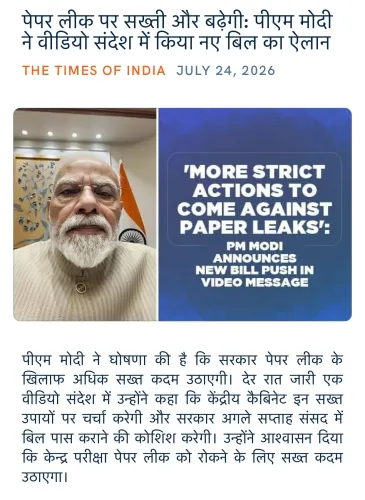
PM Modi on 26 July announced a task force headed by Nandan Nilekani to make exams leak-proof and technology-driven.
The panel includes former ISRO chief S.
Somnath , ex- IB Director Tapan Deka , and IIT Madras Director V.
Kamakoti , among others.
The controversy follows the NEET-UG 2026 paper leak, which has triggered widespread political and public backlash.
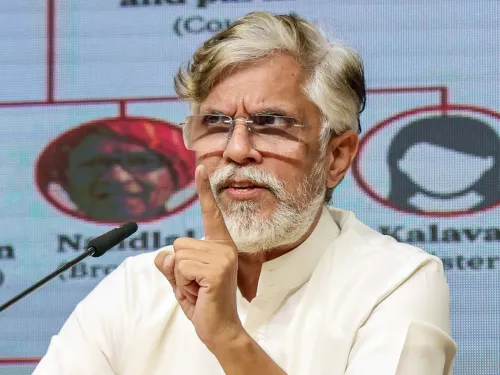
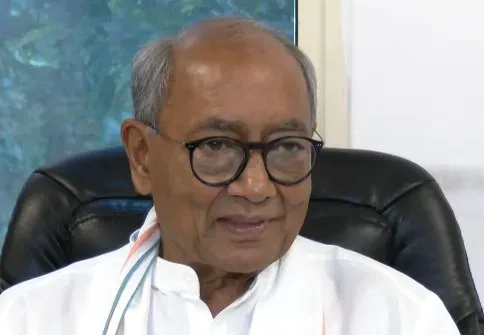
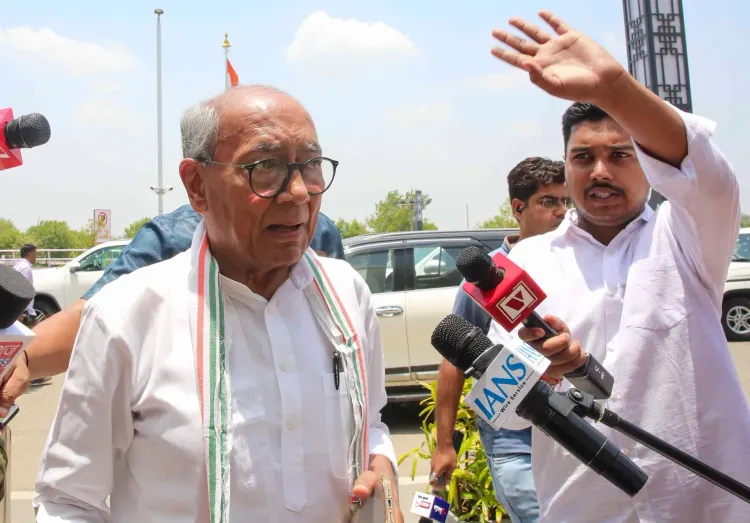
Veteran Congress leader and former Madhya Pradesh Chief Minister Digvijaya Singh on Monday, 27 July asserted that a stricter law against examination paper leaks alone cannot resolve India's deepening examination crisis, and called for a comprehensive parliamentary debate on the National Education Policy (NEP) 2020 — with mandatory consultations with state education ministers before any such discussion.
Singh's Core Argument
Responding to Prime Minister Narendra Modi's announcement of a high-powered task force on examination reforms, Singh's office posted on X: 'Making the paper leak law strict will not solve the problem. You should discuss the New Education Policy 2020 as a whole in Parliament, and before that, the Education Policy should be discussed with the education ministers of all the states of the country. If you had discussed the New Education Policy 2020 in Parliament, this situation would not have happened today.'
In a second post, Singh argued for structural decentralisation: 'In a country like India, decentralisation of power is necessary and not centralisation. Education should be kept completely in the State List of the Indian Constitution.'
What the Centre Has Announced
On Sunday, 26 July, PM Modi announced the formation of a high-powered task force headed by former UIDAI Chairman Nandan Nilekani to recommend measures for a leak-proof, technology-driven examination system. The panel will include former ISRO Chairman S. Somnath, former Intelligence Bureau Director Tapan Deka, IIT Madras Director V. Kamakoti, former Education Secretary Anita Karwal, and senior bureaucrat Amrit Lal Meena, among others.
The Prime Minister also confirmed that the government would introduce a stringent anti-paper leak law in Parliament and take strict action against those involved in examination malpractices.
Singh's Standing on Education Policy
The remarks carry institutional weight: Digvijaya Singh, a former Rajya Sabha member, served as Chairman of the Parliamentary Standing Committee on Education from September 2024 until June 2026. His critique is therefore not merely political — it is grounded in legislative oversight of the education sector.
The NEET-UG 2026 Backdrop
The exchange comes amid significant political fallout over the NEET-UG 2026 paper leak controversy, which has intensified scrutiny of centralised examination administration in India. Critics argue that the current crisis reflects systemic gaps that predate any single law or policy, and that fixing the examination framework requires rethinking how education governance is shared between the Centre and the states.
Notably, this is not the first time opposition leaders have flagged the absence of parliamentary debate on NEP 2020 — a policy that reshaped the structure of school and higher education without a floor vote in either house. As the Nilekani panel begins its work, the political pressure to widen the reform conversation beyond enforcement mechanisms is set to intensify.
Point of View
But it addresses symptoms rather than structure. If education remains on the Concurrent List in practice but is administered as a Central subject in policy, the tension between Delhi and state capitals will keep producing these crises. The real question is whether the Centre is willing to share not just the blame, but the decision-making.
NationPress
25 Oct 2026
Frequently Asked Questions
What did Digvijaya Singh say about the anti-paper leak law?
Digvijaya Singh said that making the paper leak law stricter will not solve India's examination crisis on its own. He called for a full parliamentary debate on NEP 2020 and prior consultations with state education ministers.
What is the Nandan Nilekani task force on examinations?
Prime Minister Narendra Modi announced on 26 July the formation of a high-powered task force chaired by former UIDAI Chairman Nandan Nilekani to recommend measures for a leak-proof, technology-driven examination system. The panel includes former ISRO chief S. Somnath, ex-IB Director Tapan Deka, IIT Madras Director V. Kamakoti, and others.
Why is the NEET-UG 2026 paper leak significant?
The NEET-UG 2026 paper leak has triggered a major political controversy, exposing systemic vulnerabilities in India's centralised examination administration. It has intensified demands for structural reform of how national-level exams are conducted and governed.
Why does Digvijaya Singh want education moved to the State List?
Singh argues that India's size and diversity require decentralisation of power, and that placing education exclusively in the State List would give states the autonomy to design and administer their own education systems. He contends that centralisation has contributed to the current examination governance failures.
Was NEP 2020 debated in Parliament?
NEP 2020 was not put to a floor vote in either house of Parliament. Critics, including Digvijaya Singh, have long argued this is a democratic deficit, and the current examination crisis has renewed calls for a formal parliamentary discussion on the policy.