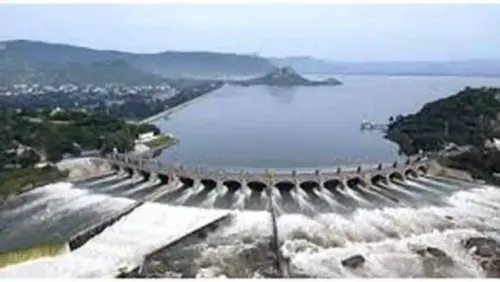
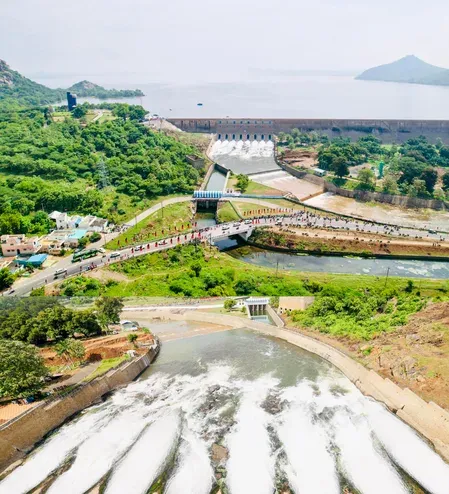
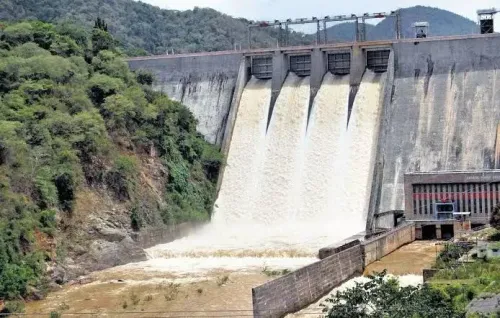
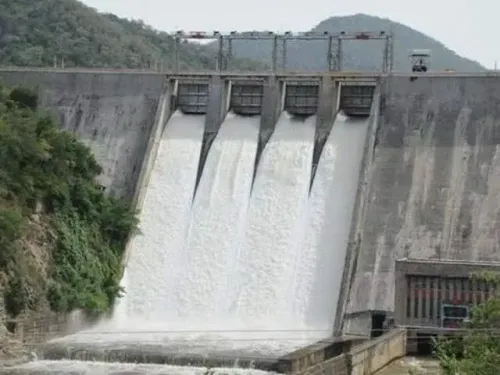
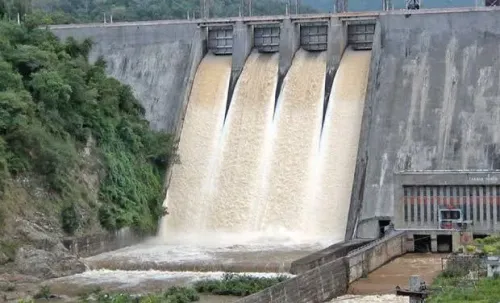
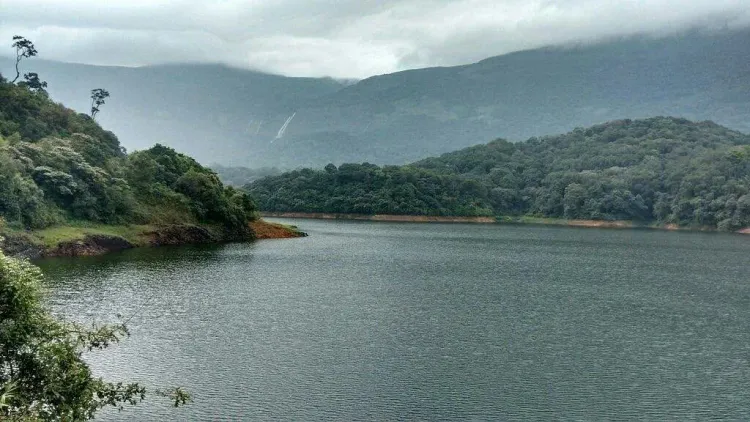
Siruvani dam water level at 26.7 ft; Coimbatore supply cut to 55 MLD
Synopsis
Coimbatore's daily drinking water supply has been slashed by 10 MLD in a single week as the Siruvani Dam — the city's primary source — sits at barely half its capacity with catchment areas receiving just 7-8 mm of rain against a required 50-100 mm. Pending inter-state repair approvals mean seepage losses continue unchecked, even as the monsoon nears its end.
Key Takeaways
Siruvani Dam water level fell to 26.7 feet against a full capacity of 50 feet as of 23 August .
TWAD Board cut Coimbatore's daily water supply from 65 MLD to 55 MLD due to weak southwest monsoon inflow.
Catchment areas received only 7–8 mm of rainfall; a minimum of 50–100 mm is needed to raise storage levels significantly.
Coimbatore City Municipal Corporation has cleared ₹11 crore in outstanding water charges and proposed an ₹18 crore repair project.
Seepage repair works are pending inter-state approvals between Tamil Nadu and Kerala ; a Kerala government condition report is being prepared.
The Tamil Nadu Water Supply and Drainage Board (TWAD Board) has reduced drinking water supply to Coimbatore city from 65 million litres per day (MLD) to 55 MLD this week, after a weak southwest monsoon left the Siruvani Dam in Kerala critically short of inflow. As of Saturday, 23 August, the reservoir's water level stood at just 26.7 feet against its full capacity of 50 feet.
How Low Rainfall Triggered the Cut
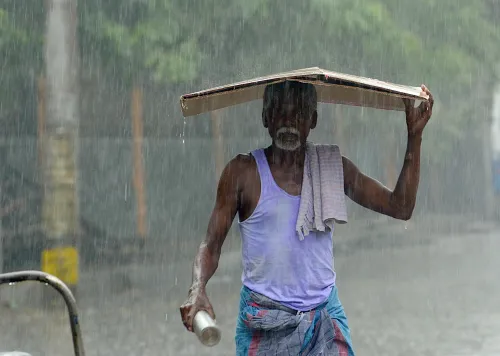
A senior TWAD Board official said the Siruvani catchment areas needed between 50 mm and 100 mm of rainfall to record a meaningful rise in storage levels. During the current monsoon season, however, the region received only around 7 mm to 8 mm — a fraction of what is required — resulting in sharply reduced inflow and dwindling reserves. Officials noted that Siruvani depends on sustained, heavy showers in its catchment zones to build adequate storage, and only light rainfall has fallen so far this season.
Impact on Coimbatore's Drinking Water
The Siruvani Dam is one of Coimbatore's principal sources of drinking water, making the declining storage a direct concern for residents across the city. Officials confirmed that supplies are currently being regulated strictly according to available water levels. The reduction from 65 MLD to 55 MLD represents a cut of roughly 15% in daily supply within a single week.
Pending Repairs Add to Concern
Compounding the situation, proposed repair work to arrest seepage and prevent further water loss from the dam has yet to begin. The Tamil Nadu and Kerala governments are coordinating to identify the scope of works and secure the necessary administrative and financial approvals. Kerala government officials are preparing a comprehensive condition report on the dam; once submitted, the most urgent repairs will be prioritised and the proposal forwarded to the TWAD Board Managing Director for fund allocation. Arresting seepage has been identified as the top priority, with the required funds to be deposited with Kerala authorities, who will execute the works.
Financial Steps Already Taken
The Coimbatore City Municipal Corporation recently cleared approximately ₹11 crore in outstanding water charges owed to the TWAD Board. It has also submitted a proposal to the Tamil Nadu government seeking approval for an ₹18 crore repair and maintenance project at the reservoir. With the southwest monsoon approaching its end, officials expressed hope that approvals will come through in time for repairs to be carried out without significantly disrupting water supply.
What Happens Next
The immediate outlook hinges on whether the catchment areas receive any late-monsoon rainfall in the weeks ahead. Should inflow remain low, further supply reductions cannot be ruled out. Longer term, the pace at which the inter-state repair approvals are processed will determine how quickly seepage losses — which are compounding the shortage — can be stemmed. Coimbatore's water security going into the dry months will depend on both nature and administrative speed.
Point of View
Yet repair approvals remain stuck in inter-state coordination even as water levels slide to just over half capacity. Coimbatore's dependence on a single cross-border reservoir — with no visible demand-side conservation measures in play — leaves the city structurally exposed every time the monsoon underperforms. The ₹18 crore repair proposal and the ₹11 crore payment are positive signals, but the pace of bureaucratic clearances will matter more than the cheques written.
NationPress
7 Oct 2026
Frequently Asked Questions
Why has Coimbatore's water supply been reduced?
The TWAD Board reduced Coimbatore's daily water supply from 65 MLD to 55 MLD because the Siruvani Dam's water level has fallen sharply due to a weak southwest monsoon. Catchment areas received only 7–8 mm of rainfall this season against the 50–100 mm needed to raise storage meaningfully.
What is the current water level at Siruvani Dam?
As of 23 August, the Siruvani Dam water level stood at 26.7 feet against its full reservoir level of 50 feet — roughly 53% of capacity. Reduced inflow from the monsoon has been the primary driver of the decline.
What repairs are planned for Siruvani Dam, and when will they begin?
The Tamil Nadu and Kerala governments are coordinating on repair works to arrest seepage and prevent further water loss. Kerala officials are preparing a condition report; once submitted, urgent repairs will be identified and funds deposited with Kerala authorities for execution. No start date has been confirmed yet.
How much has Coimbatore paid towards Siruvani water charges?
The Coimbatore City Municipal Corporation recently paid approximately ₹11 crore in outstanding water charges to the TWAD Board. It has also submitted a proposal seeking Tamil Nadu government approval for an ₹18 crore repair and maintenance project at the reservoir.
Will water supply in Coimbatore be cut further?
Officials have not announced additional cuts, but supply is being regulated based on available water levels. If the catchment areas do not receive significant late-monsoon rainfall, further reductions cannot be ruled out as the southwest monsoon approaches its end.