Sonia Gandhi's memoir reveals Pranab Mukherjee's 2010 PM ambition hint
Synopsis
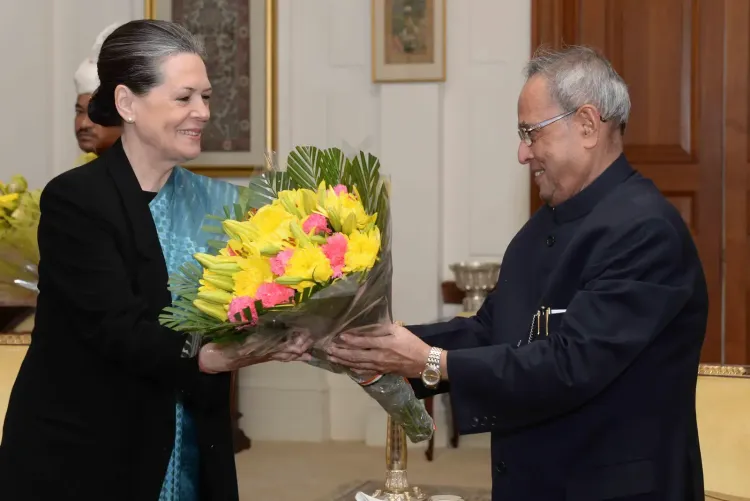
Sonia Gandhi's memoir 'Belonging: A Journey Of Love' reveals that Pranab Mukherjee, in 2010, shocked her by suggesting 'a change at the top' — a remark she read as a long-held desire to become PM. Gandhi says she simply changed the subject. Two years later, the Congress made him President instead.
Key Takeaways
Sonia Gandhi reveals in her memoir 'Belonging: A Journey Of Love' that Pranab Mukherjee hinted at wanting to become Prime Minister in 2010 .
Mukherjee reportedly made the remark after expressing frustration over differences with then Finance Minister P.
Gandhi says she 'gently changed the subject' and that Mukherjee never held it against her.
The memoir describes a weekly core group that coordinated between the Congress party and the UPA government , including Arjun Singh , A.K.
Anthony , and Ahmed Patel .
Congress nominated Mukherjee as the UPA presidential candidate in 2012 ; he won the election and became the 13th President of India .
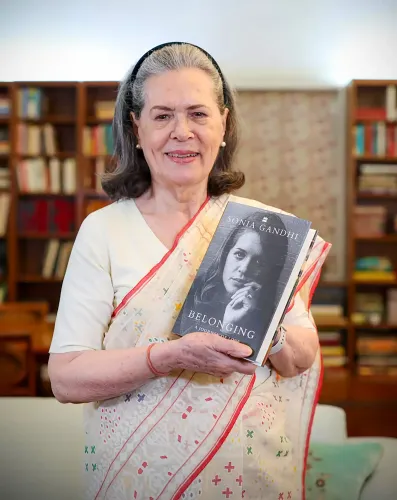
Congress Parliamentary Party (CPP) Chairperson Sonia Gandhi has disclosed in her memoir that former President Pranab Mukherjee stunned her in 2010 by suggesting that the time had 'perhaps come for a change at the top' — a remark she interpreted as an indirect expression of his long-held desire to become Prime Minister. The revelation appears in Gandhi's memoir titled 'Belonging: A Journey Of Love', and offers a rare behind-the-scenes look at the internal dynamics of the United Progressive Alliance (UPA) government.
The 'Unspoken Division' at the Top
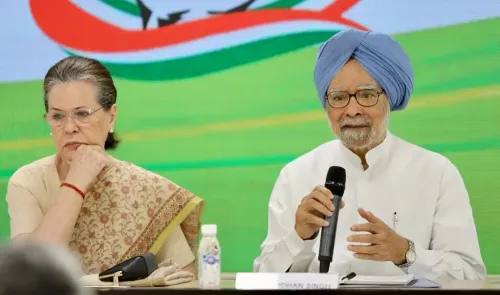
In her memoir, Gandhi describes what she calls an 'unspoken division of responsibility' between herself and then Prime Minister Manmohan Singh. Under this arrangement, Singh led the government while Gandhi managed the Congress party organisation. She writes that this understanding functioned smoothly and ensured effective coordination between the party and the UPA administration.
A key mechanism of this coordination was a core group that met the Prime Minister every week. Gandhi recalls the composition of this group in her own words: 'Its other members were Pranab Mukherjee, who had been a Minister in Indira Gandhi's cabinet in the 70s; the politically insightful Arjun Singh, a former Chief Minister of Madhya Pradesh; A.K. Anthony, a former Chief Minister of Kerala; and Ahmed Patel.'
The Moment That Shocked Sonia
Gandhi also recalls regular meetings of a Strategy Group, convened to deliberate on Parliament-related matters. She writes that Mukherjee — whom she always addressed as 'Pranab ji' — would sometimes linger after these sessions for informal conversation. It was during one such exchange in 2010 that the pivotal remark was made.
Mukherjee had, according to Gandhi, developed 'serious differences' with then Finance Minister P. Chidambaram. After venting his frustration, he reportedly made a suggestion that caught her off guard. As Gandhi writes: 'He had developed serious differences with the Finance Minister P. Chidambaram, and on one occasion, in 2010, I think after expressing his frustration, he shocked me with the suggestion that perhaps it was time for a change at the top, which I understood as a hint of his long-held desire to become prime minister.'
Gandhi's Measured Response
Gandhi chose not to engage with the suggestion directly. Instead, she quietly redirected the conversation. 'I gently changed the subject, and though he may have been disappointed, he never made me feel he held it against me,' she writes. The anecdote suggests Mukherjee accepted the implicit rejection with characteristic dignity, leaving their personal rapport intact.
From PM Aspirant to President
Notably, two years after the 2010 conversation, the Congress nominated Mukherjee as the UPA's candidate for the President of India in 2012. He went on to win the presidential election, ascending to the country's highest constitutional office — a different pinnacle from the one he had reportedly sought. Gandhi writes that she continued to visit Mukherjee even after his elevation, 'mostly just to converse with the erudite and knowledgeable politician that he always remained.'
Mukherjee, one of India's most experienced political figures, served in multiple senior ministerial roles across decades before becoming the 13th President of India. He passed away in August 2020. The memoir's disclosure adds a new dimension to the long-debated question of whether Mukherjee's presidential nomination was, in part, a resolution of his unfulfilled ambition for the prime ministership.
Point of View
Yet the prime ministership remained with Manmohan Singh — a figure seen as more acceptable to the Congress high command's internal arithmetic. Gandhi's calm deflection, and Mukherjee's dignified silence, encapsulates how Indian coalition politics resolves ambition — not through confrontation but through redirection, in this case the presidency in 2012. What the memoir does not address is whether that redirection satisfied Mukherjee or simply deferred a question that never had a different answer.
NationPress
10 Nov 2026
Frequently Asked Questions
What does Sonia Gandhi reveal about Pranab Mukherjee in her memoir?
Sonia Gandhi reveals in her memoir 'Belonging: A Journey Of Love' that Pranab Mukherjee, during an informal conversation in 2010, suggested 'perhaps it was time for a change at the top' — a remark she interpreted as a hint of his desire to become Prime Minister. Gandhi says she quietly changed the subject in response.
What was the UPA core group mentioned by Sonia Gandhi?
The UPA core group was a weekly coordination meeting between senior Congress leaders and Prime Minister Manmohan Singh. Its members included Pranab Mukherjee, Arjun Singh, A.K. Anthony, and Ahmed Patel, and it was designed to align the functioning of the Congress party organisation with the government.
Why did Pranab Mukherjee reportedly make the remark about a 'change at the top'?
According to Gandhi's memoir, Mukherjee had developed 'serious differences' with then Finance Minister P. Chidambaram at the time. After expressing his frustration over this situation, he made the remark that Gandhi interpreted as reflecting his long-held ambition to lead the government as Prime Minister.
Did Pranab Mukherjee ever become Prime Minister?
No, Pranab Mukherjee never became Prime Minister. In 2012, the Congress and the UPA instead nominated him as their presidential candidate; he won the election and served as the 13th President of India until 2017. He passed away in August 2020.
What is Sonia Gandhi's memoir 'Belonging: A Journey Of Love' about?
The memoir recounts Sonia Gandhi's personal and political journey, including her working relationship with Prime Minister Manmohan Singh and the internal dynamics of the UPA government. It offers first-hand accounts of key moments in Congress party history, including previously undisclosed private conversations with senior leaders.