How is South Korean President Lee Promoting Mutual Relations with Japan?
Synopsis
In a significant diplomatic move, South Korean President Lee Jae Myung advocates for stronger ties with Japan, emphasizing mutual benefits. His recent discussions with Japanese leaders reflect a commitment to cooperation amidst regional tensions, raising hopes for improved relations. Discover the implications of this pivotal meeting and its impact on Northeast Asia.
Key Takeaways
Seoul and Tokyo are focusing on strengthening bilateral ties.
President Lee emphasizes mutually beneficial relations .
Shuttle diplomacy is being utilized for advanced cooperation.
Historical issues, including forced labor, are being addressed.
Commitment to denuclearization of the Korean Peninsula was reaffirmed.
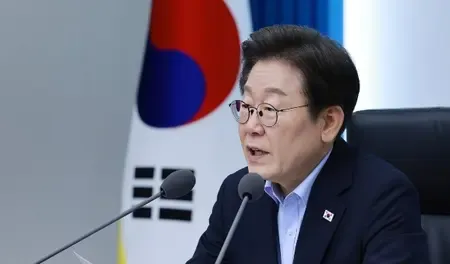
Seoul, Jan 16 (NationPress) South Korean President Lee Jae Myung emphasized on Friday the necessity for Seoul and Tokyo to pursue mutually beneficial relations by enhancing their bilateral connections.
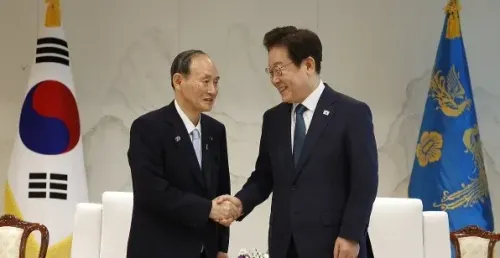
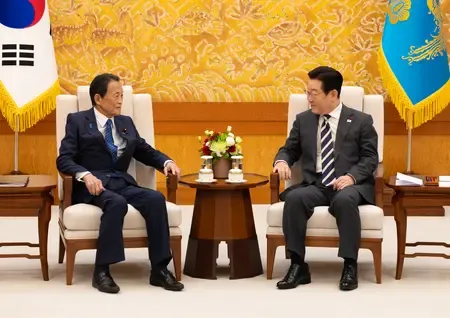
While meeting with former Japanese Prime Minister Taro Aso, Lee noted that South Korea and Japan are neighboring countries sharing a common front yard.
"It is essential to identify as many collaboration opportunities as possible between the two nations to foster a mutually beneficial relationship," Lee stated, as reported by Yonhap News Agency.
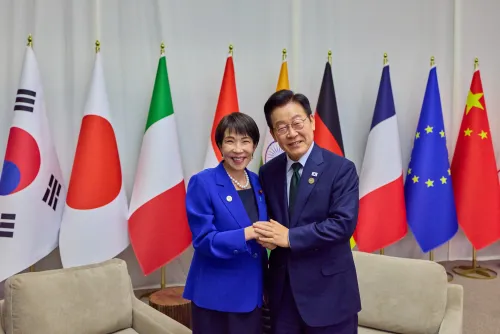
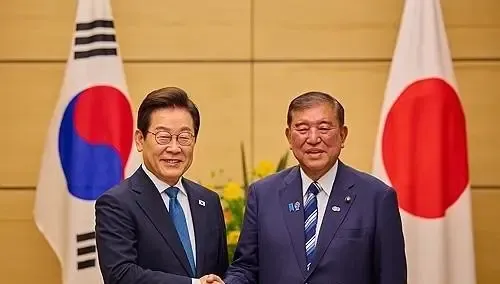
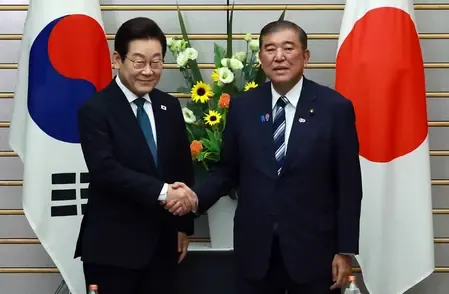
This meeting with Aso followed Lee's recent visit to Japan earlier in the week for discussions with Japanese Prime Minister Sanae Takaichi aimed at expanding and deepening bilateral cooperation amidst rising tensions between Beijing and Tokyo.
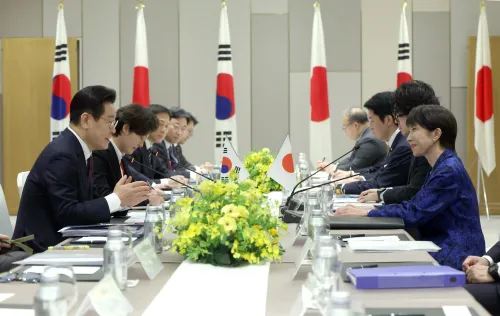
Lee's meeting with Takaichi took place in her hometown of Nara, marking his second trip to Japan and his fifth summit with a Japanese prime minister since he assumed office in June of the previous year.
It was their second summit following their initial meeting in Gyeongju, South Korea in late October.
During the discussions on Tuesday, the two leaders agreed to promote future-oriented cooperation through reciprocal visits by leaders, a strategy referred to as shuttle diplomacy.
Lee mentioned that his meeting with Aso immediately after the summit discussions is fostering optimism among the Korean populace regarding an imminent improvement in Seoul-Tokyo relations.
Aso remarked that the second summit between the leaders of Japan and South Korea in less than three months is highly significant.
"The international context affecting Japan and South Korea is evolving, and strong cooperation is beneficial for both nations," Aso said.
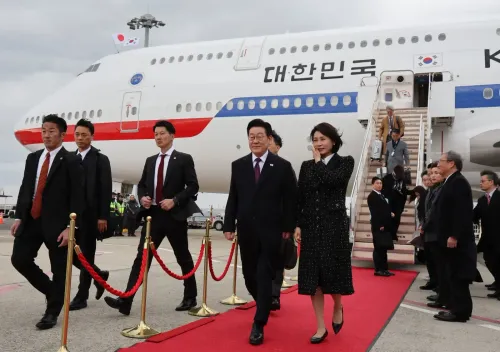
On January 14, President Lee returned to South Korea after a two-day visit to Japan, where he engaged in talks with Prime Minister Takaichi about strategies to enhance bilateral cooperation amidst tensions with Beijing and Tokyo.
During their discussions, they reaffirmed their commitment to the complete denuclearization of the Korean Peninsula, while Lee also stressed the importance of Seoul, Tokyo, and Beijing finding common ground for collaboration in Northeast Asia.
They also addressed sensitive topics, including South Korea's ban on Japanese seafood imports, as Seoul aims to join the 12-member Comprehensive and Progressive Agreement for Trans-Pacific Partnership, led by Japan.
While South Korea reiterated its desire to join the pact, Japan clarified its stance on food safety, as per National Security Adviser Wi Sung-lac, indicating that additional working-level consultations are required.
The summit also tackled historical issues that have historically impacted their bilateral relationship. Seoul and Tokyo agreed to conduct DNA testing to identify remains found last August at the Chosei undersea coal mine in Yamaguchi Prefecture, where a flood in 1942 claimed the lives of 183 individuals, including 136 Korean forced laborers.
President Lee's visit also allowed for opportunities to foster personal rapport between the two leaders through lighthearted moments, such as an impromptu drum session, gift exchanges, and a tour of Horyu-ji Temple, a UNESCO World Heritage site known for its ties to the ancient Korean kingdom of Baekje.
Point of View
I believe that President Lee's proactive approach in fostering relations with Japan is a strategic move that can benefit both nations. The emphasis on cooperation, especially amidst rising tensions with neighboring powers, reflects a mature understanding of international diplomacy. Building bridges rather than walls is the way forward for lasting peace and stability in the region.
NationPress
13 Oct 2026
Frequently Asked Questions
What did South Korean President Lee Jae Myung discuss with Japanese leaders?
President Lee emphasized the importance of fostering mutually beneficial relations and enhancing bilateral ties during discussions with Japanese leaders, including former Prime Minister Taro Aso.
What is shuttle diplomacy?
Shuttle diplomacy refers to the practice of leaders visiting each other's countries to promote cooperation and dialogue, as seen in the recent discussions between South Korean and Japanese leaders.
What historical issues were addressed during the summit?
The summit tackled sensitive historical issues, including the agreement to conduct DNA analysis on remains of Korean forced laborers discovered in Japan.
How does this meeting impact regional cooperation?
The meeting aims to strengthen cooperation amid tensions with Beijing and aligns the interests of South Korea and Japan in promoting stability in Northeast Asia .
What is the significance of the Comprehensive and Progressive Agreement for Trans-Pacific Partnership?
The agreement is significant as it seeks to enhance trade relations and cooperation among member countries, including Japan, and South Korea's desire to join reflects its commitment to economic collaboration.