Sri Lanka court sentences ex-police chief to death over 2019 Easter attacks
Synopsis
Sri Lanka's High Court has sentenced former police chief Pujith Jayasundara and former Defence Secretary Hemasiri Fernando to death for failing to act on specific intelligence warnings before the 2019 Easter Sunday bombings that killed over 260 people — the most consequential accountability verdict since the attacks shook the nation five years ago.
Key Takeaways
A Sri Lanka High Court majority panel sentenced former Inspector General of Police Pujith Jayasundara to death on 1 August .
He was convicted of dereliction of duty and aiding and abetting murder for ignoring advance intelligence about the 2019 Easter Sunday attacks .
Former Defence Secretary Hemasiri Fernando was also sentenced to death on the same day for the same intelligence failure.
The court found that Nilantha Jayawardena , then director of the State Intelligence Service, had warned Jayasundara on 20 April 2019 — the evening before the attacks.
The 21 April 2019 bombings killed more than 260 people and injured over 500 others , according to the judgment.
Sri Lanka has maintained a moratorium on executions since 1976 ; both convicts are expected to appeal.
A three-judge High Court panel in Sri Lanka has sentenced former Inspector General of Police Pujith Jayasundara to death, after a majority of judges found him guilty of failing to prevent the 2019 Easter Sunday terror attacks despite receiving advance intelligence warnings. The verdict was delivered on Friday, 1 August, in Colombo.
The Conviction and Sentence
The court convicted Jayasundara on charges of dereliction of duty and aiding and abetting murder. The majority verdict was delivered by Judges Priyantha Liyanage and Thilakaratne Bandara, while Judge Viraj Weerasuriya issued a dissenting judgment, acquitting Jayasundara on the grounds that the prosecution had failed to prove the charges beyond a reasonable doubt.
Presiding Judge Liyanage, announcing the majority decision, stated that Jayasundara had served as the country's police chief at the time and bore direct responsibility for protecting citizens and maintaining public security. The court took more than four hours to deliver the judgment.
The Intelligence Failure
According to the court, Nilantha Jayawardena, then director of the State Intelligence Service, had informed Jayasundara on the evening of 20 April 2019 that suicide attacks were expected the following day, targeting Catholic churches and tourist hotels in Colombo and surrounding areas. Despite this specific warning, Jayasundara failed to take any preventive measures, the majority judges found.
The majority held that he had 'neglected his responsibilities as the state official appointed to prevent crime and protect the public,' and imposed the death sentence after considering the gravity of the offences.
Former Defence Secretary Also Sentenced
Later on the same day, the court found former Defence Secretary Hemasiri Fernando guilty on similar charges — failure to act on intelligence warnings ahead of the attacks — and also sentenced him to death. This makes Fernando the second senior official to receive a capital sentence in connection with the Easter Sunday bombings.
The 2019 Easter Sunday Attacks
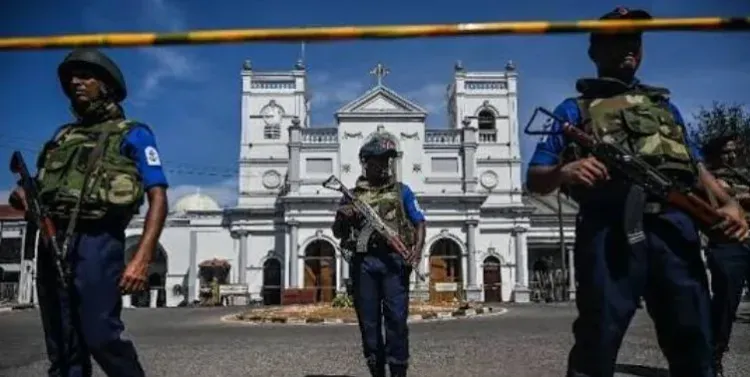
The coordinated bombings on 21 April 2019 struck multiple Catholic churches and luxury hotels across Sri Lanka, killing more than 260 people and injuring over 500 others, according to the court's own judgment. The attacks remain one of the deadliest acts of terrorism in South Asian history in recent decades and triggered a prolonged national reckoning over intelligence failures at the highest levels of Sri Lanka's security apparatus.
This comes amid longstanding demands from victims' families and the Catholic Church in Sri Lanka for accountability, with the verdict now marking the most significant judicial outcome in that pursuit. Whether the death sentences will be carried out remains uncertain, as Sri Lanka has maintained a moratorium on executions since 1976, though the sentences remain legally valid.
What Happens Next
Both Jayasundara and Fernando are expected to appeal the verdicts. Legal observers note that Sri Lanka's appellate process could take years. The Catholic community and victims' groups have welcomed the convictions, while human rights organisations are likely to scrutinise the prospect of any execution given the country's long-standing de facto abolition of capital punishment.
Point of View
Making the punishment more a statement of moral culpability than a credible penal outcome. The more consequential question the verdict raises is systemic — how did specific, named intelligence reach the police chief the night before the attacks and still produce zero preventive action? That chain of command failure implicates more than two individuals. Victims' families and the Catholic Church have waited five years for this moment; whether the appellate process delivers finality, or buries accountability in procedural delay, will define Sri Lanka's post-Easter reckoning.
NationPress
15 Sept 2026
Frequently Asked Questions
Who is Pujith Jayasundara and why was he sentenced to death?
Pujith Jayasundara is the former Inspector General of Police of Sri Lanka. He was sentenced to death by a High Court majority panel on 1 August for dereliction of duty and aiding and abetting murder, after the court found he had received specific intelligence warnings about the 2019 Easter Sunday attacks and failed to act on them.
What were the 2019 Easter Sunday attacks in Sri Lanka?
The Easter Sunday attacks were a series of coordinated suicide bombings on 21 April 2019 that targeted Catholic churches and tourist hotels across Sri Lanka, killing more than 260 people and injuring over 500 others. They remain among the deadliest terrorist attacks in South Asian history in recent decades.
Was the verdict unanimous?
No. The verdict was a majority decision by two of the three judges — Judges Priyantha Liyanage and Thilakaratne Bandara. Judge Viraj Weerasuriya issued a dissenting judgment, finding that the prosecution had not proved the charges against Jayasundara beyond a reasonable doubt and acquitting him.
Who else was sentenced in connection with the Easter attacks?
Former Defence Secretary Hemasiri Fernando was also convicted and sentenced to death on the same day, 1 August, for similarly failing to act on intelligence warnings ahead of the 2019 bombings.
Will the death sentences actually be carried out?
That remains uncertain. Sri Lanka has maintained a moratorium on executions since 1976, meaning no one has been executed in nearly five decades despite courts continuing to hand down capital sentences. Both Jayasundara and Fernando are expected to appeal, and the appellate process could take years.