Are State-led Reforms Essential for Strengthening Higher Education in India?
Synopsis
Dr. Anantha Nageswaran highlights the necessity for state-led reforms to elevate India's higher education system, focusing on industry collaboration and innovative regulatory frameworks. These reforms aim to address faculty shortages, enhance curriculum design, and position India as a global education hub.
Key Takeaways
State leadership is essential for effective higher education reform.
Addressing faculty shortages is urgent for institutional success.
Industry engagement is key in curriculum development .
Outcome-based regulations can enhance educational quality.
Collaboration among stakeholders can drive innovation in education.
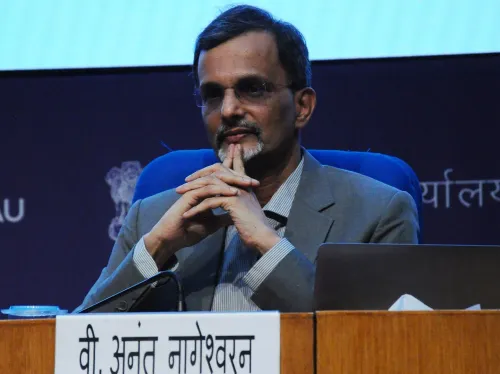
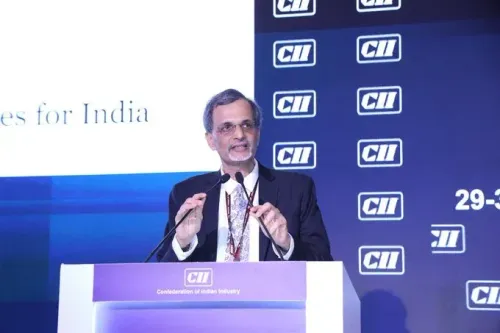
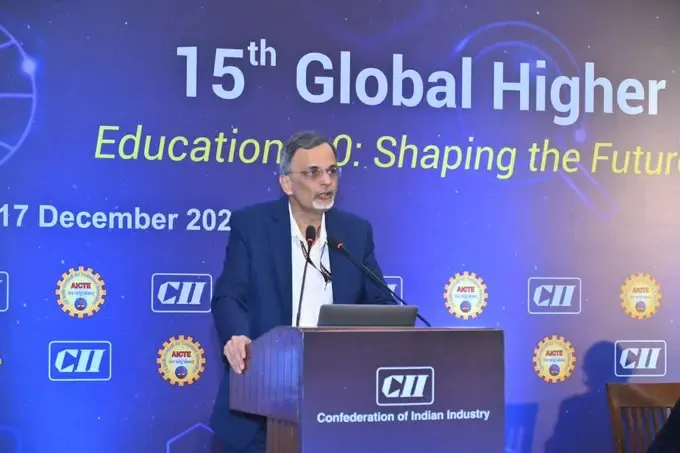
New Delhi, Dec 17 (NationPress) The upcoming phase of higher education reform in India should be spearheaded by the states, emphasized Dr. Anantha Nageswaran, the Chief Economic Adviser to the government, on Wednesday.
During his address at the CII Global Higher Education Summit in New Delhi, Nageswaran highlighted vital priorities for states, including transitioning from control to stewardship and urgently tackling faculty shortages through initiatives like professors of practice.
He pointed out that a shift from input-based to outcome-based regulation, embracing an entrepreneurial mindset in public administration, and financially supporting institutions based on differentiated roles and results can facilitate the reforms.
Nageswaran also urged for enhanced collaboration with industry in curriculum design, research, and governance.
“Industry can co-create curricula, offer credit-bearing internships, fund applied research, share resources, and actively engage in governance,” he stated.
“Collaboration among government, states, industries, and citizens can propel India from scale to leadership and position it as a global hub for learning, research, and innovation,” the CEA added.
Nageswaran noted that India’s demographic and economic turning point, the structural transformation in the global higher education landscape, AI-driven pedagogy, and the reforms brought by the National Education Policy (NEP) 2020 present a unique opportunity for ambitious reform.
At the event, Prof. Anil Sahasrabudhe, Chairman of the National Education Technology Forum, emphasized that recent reforms in higher education are fostering a future-ready, student-centric ecosystem grounded in quality, flexibility, and innovation.
He mentioned that the proposed new regulatory framework will consolidate all higher education regulators under a single umbrella with a streamlined approval process, allowing institutions to offer interdisciplinary programs more easily.
Dr. Naushad Forbes, Past President of CII, stressed that the greatest source of long-term resilience for any economy or institution is its human capital, nurtured through a combination of education and acquired skills.
Economic transformation relies not just on knowledge creation but also on skilled individuals' ability to convert ideas into actionable outcomes.
Emphasizing the crucial role of higher education in fostering innovation, he called for a significant increase in public research funding within universities.
The expert contended that universities should primarily be viewed as talent creators and advocated for a transition from prescriptive regulation to enhanced autonomy and competition.
Point of View
The emphasis on state-led reforms in higher education is crucial for aligning academic institutions with industry needs. This approach not only addresses current challenges but also positions India favorably in the global education ecosystem. The collaboration between various stakeholders is vital for fostering innovation and quality in education.
NationPress
19 Sept 2026
Frequently Asked Questions
What are the main focuses of the higher education reforms proposed by Dr. Nageswaran?
The main focuses include shifting from control to stewardship, addressing faculty shortages, enhancing industry collaboration in curriculum design, and adopting outcome-based regulations.
Why is industry collaboration important in higher education?
Industry collaboration is crucial as it allows for co-designed curricula, practical internships, and applied research, which enhance the relevance and quality of education.
How can India become a global hub for education?
By implementing comprehensive reforms that foster collaboration among government, states, and industry, India can transition from scale to leadership in the global education landscape.