Why Did the Supreme Court Stay the UGC Regulation?
Synopsis
The Supreme Court's decision to stay the UGC regulations sparks celebrations in Nawada, highlighting concerns over potential misuse of the rules. Union Minister Giriraj Singh expresses gratitude for the ruling, while critics question the delay in addressing the regulations. The case's implications on educational equity in India are closely watched by stakeholders.
Key Takeaways
The Supreme Court has temporarily halted UGC regulations.
Celebrations in Nawada reflect community relief.
The ruling emphasizes the importance of Article 14 (Right to Equality).
Concerns about potential discrimination were voiced by critics.
Union Minister Giriraj Singh supports the court's decision.
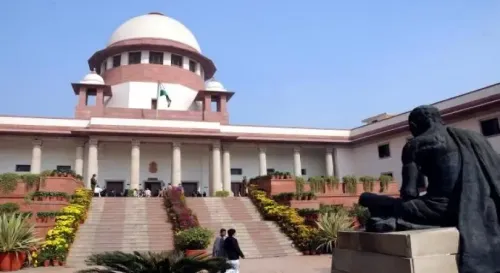
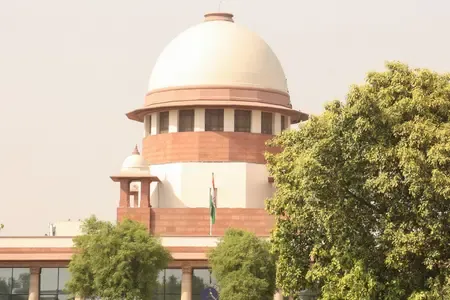
Patna, Jan 29 (NationPress) The Supreme Court has put a hold on the enforcement of the University Grants Commission (UGC) Promotion of Equity in Higher Education Institutions Regulations, 2026, stating that the new rules seem vague on their face and could easily be misused.
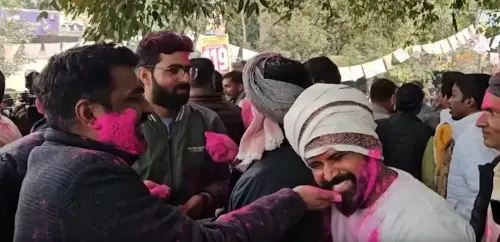
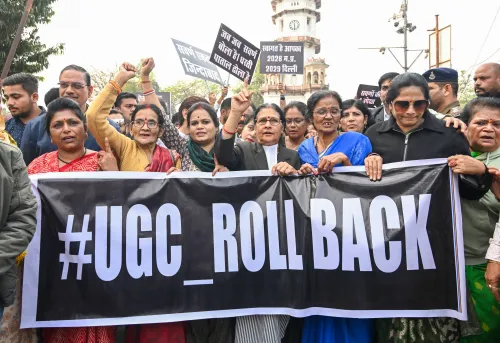
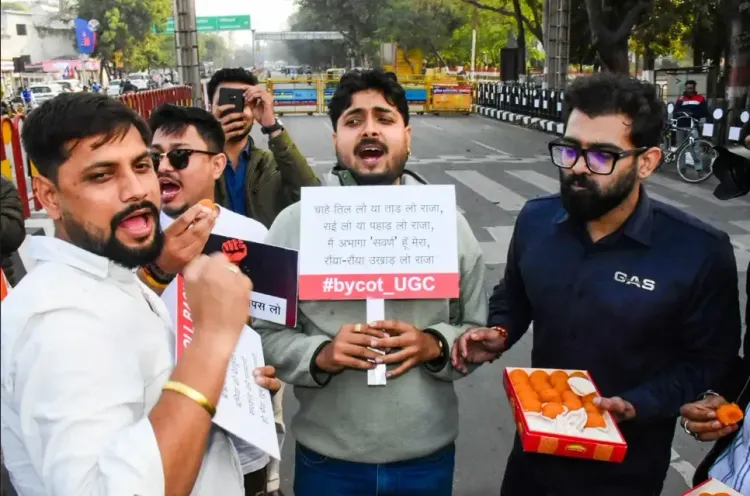
In the wake of the apex court's ruling, celebrations erupted in parts of Nawada district, where members of the upper caste community expressed their relief over this stay.
People congregated in public spaces, shared sweets, and smeared gulal on one another, celebrating what they regarded as a protection of constitutional equality.
Local students and residents noted that the court's stay upholds Article 14 (Right to Equality) of the Constitution and shields against what they perceive as potential misuse of the proposed regulations.
Celebrating youths emphasized that their opposition was not aimed at any particular community, but rather at provisions they felt could undermine merit-based opportunities.
Critics have argued that the 2026 regulations could lead to discrimination against general category students and faculty, especially concerning disciplinary and administrative matters.
Legal experts involved in the protests asserted that the regulations lacked clear definitions and procedural safeguards, raising the risk of arbitrary interpretation.
Student groups in Nawada mentioned that the Supreme Court's intervention has temporarily alleviated worries about fairness and transparency in governance within higher education.
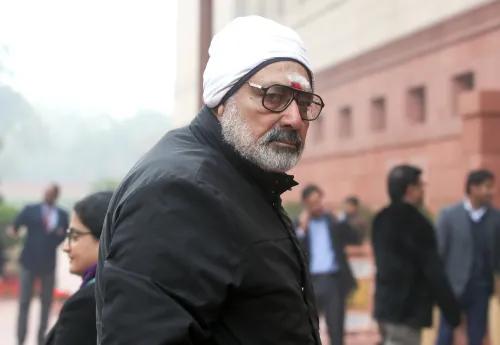
Union Textile Minister Giriraj Singh publicly expressed his appreciation for the Supreme Court's decision, acknowledging it as a relief for students, educators, and institutions across the country. He took to social media, stating, "I convey my heartfelt thanks to Prime Minister Narendra Modi and Home Minister Amit Shah. The Supreme Court's stay on the UGC regulations has offered immense relief. The Narendra Modi administration is dedicated to inclusive development, justice, and the steadfast defense of constitutional principles."
However, his comments were met with backlash on social media, with users questioning his silence when the regulations were first announced.
Meanwhile, Union Minister Rajiv Ranjan Singh, also known as Lalan Singh, opted not to comment when approached by reporters at Patna Airport.
Numerous leaders from Bihar had previously remained quiet despite widespread discussions surrounding the UGC regulations.
Until the Supreme Court reaches a final verdict, higher education institutions nationwide will continue to follow the existing 2012 UGC guidelines.
This case is being monitored closely by academic entities, student organizations, and policymakers, as it has the potential to significantly reshape the framework for equity and governance within India's higher education landscape.
Point of View
I recognize the Supreme Court's ruling as a pivotal moment for educational equity in India. The stay on the UGC regulations addresses concerns that could have led to discrimination and inequality in higher education. It is crucial for policymakers to prioritize clarity and fairness to uphold the principles of the Constitution and support all students equitably.
NationPress
2 Oct 2026
Frequently Asked Questions
What are the UGC regulations that were stayed?
The UGC Promotion of Equity in Higher Education Institutions Regulations, 2026 aimed to promote equity but were criticized for being vague and susceptible to misuse.
Why was there a celebration in Nawada?
The celebrations were due to the Supreme Court's stay on the UGC regulations, which many felt protected their right to equality under Article 14 of the Constitution.
What did Union Minister Giriraj Singh say about the ruling?
He expressed gratitude to the Supreme Court and emphasized the government's commitment to inclusive development and justice for students and educational institutions.
What are the implications of this case for higher education?
The Supreme Court's intervention is expected to influence the governance and equity framework in India's higher education system significantly.
What happens next for higher education institutions?
Until a final judgment is delivered, institutions will continue to follow the existing 2012 UGC guidelines.