Will the New UGC Equity Regulations Divide Society?
Synopsis
The Supreme Court has temporarily halted the implementation of UGC's 2026 equity regulations, voicing concerns over potential societal division and discrimination against the general category. This ruling ensures the continuation of the 2012 regulations until further review. The implications of this decision could have significant effects on the higher education landscape in India.
Key Takeaways
The Supreme Court has stayed the UGC's 2026 equity regulations.
Concerns over societal division and discrimination were highlighted.
The 2012 UGC Regulations will remain effective until further orders.
Next hearing is set for March 19.
Petitions argue for equality and fair access in higher education.
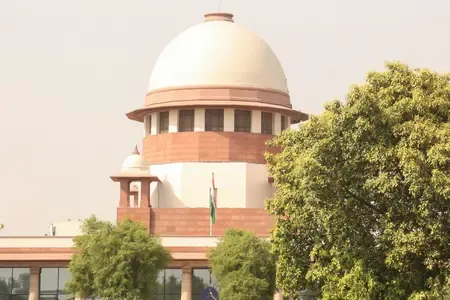
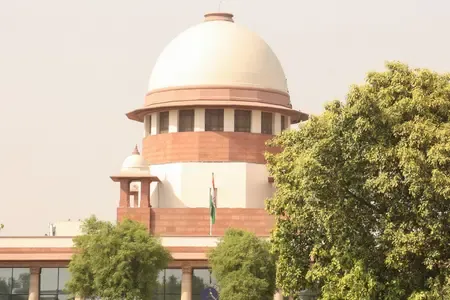
New Delhi, Jan 29 (NationPress) In a decisive interim ruling issued on Thursday, the Supreme Court has suspended the implementation of the University Grants Commission (Promotion of Equity in Higher Education Institutions) Regulations, 2026. The Court, led by Chief Justice of India Surya Kant and Justice Joymalya Bagchi, has also served notice to the Centre and the UGC, mandating that the 2026 Regulations will remain on hold while the provisions of the 2012 UGC Regulations will be in effect until further instructions are provided.
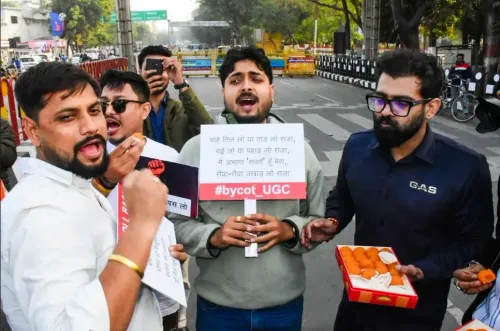
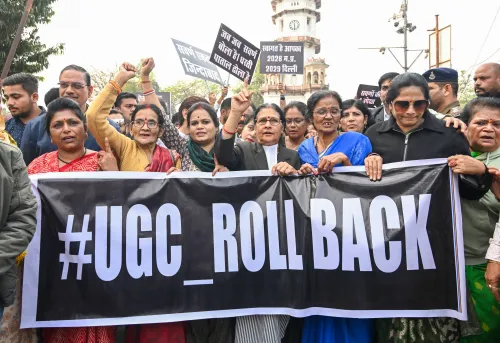
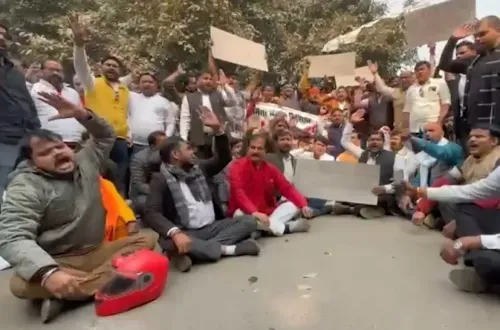
The Court was addressing several petitions arguing that the newly proposed regulations could foster discrimination against individuals in the general category. The judges expressed apprehension regarding the lack of adequate grievance redressal mechanisms for those affected.
By invoking its extraordinary powers under Article 142 of the Constitution to ensure “complete justice,” the Supreme Court has ruled that the 2012 Regulations will remain operational until a subsequent order is issued.
This matter is scheduled for further deliberation on March 19.
During the hearings, Chief Justice Kant raised concerns about the potential fallout from the new regulations, stating, “If we don’t intervene, it will have a dangerous impact. It will divide society and have grave repercussions.”
Earlier, on Wednesday, Chief Justice Kant had agreed to prioritize the case for hearing after it was requested for urgent listing.
The petitioners claim that the new UGC framework institutionalizes discrimination by failing to provide grievance redressal mechanisms for non-SC/ST/OBC category individuals. They argue that these regulations contravene the principles of equality and equitable access to remedies within higher education.
The petition further asserts that the regulation limits the definition of “caste-based discrimination” exclusively to members of the “Scheduled Castes, Scheduled Tribes and Other Backward Classes.” This narrow definition effectively grants legal recognition of victimhood only to certain reserved categories, thereby excluding individuals from general or upper castes from protection, irrespective of their experiences of discrimination.
Additionally, the petition seeks a directive to ensure that Equal Opportunity Centres, Equity Helplines, inquiry mechanisms, and Ombudsperson processes under the regulations are accessible in a “non-discriminatory and caste-neutral manner,” pending any reconsideration or amendments to Regulation 3(c).
The petition claims that denying access to grievance mechanisms based on caste identity constitutes impermissible state discrimination, thus violating Articles 14, 15(1), and 21 of the Constitution.
Point of View
I believe that the Supreme Court's decision reflects the need to uphold equality in our education system. The concerns raised about potential discrimination against certain categories underscore the vital importance of ensuring that all students have equal access to opportunities and redressal mechanisms. This ruling is a necessary step towards fostering an inclusive educational environment.
NationPress
6 Oct 2026
Frequently Asked Questions
What are the UGC's new equity regulations?
The UGC's new equity regulations aim to promote fairness and inclusion within higher education institutions, specifically targeting underrepresented groups. However, their implementation has been challenged due to concerns over potential discrimination against the general category.
Why did the Supreme Court stay these regulations?
The Supreme Court stayed the regulations due to apprehensions that they could lead to societal division and discrimination against individuals in the general category, thus violating principles of equality.
When is the next hearing scheduled?
The next hearing regarding this matter is scheduled for March 19.
What are the main concerns raised in the petitions?
The petitions argue that the regulations institutionalize discrimination, lack adequate grievance redressal mechanisms for non-SC/ST/OBC individuals, and violate constitutional principles of equality.
How does this ruling impact higher education in India?
The ruling ensures that the 2012 UGC Regulations remain in force, thereby providing a framework that is perceived to be more equitable until the new regulations are re-evaluated.