Could the misuse of new UGC equity regulations be a concern? SC stays 2026 regulations
Synopsis
In a significant interim order, the Supreme Court has suspended the University Grants Commission's 2026 regulations, citing potential misuse and ambiguities. The 2012 regulations will remain in effect. This decision has raised crucial questions regarding caste-based discrimination and equity in higher education.
Key Takeaways
Supreme Court stays UGC's 2026 equity regulations .
Previous 2012 Regulations will remain in effect.
The court raised concerns about potential misuse of the new provisions.
Issues of caste-based discrimination remain a focal point.
Further hearings are set for March 19 .
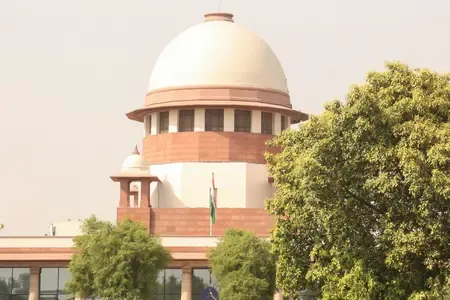
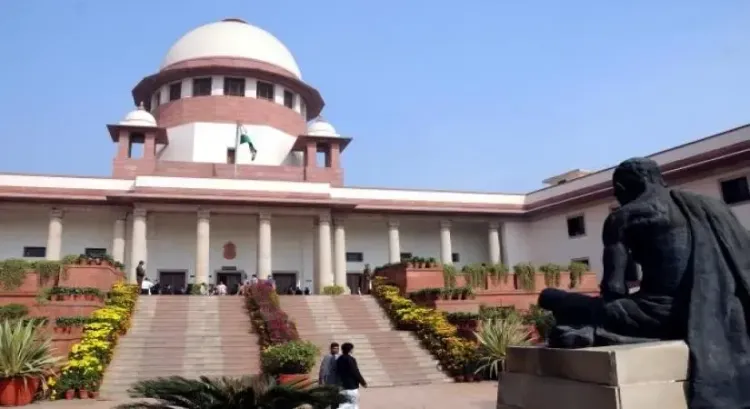
New Delhi, Jan 29 (NationPress) The Supreme Court has issued an interim ruling on Thursday, suspending the implementation of the University Grants Commission (Promotion of Equity in Higher Education Institutions) Regulations, 2026. This directive mandates that the previous 2012 Regulations remain effective until further notice.
The court has sent notices to the Centre and the UGC regarding multiple writ petitions contesting the validity of the 2026 Regulations, especially Clause 3(c), which outlines the definition of caste-based discrimination. The bench, led by Chief Justice of India (CJI) Surya Kant and Justice Joymalya Bagchi, has ordered that the new regulations be put on hold.
In its preliminary assessment, the apex court noted that “some provisions of the Impugned Regulations contain ambiguities, and the potential for misuse is significant.”
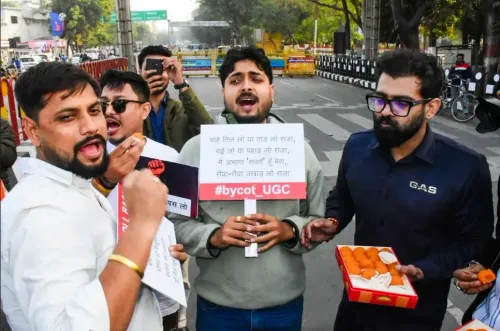
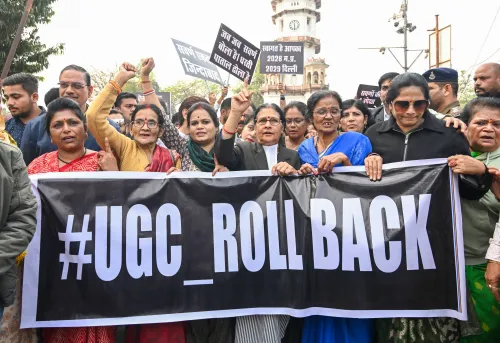
During the proceedings, the petitioners argued that the definition of caste-based discrimination in the 2026 Regulations is “restrictive and exclusionary,” leaving individuals from general categories without remedies even if they face caste-based discrimination or institutional bias in higher education.
The court took note of the petitioners' claim that “the Impugned Regulations operate under an unfounded assumption that caste-based discrimination is solely unidirectional, never affecting individuals from non-reserved or general categories.”
As it framed important legal questions for review, the Supreme Court indicated it would assess whether the inclusion of Clause 3(c) maintains a “reasonable and rational connection” to the goals of the 2026 Regulations, particularly when no distinct procedure for addressing caste-based discrimination has been established, in contrast to the broader definition of “discrimination” under Clause 3(e).
The apex court raised concerns about the word “segregation” in Clause 7(d), suggesting that the allocation of hostels, classrooms, or mentorship groups, even when based on transparent criteria, could lead to questions surrounding a “separate yet equal” classification, potentially violating the constitutional guarantees of equality and fraternity under Articles 14 and 15.
Another significant issue identified for deeper investigation was the absence of “ragging” as a specific form of discrimination within the 2026 framework, even though it was specifically addressed in the earlier 2012 Regulations.
The CJI-led bench remarked that this omission could represent a “regressive and exclusionary legislative omission,” possibly infringing Articles 14 and 21 of the Constitution by creating inequality in access to justice.
In conclusion, the Supreme Court mandated that the University Grants Commission (Promotion of Equity in Higher Education Institutions) Regulations, 2026 remain on hold, stating that “pursuant to our authority under Article 142 of the Constitution, the 2012 Regulations will continue to be enforced until further directives.”
The case is set for further deliberation on March 19.
Point of View
The Supreme Court's decision reflects a careful balance between equity and fairness in higher education. The court's willingness to scrutinize the implications of the 2026 regulations demonstrates a commitment to upholding constitutional values while addressing the complexities of caste-based issues. This approach emphasizes that legislative measures must be inclusive and just, ensuring that no group is left without recourse.
NationPress
28 Sept 2026
Frequently Asked Questions
What are the implications of the Supreme Court's ruling?
The ruling suspends the new 2026 regulations, allowing the 2012 regulations to remain in force, which could influence how caste-based discrimination is addressed in higher education.
Why were the 2026 regulations challenged?
The 2026 regulations were contested due to concerns over ambiguities and their restrictive definition of caste-based discrimination, which could leave some individuals without legal remedies.
When will the Supreme Court hear this matter again?
The Supreme Court has scheduled further hearings for March 19.