Are Protests Erupting Nationwide Over Revised UGC Regulations and Claims of Discrimination?
Synopsis
Nationwide protests against revised UGC regulations have sparked tensions, with demonstrators claiming discrimination. As upper-caste groups voice their concerns, the agitation intensifies, threatening to escalate further. Will the authorities heed these demands for change?
Key Takeaways
Massive protests across states against new UGC regulations.
Claims of discrimination by upper-caste groups.
Call for immediate withdrawal of controversial rules.
Petition challenging regulations filed in Supreme Court.
Social divides highlighted among students.
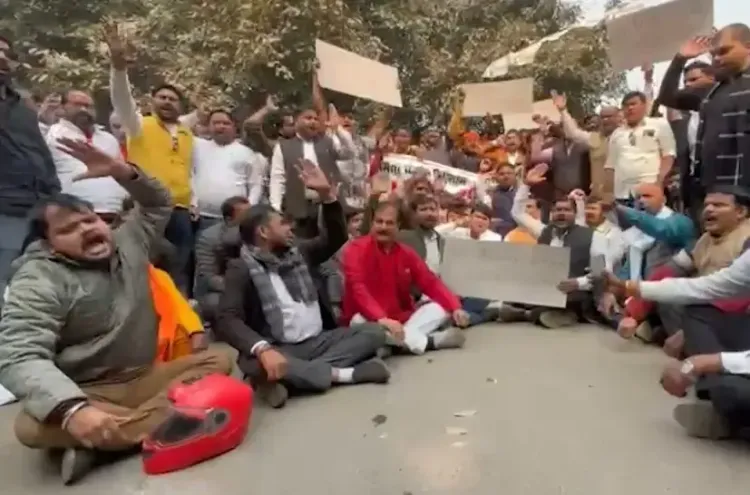
New Delhi, Jan 27 (NationPress) - Massive protests have sprung up across various states in response to the University Grants Commission’s revised regulations, with participants labeling them as “discriminatory” and cautioning that these new policies could exacerbate social divides and incite further unrest on university campuses.
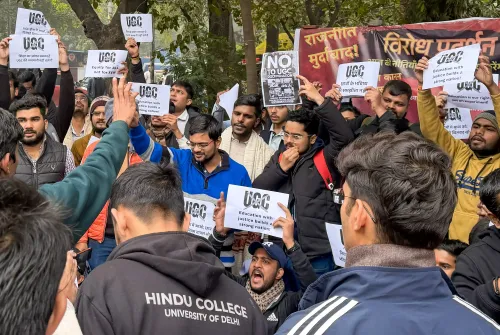
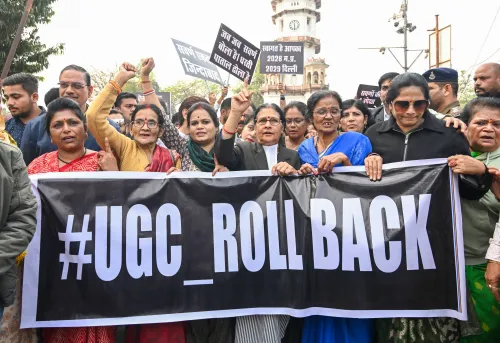
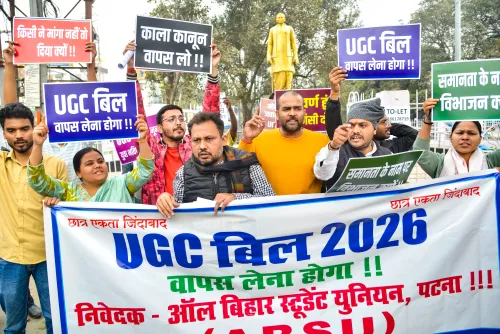
On Tuesday, students and young adults from the general category took to the streets in numerous cities, demanding that the new UGC regulations be rescinded without delay.
The agitation has gained significant traction nationwide, especially among upper-caste groups, who contend that the guidelines have incited feelings of resentment and exclusion instead of promoting equality.
Critics of the revised UGC framework argue that measures against discrimination should be applied uniformly and fairly, regardless of the caste identity of the victim or the accused.
Demonstrators have also called for protections for upper-caste students, emphasizing that they too encounter harassment and negative labeling.
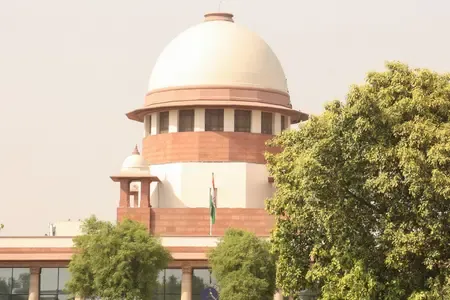
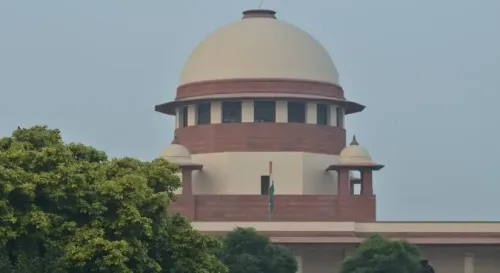
The controversy has escalated to the judiciary level, with a petition submitted to the Supreme Court challenging the newly implemented UGC regulation.
The petition claims that the new guidelines utilize a “non-inclusionary” definition of caste-based discrimination, excluding specific social groups from institutional protections.
It further alleges that the regulations fail to protect students and faculty outside the reserved categories, thus creating an imbalance in the grievance redressal processes in educational institutions.
In the national capital, members of the upper-caste community organized a protest outside the UGC headquarters at ITO in New Delhi. Heightened security measures were implemented, with multiple barricades erected to restrict protesters from approaching the office.
One protester remarked to IANS, “Our stand is very clear, and our numbers are large, yet they are stopping us. They have put up five layers of barricading... Do people not have the right to protest? All our rights and interests are being taken away. The police and administration are trying to stop us. We are being forced to live like second-class citizens in our own country... We are demanding that these regulations be withdrawn.”
Similar protests were reported in several regions of Uttar Pradesh, including Varanasi, Amethi, and Bareilly, demonstrating the expanding nature of the protest movement.
In Amethi, members of the upper-caste community protested against the BJP concerning the UGC regulations, threatening to march to Delhi if their demands were overlooked.
As part of their demonstration, the protesters also declared a Bharat Bandh on February 1.
In Varanasi, students and young adults from the general category gathered at the district headquarters to express their opposition to the new UGC rules, warning that the agitation could escalate and move to the national capital if corrective measures are not enacted.
A protesting student conveyed to IANS, “Dividing adults by caste may still be understandable to some extent for some people, but dividing children on the basis of caste is completely unacceptable. Earlier, children studied together, sat together, ate together, shared their tiffins and interacted freely. Now they have been divided into SC, ST, OBC, and General categories. Effectively, two groups have been created - General on one side and OBC and SC on the other.”
Meanwhile, events in Bareilly added another layer to the ongoing discontent. A PCS officer, Alankar Agnihotri, who previously resigned from his role as Bareilly City Magistrate, was suspended by the authorities.
After his suspension, Agnihotri arrived at the collectorate with his supporters, seeking to meet the District Magistrate.
When police barred their entry, Agnihotri and his supporters staged a dharna at the gate. He insisted that the protest would persist until the District Magistrate personally addressed his inquiries.
Subsequently, senior officials, including ADM (E) Purnima Singh and ADM City Saurabh Dubey, attended the site, prompting the gate to be opened. However, the protest continued even after their arrival.
Questioning the conduct of senior officials, Agnihotri claimed he was personally targeted.
“I want to ask the District Magistrate who called him last night. They referred to me as ‘Sala Pandit Pagal Ho Gya Hai’. If these words were not spoken by the District Magistrate himself, then they were spoken by those who were issuing orders to him. Saying ‘Sala Pandit Pagal Ho Gya Hai’ is unacceptable,” he asserted.
He further claimed widespread support for his position, stating, “Symbols of the Sanatan culture are being insulted. This is not just about me. Injustice is being done to society as a whole.”
Point of View
It is crucial to approach this situation with empathy and an understanding of the broader implications. The protests reflect deep-seated concerns about equality and representation in education. It is essential that all voices are heard, ensuring a balanced dialogue that fosters unity rather than division.
NationPress
23 Sept 2026
Frequently Asked Questions
What are the revised UGC regulations?
The revised UGC regulations are new guidelines implemented by the University Grants Commission, which have sparked protests due to claims of discrimination against upper-caste students.
Why are people protesting the UGC regulations?
Protesters argue that the new UGC regulations are discriminatory and could further entrench social divides within educational institutions.
What actions have been taken by protesters?
Protesters have organized demonstrations in various cities, demanded the withdrawal of the regulations, and declared a Bharat Bandh on February 1.
How have authorities responded to the protests?
Authorities have implemented heavy security measures at protest sites, including barricading, to manage the demonstrations.
What is the next step for the protesting groups?
The protesting groups are advocating for dialogue with authorities and plan to intensify their demonstrations if their demands are not met.