FairPoint: Did Campuses Anticipate the Controversy Over New Rules?
Synopsis
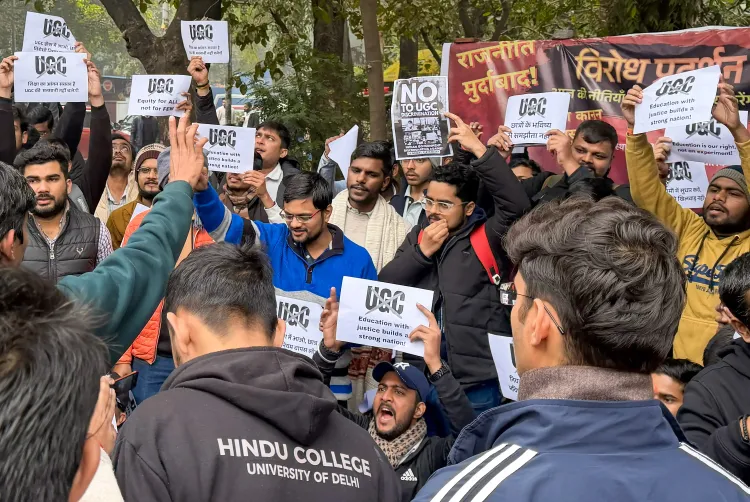
The recent equity regulations by the University Grants Commission have ignited a fierce debate across campuses. While aimed at promoting equality, many perceive them as coercive and potentially discriminatory. The Supreme Court's intervention highlights the need for a balanced approach to social justice. This article dives into the implications and reactions surrounding these controversial rules.
Key Takeaways
UGC regulations sparked significant debate .
Supreme Court emphasizes fairness and balance .
Concerns about coercion and discrimination .
Political context raises questions about intent .
Need for inclusive and transparent equity measures .
New Delhi, Feb 1 (NationPress) When a regulation grants extensive discretionary power to authorities without precise guidelines, it transitions from being a reformative measure to appearing coercive. This is how the University Grants Commission's recent equity regulations have been interpreted across educational institutions and beyond.
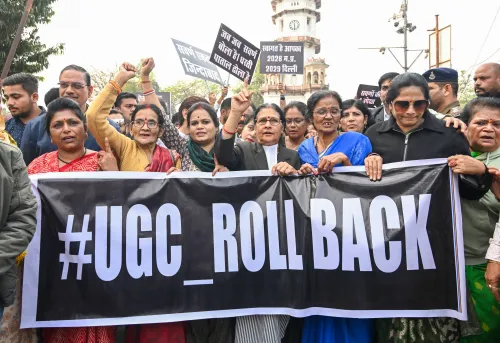
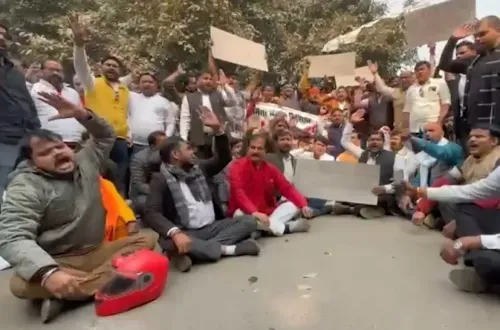
The backlash was not against the ideals of equality or social justice, but against the framework of the rules themselves—characterized by ambiguous definitions, broad mandates, and an enforcement mechanism that seemed more punitive than corrective.
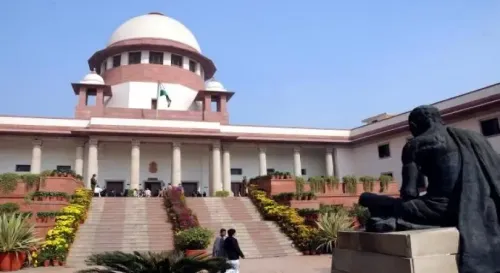
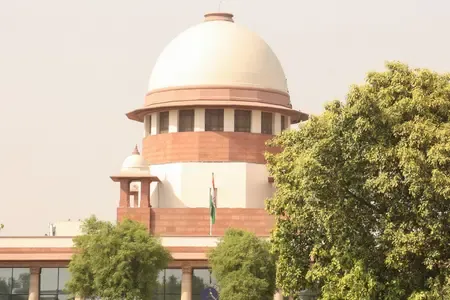
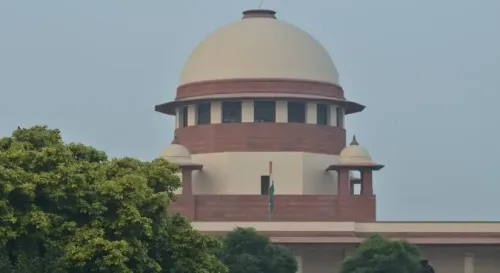
The Supreme Court's intervention, which suspended the operation of the University Grants Commission (Promotion of Equity in Higher Education Institutions) Regulations and instructed institutions to adhere to prior norms, reinstated an essential constitutional equilibrium.
In this action, the Court reiterated a fundamental principle: social justice must operate within the confines of reasonableness, fairness, and due process. Equity cannot be applied as a blunt tool; it must be equitable and safeguarded.
It is hard to believe that the authors of these regulations were oblivious to this distinction. The aim is to eradicate bias and discrimination from campuses, yet the formulated rules have sparked disconcerting inquiries. How can a regulation intended to combat discrimination seem discriminatory itself? How can an initiative to foster equity become so biased that it alienates a significant portion of students and faculty?
The heart of the controversy resides in Clause 3(c), which defines "caste-based discrimination" solely as discrimination against members of Scheduled Castes, Scheduled Tribes, and Other Backward Classes. This definition is predicated on the assumption that caste discrimination is inherently one-directional. While the historical injustices against marginalized communities are undeniable and must be addressed, the complete exclusion of the general category from the protective framework creates an inequity that is neither just nor practical.
Campuses are intricate social environments. Discrimination, intimidation, and misuse of power can occur across caste boundaries. There have been instances—both documented and anecdotal—where students from general or upper-caste backgrounds have experienced harassment, social exclusion, or threats. Ignoring these concerns outright risks dismissing legitimate grievances and exacerbating social divisions rather than reconciling them.
Controversies at institutions like Jawaharlal Nehru University and Ashoka University, where allegations of intimidation and targeting have frequently emerged, highlight the volatility of campus politics.
A recent unverified video that circulated broadly on social media suggested that a false complaint under the SC/ST Act was employed to intimidate a student following a personal disagreement. Although the college in question denied the incident, and such claims should be approached with caution, the event underscores a larger fear: the potential misuse of stringent laws without adequate safeguards.
This concern was echoed during the Supreme Court hearing on January 29. A counsel reportedly argued that a fresher resisting ragging by a senior from a Scheduled Caste background could be susceptible to false allegations of caste discrimination. Given that anticipatory bail is not accessible under the SC/ST (Prevention of Atrocities) Act, such an accusation—even if ultimately proven false—could irreparably harm a student's academic career and personal life. The argument was hypothetical, but the anxiety it signified was genuine.
The petitioners before the Court noted that the regulations not only exclude the general category from protection but also lack mechanisms to penalize false or malicious complaints. This gap has fueled fears of harassment and selective targeting.
Adding to the unease is the political backdrop. The regulations were unexpected, especially under a BJP-led government that has consistently aimed to consolidate Hindu unity across caste lines. Their introduction mere months before elections in five states has inevitably sparked speculation about timing and intent. Whether coincidental or not, the move has undeniably stirred the caste discourse, with most political parties—including BJP leaders—offering support rather than criticism.
The Centre has attempted to reassure skeptics. Education Minister Dharmendra Pradhan has stated that the guidelines are solely intended to combat caste-based discrimination and will not be misused. He underscored that it is the responsibility of the Centre, states, and the UGC to ensure constitutional compliance, particularly since the matter is now under the Supreme Court's supervision.
However, mere assurances may not suffice. While protests have diminished following the Court's stay, a lingering sense of mistrust persists among a considerable segment of society. The Supreme Court has appropriately warned against politicizing the issue, stating that India's unity must be mirrored within its educational institutions. Yet, in an environment where law, identity, and politics are deeply interconnected, maintaining the apolitical nature of such regulations will be easier said than done.
If equity is to be meaningful, it must be inclusive, balanced, and transparent. Otherwise, reform risks morphing into coercion—and justice, a casualty.
(Deepika Bhan can be reached at deepika.b@ians.in)
Point of View
It's crucial to recognize the nuanced complexities surrounding the recent equity regulations by the UGC. While the intention to address caste-based discrimination is commendable, the execution has led to significant concerns regarding fairness and balance. The ongoing discourse must navigate these challenges, ensuring all voices are heard while fostering a just and equitable educational environment.
NationPress
10 Sept 2026
Frequently Asked Questions
What sparked the controversy over the UGC regulations?
The controversy arose from the perception that the UGC's equity regulations granted excessive discretionary power without clear guidelines, leading to fears of coercion and discrimination against certain student groups.
How did the Supreme Court respond to the UGC regulations?
The Supreme Court intervened by staying the operation of the UGC regulations, emphasizing the need for fairness and due process in implementing social justice measures.
What are the main concerns regarding the regulations?
Concerns include the vague definitions within the regulations, the exclusion of the general category from protection, and the lack of mechanisms to address false complaints, which could lead to selective targeting.
Why is the political context significant in this debate?
The political backdrop is important as the regulations were introduced during a BJP-led government, raising questions about the timing and implications for caste unity, especially ahead of upcoming elections.
What is the importance of ensuring equity in educational institutions?
Ensuring equity is vital for fostering an inclusive and transparent educational environment where all students feel protected and valued, rather than alienated or discriminated against.