Is 'Foreign DNA' Preventing Rahul and Priyanka Gandhi from Joining the Vande Mataram Debate?
Synopsis
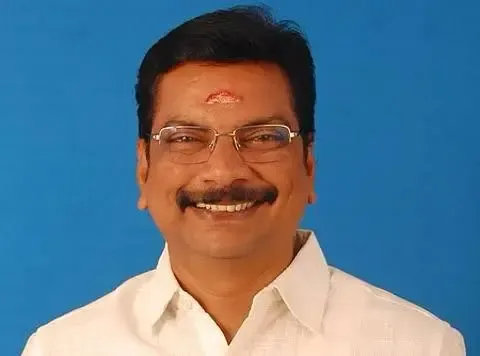
TDP MP Byreddy Shabari's remarks on Rahul and Priyanka Gandhi's absence during the 'Vande Mataram' debate stir controversy. Her comments on 'foreign DNA' and the historical significance of the anthem spark discussions about patriotism and political participation. Explore the implications of her statements and the relevance of 'Vande Mataram' in today's India.
Key Takeaways
Vande Mataram has historical significance in India's freedom struggle.
Political leaders must acknowledge their role in national discussions.
Inclusivity in patriotism transcends religion and caste.
Reviving recognition for historical figures is essential.
National pride is pivotal for a united India.
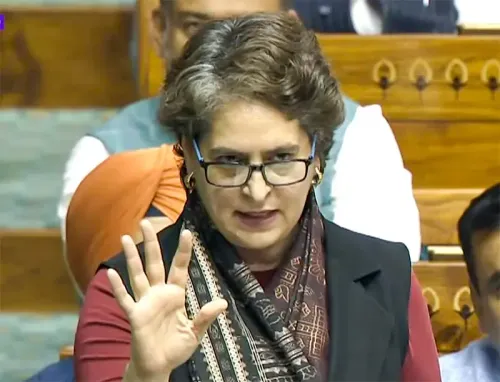
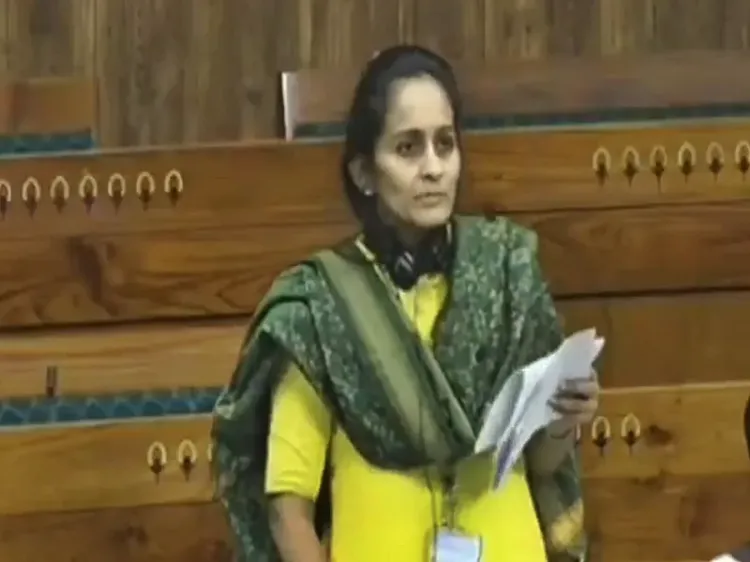
New Delhi/Amaravati, Dec 8 (NationPress) Telugu Desam Party (TDP) MP Byreddy Shabari critiqued the absence of Congress leaders Rahul Gandhi and Priyanka Gandhi Vadra during the debate commemorating 150 years of Vande Mataram in the Lok Sabha on Monday. Byreddy Shabari suggested that their 'foreign DNA' might be the reason for their non-participation in this significant discussion.
Shabari stated, "It is said to return to the motherland and uplift the nation. I wonder why some individuals and leaders here cannot return to their roots. Perhaps their foreign DNA is preventing them from even attending this crucial session today," while not explicitly naming the Congress leaders.
The MP from Nandyal emphasized the historical significance of Vande Mataram, noting that it was written on the auspicious occasion of Akshaya Navami and has since become the eternal anthem of our nation. “This song embodies courage and hope, representing the collective memories of India’s consciousness,” she remarked.
Shabari recalled that Rabindranath Tagore first sang this song during a Congress session in 1896, and in 1905, thousands marched with the slogan of Vande Mataram during the Bengal partition, marking its entry into India’s political landscape.
She urged that we must remember the contributions of great individuals like Bhikaji Cama, who displayed the Tricolour with Vande Mataram inscribed on it abroad, and Madan Lal Dhingra, who faced the gallows with Vande Mataram as his final words, showcasing immense devotion. Even Savarkar uttered Vande Mataram while enduring punishment in 'Kala Pani'.
The TDP MP highlighted that Peddakarayapalli, a small village in Andhra Pradesh, was the first to achieve Swaraj, shaking the foundations of the British Empire. Vande Mataram inspired and shaped the freedom movement, igniting political awareness and strength.
She referenced Warren Hastings, who warned of the destruction caused by wandering Sadhus and Sanyasis, reflecting a mindset that dismissed these figures as looters. Yet, this narrative was revived after Anandamath’s birth. She pointed out how the Macaulay mindset erased great historical figures’ contributions.
Shabari mentioned Uyyalawada Narasimha Reddy, a hero from her constituency, and expressed pride in her lineage’s contribution to the freedom struggle. She also lamented how Pingali Venkayya, the designer of the national flag from Andhra Pradesh, was omitted from history until the Prime Minister's announcement of Azadi Ka Amrit Mahotsav reignited recognition of such figures.
She applauded how people of all backgrounds sing Vande Mataram with pride and fervor, transcending religion, caste, and gender.
Shabari criticized West Bengal’s silence regarding the removal of divine references from Vande Mataram. "Why is it that the state where this song was born, the state that claims to be the motherland of Durga Maa, remains silent about the Congress's actions in 1937? We know the leaders from Nehruji's Cabinet who objected to Vande Mataram."
She recalled how former President A.P.J. Abdul Kalam expressed pride in the song, urging citizens to view it as a source of inspiration rather than a religious chant, and highlighted how A.R. Rahman included Vande Mataram in his album, creating a nationwide impact.
Dr. Rajendra Prasad, India’s first President, emphasized that Vande Mataram should be honored as much as the national anthem. “All of our citizens, Hindus and Muslims alike, appreciated this sentiment. I am grateful to our Prime Minister (Narendra Modi) for celebrating 150 years of Vande Mataram - a journey that embodies not only our nation’s essence but also reflects the bravery of our ancestors, the sacrifices of our villages, and the voices of millions. This is not merely a song; it’s a powerful force that ignites patriotism in every Indian's heart,” she concluded.
Point of View
Byreddy Shabari's remarks highlight a growing divide in Indian politics regarding national identity and participation. While her comments may resonate with some, they also risk alienating others. The ongoing discussion around 'Vande Mataram' serves as a reminder of the complexities of patriotism in a diverse nation. It is essential to foster dialogue that unites rather than divides, emphasizing that every citizen has a role in shaping the country's future.
NationPress
2 Oct 2026