Tehran Faces Unprecedented Strikes as Conflict Intensifies
Synopsis
As tensions escalate, Tehran becomes the battleground for a fierce conflict with US and Israeli airstrikes causing extensive destruction. Residents live in fear, as the strikes target military and civilian infrastructure alike. This article delves into the implications of the ongoing warfare and what it means for the future.
Key Takeaways
Tehran is under severe bombardment from US and Israeli airstrikes.
Major damage has occurred to both military and civilian infrastructure.
Residents live in constant fear as their daily lives are disrupted.
Iranian officials have vowed to retaliate, raising tensions further.
US intelligence suggests the political structure in Iran is resilient against military actions.
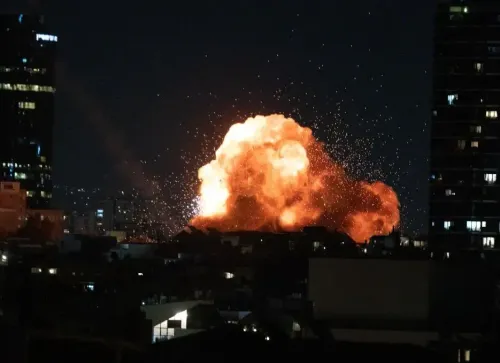
Washington, March 8 (NationPress) Tehran is currently at the forefront of a rapidly escalating conflict as airstrikes from the United States and Israel relentlessly target various sites in the Iranian capital. The ongoing assault has resulted in extensive devastation and an increasing sense of anxiety regarding a prolonged warfare scenario, according to recent media reports.
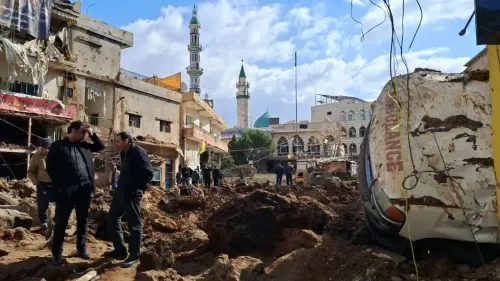
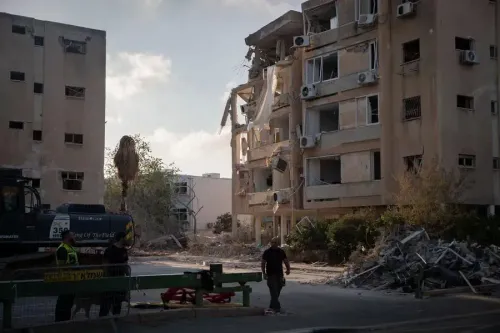
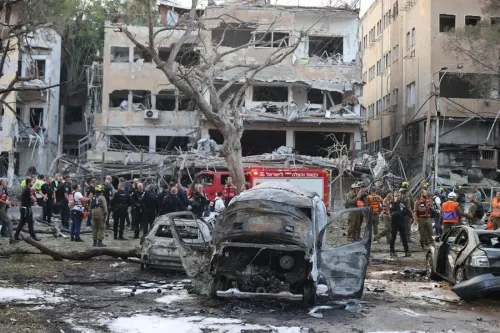
Numerous munitions have bombarded the vast city, impacting military installations, security facilities, and critical infrastructure linked to Iran's defense network. These strikes have also inflicted damage on cultural sites and residential neighborhoods, highlighting the extensive nature of the attacks in a city housing nearly 17 million inhabitants.
The Wall Street Journal reports that the joint US-Israeli air operations have “created a path of destruction through Tehran, instilling a profound sense of fear and paranoia in a city that has endured conflict but never on such a scale.”
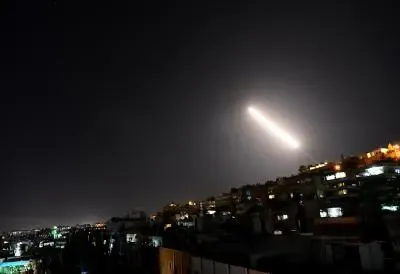
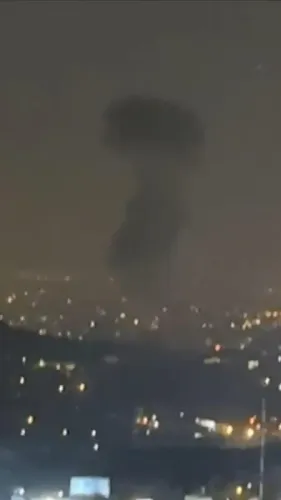
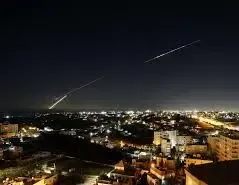
Explosions have been reported throughout Tehran, with smoke billowing from various districts. Notably, a refinery in southern Tehran was engulfed in flames after airstrikes targeted oil storage facilities, marking a significant escalation in which energy infrastructure has become a focal point.
Residents have described the experience as living under relentless fire.
“It feels like an absurd picnic,” one Tehran woman expressed to the Wall Street Journal. “People gather, snack, and discuss where the latest missile landed.”
Reportedly, the strikes have zeroed in on command posts, missile launch sites, and facilities associated with the Islamic Revolutionary Guard Corps and its Basij militia, as per US sources. These operations seem designed to undermine Iran’s military leadership and internal security forces.
The civilian population has also suffered the consequences. Hospitals, educational institutions, and residential areas have experienced damage due to the continuous bombardment.
“Educational institutions and healthcare facilities should remain safe and designated as nonmilitary zones; they are meant for learning, healing, and care, not as targets of warfare,” stated the Coordination Council of Iranian Educators’ Associations, as referenced by the Wall Street Journal.
Iranian authorities have pledged to retaliate and cautioned that the conflict may broaden in scope.
“We will not allow Trump to evade accountability; he must face repercussions,” asserted senior Iranian security official Ali Larijani in a statement aired on Iranian state television, according to CNN.
Israeli officials have indicated that their military actions will escalate.
“Israel will continue to target Iran with full force,” declared Prime Minister Benjamin Netanyahu in a recorded message shared by CNN, noting that there are “multiple other targets and surprises in store.”
US President Donald Trump has also indicated that the conflict could expand if Tehran does not relent. Speaking to journalists aboard Air Force One, he stated that Washington seeks a leadership in Iran that will not drag the nation into further wars.
“We don’t want to revisit this every five or ten years,” Trump remarked to reporters, as reported by CNN. “Our goal is to support a president who won’t lead their country into conflict.”
Daily life in Tehran has been profoundly disrupted. Many residents are leaving the capital, resulting in lighter traffic, while those who remain congregate on rooftops at night to witness the explosions illuminating the sky.
The sounds of missiles soaring overhead and air-raid sirens have become a common aspect of nightly life.
This ongoing bombardment has rekindled memories of the Iran-Iraq war during the 1980s when Iraqi forces launched missile attacks on Iranian cities. Analysts suggest that the current air campaign is more focused and technologically advanced than those historical strikes.
Despite the escalation, US intelligence officials have warned that achieving Washington's political objectives may not occur swiftly. A classified assessment by The Washington Post indicated that a large-scale military offensive against Iran would likely be “improbable” in toppling the entrenched clerical and military hierarchy. Officials noted that Iran's leadership structure is built to maintain continuity of authority even in the event of the death of high-ranking officials.
This evaluation underscores the fundamental challenge faced by Washington and its allies: although the air campaign has caused extensive damage to Iran's military capabilities, dismantling the nation’s political framework may prove to be a far more daunting task.
Point of View
Presenting a complex challenge for both regional stability and global politics. The bombardment reflects a significant escalation in hostilities that could have far-reaching consequences, not just for Iran but for the international community as a whole. A focus on diplomacy rather than military action may be crucial to prevent further deterioration.
NationPress
19 Sept 2026
Frequently Asked Questions
What is causing the recent airstrikes in Tehran?
The airstrikes are part of a joint military campaign by the US and Israel aimed at targets linked to Iran's military and security apparatus amidst escalating tensions.
How has civilian life been affected in Tehran?
Civilian life has been severely disrupted, with schools, hospitals, and residential areas suffering damage from the strikes, leading to widespread fear among residents.
What has been the international reaction to the strikes?
International reactions have varied, with Iranian officials promising retaliation while Israeli leaders have indicated that their military actions will continue and intensify.
What are the potential implications of this conflict?
The conflict could lead to a broader regional war and complicate international relations, especially if retaliatory actions escalate further.
How does this situation compare to past conflicts involving Iran?
The current situation is seen as more focused and technologically advanced compared to historical conflicts, such as the Iran-Iraq war of the 1980s.