IANS Year Ender 2025: Has Revanth Reddy Advanced Telangana's Social Justice Goals?
Synopsis
Discover how Telangana's political landscape transformed in 2025, from caste census initiatives to substantial reservation changes. With significant victories for the Congress party and strategic Cabinet expansions, Chief Minister Revanth Reddy's leadership shaped a year of intense political activity, setting the stage for future developments.
Key Takeaways
Caste census revealed significant population demographics in Telangana.
The government aimed for a 42% reservation for Backward Classes .
Telangana became the first state to implement SC sub-categorization.
Cabinet expansions included significant political figures for better representation.
The Congress party achieved notable victories in key elections.
Hyderabad, Dec 26 (NationPress) The focus of Telangana's political landscape in 2025 was primarily on the caste census and the initiative to bolster reservations for Backward Classes (BCs). Significant political events included the sub-categorization of Scheduled Castes (SCs), two expansions of the Cabinet, the Congress party's success in the Jubilee Hills Assembly bypoll, and a strong performance in the recent Gram Panchayat elections.
The Socio-Economic, Education, Employment, Political and Caste (SEEEPC) Survey, initiated in late 2024, continued into January 2025. This extensive 60-day effort demonstrated that Backward Classes represent 56.33% of Telangana’s populace.
The survey encompassed 96.9% of the population—3,54,77,554 individuals—indicating that 17.43% are Scheduled Castes (SCs), 10.45% are Scheduled Tribes (STs), and 13.31% are Other Castes (OCs). Muslims make up 12.56% of the state's population, with 10.08% classified as BCs.
The Congress government initiated the caste census to honor its election commitment to social justice, echoing party leader Rahul Gandhi’s slogan, “Jis ki jitni abadi, uska utna haq” (rights commensurate with population).
Telangana prided itself on being the first state in the nation to execute a caste census. Chief Minister A. Revanth Reddy stated, “We have accomplished what no one has in a century. The Telangana model serves as a role model for the entire country.”
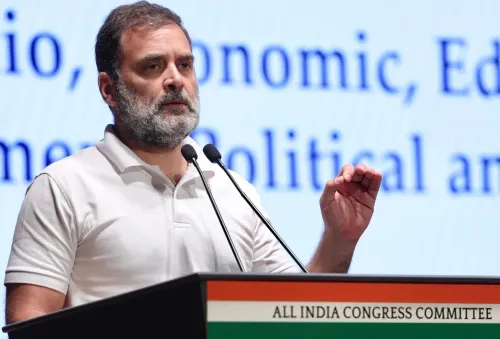
Rahul Gandhi labeled the caste survey in Telangana as a significant milestone for social justice nationwide, asserting that it would set the standard for a national caste census.
However, the government faced fierce criticism from opposition parties, including the Bharat Rashtra Samithi (BRS) and the Bharatiya Janata Party (BJP), regarding the survey results. These parties questioned the reported decrease in BC population since 2014 and demanded clarification on how the BC demographic fell from 61% to 56.33% (including Muslim BCs) based on an integrated household survey conducted by the previous BRS government.
Adding to the ruling party's troubles, its own MLC, Teenmaar Mallanna, publicly criticized the caste survey report and subsequently burned a copy, leading to his suspension.
Utilizing the caste survey findings, the state legislature passed two Bills aimed at increasing BC reservations to 42% in education, employment, and local governance. These Bills were sent to the Centre for inclusion in the Ninth Schedule of the Constitution, as the total reservation would exceed the 50% limit.
As the Centre delayed action on the Bills, the Chief Minister and his Cabinet colleagues staged a dharna at Jantar Mantar in Delhi to apply pressure. Revanth Reddy also sought a meeting with President Droupadi Murmu to present a memorandum requesting her endorsement of the Bills.
In light of the lack of Central approval, the state government opted to elevate BC reservations in local bodies to 42% via an executive order. However, this decision faced legal challenges, resulting in the High Court staying the order and the Supreme Court dismissing the government’s appeal.
The legal complications further postponed rural local body elections. With Central grants of Rs 3,000 crore for Gram Panchayats expiring by March 2026, the government was compelled to conduct the polls, but chose to wait for final High Court rulings on the 42% BC reservation before proceeding with elections for Mandal Parishad Territorial Constituencies (MPTCs) and Zilla Parishad Territorial Constituencies (ZPTCs).
Another major occurrence was the sub-categorization of Scheduled Castes. Telangana became the first state to implement the Supreme Court's directive allowing for SC subclassification to ensure fair distribution of reservations.
A one-man commission was established, gathering empirical data and recommending the classification of SCs into three groups. The Telangana Scheduled Castes (Rationalisation of Reservations) Bill, 2025, was unanimously passed by the State Assembly in March, categorizing 59 SC communities into three groups for the application of 15% reservation.
Chief Minister Revanth Reddy hailed the passage of the Bill as a historic milestone for social justice, noting that the movement for SC sub-categorization had been ongoing for over 30 years.
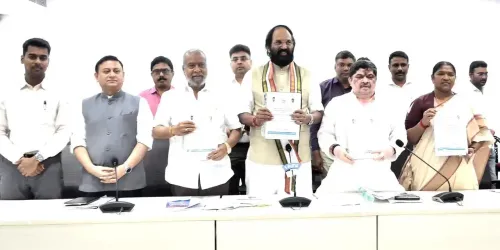
Following the caste census, the long-awaited Cabinet expansion occurred in June with the induction of three ministers—G. Vivek Venkataswamy, Adluri Laxman Kumar, and Vakiti Srihari. Vivek Venkataswamy, son of former Union Minister G. Venkataswamy, and Adluri Laxman Kumar belong to Scheduled Castes, while Vakiti Srihari hails from the Backward Classes.
This marked the first Cabinet expansion since the government was formed on December 7, 2023, when the Chief Minister and 11 ministers took their oaths.
A second Cabinet expansion occurred in November, inducting former Indian cricket captain Mohammed Azharuddin amid the campaign for the Jubilee Hills Assembly byelection. Azharuddin became the first Muslim minister in the Revanth Reddy Cabinet, following criticism regarding the Congress government's lack of Muslim representation for nearly two years.
As none of the Congress party’s Muslim candidates secured seats in the November 2023 Assembly elections, Cabinet representation for Muslims had been delayed. Azharuddin, who had lost in Jubilee Hills in 2023, was again seeking a party ticket for the byelection. However, the leadership chose not to nominate him for the byelection, instead appointing him to the Legislative Council and subsequently including him in the Cabinet.
Azharuddin’s appointment faced sharp criticism from the BJP, which labeled it an attempt to sway Muslim voters, who constitute over 30% of the electorate in Jubilee Hills.
In the byelection, Congress candidate V. Naveen Yadav triumphed over BRS nominee Maganti Sunitha by nearly 25,000 votes. This byelection was necessitated by the death of Sunitha’s husband, BRS leader Maganti Gopinath.
This victory helped Revanth Reddy solidify his standing, as he led the party to reclaim the Jubilee Hills seat from the BRS. The win also provided a significant boost to Congress ahead of the Greater Hyderabad Municipal Corporation (GHMC) elections.
At the year's end, the ruling party made a strategic move by merging 27 urban local bodies with the GHMC, establishing it as the largest municipal entity in the nation in terms of both area and population. Given Congress's traditional weakness in Greater Hyderabad, this move was perceived as a strategy to counter the BRS by consolidating adjacent gram panchayats and municipalities.
The Congress party's success in the Gram Panchayat elections represented another substantial boost for the Chief Minister. Out of 12,727 Gram Panchayats, Congress-backed candidates secured 6,822 seats (53.60%), while BRS captured 3,519 seats (27.64%). BJP-backed candidates won merely 703 seats (5.52%), with independents and others taking 1,654 seats (12.99%).
Revanth Reddy claimed that together, Congress and its rebels won 8,335 Gram Panchayats, representing nearly 66% of the total. His analysis of the results indicated Congress leading in 87 of the 94 Assembly constituencies, with BRS ahead in six and BJP in one.
On December 7, the Congress government marked two years in office by hosting the Telangana Rising Global Summit. By selecting Bharat Future City as the venue, the Chief Minister aimed to emphasize his flagship vision project.
The highlight of the two-day summit was the introduction of the Telangana Rising Vision 2047 document, which outlined an ambitious objective of transforming Telangana into a $3 trillion economy by 2047, with a milestone of $1 trillion by 2034.
The document detailed a roadmap centered around three sector-specific zones—CURE (Core Urban Region Economy), PURE (Peri Urban Region Economy), and RARE (Rural Agri Region Economy). To achieve these objectives, the state proposed several transformative projects, including Bharat Future City, Musi River rejuvenation, a Dry Port, a 12-lane expressway connecting the Dry Port to Krishnapatnam Sea Port in Andhra Pradesh, and bullet train corridors linking Hyderabad with Bengaluru and Chennai via Amaravati.
Point of View
It is essential to recognize the significant strides taken in Telangana under Chief Minister Revanth Reddy's leadership. The focus on social justice through the caste census and enhanced reservations highlights a commitment to equity, but the government's approach has sparked debates and challenges. Balancing progress while addressing opposition concerns will be crucial in the upcoming political landscape.
NationPress
30 Sept 2026
Frequently Asked Questions
What were the major political developments in Telangana in 2025?
Key developments included the caste census, enhancements in BC reservations, two Cabinet expansions, and victories for the Congress party in important elections.
How did the caste census impact social justice in Telangana?
The caste census was aimed at fulfilling the Congress party's promise of social justice, revealing the population distribution among different castes and ensuring fair representation.
What challenges did the government face regarding the caste survey?
The government faced criticism from opposition parties over the accuracy of the caste population figures and legal challenges regarding the implementation of increased BC reservations.
What was the significance of the Jubilee Hills Assembly bypoll?
The Congress party's victory in the Jubilee Hills bypoll strengthened its position and provided momentum heading into future elections.
How did the Cabinet expansions affect the political landscape?
The Cabinet expansions aimed to enhance representation within the government, addressing criticisms of underrepresentation, particularly concerning the Muslim community.