Why is the Thai military targeting Cambodian territory?
Synopsis
As tensions escalate along the Cambodia-Thailand border, the Thai military's ongoing artillery strikes have resulted in tragic civilian casualties. The conflict has now forced hundreds of thousands to flee their homes, raising urgent calls for restraint and dialogue from ASEAN leaders. What does this mean for regional stability?
Key Takeaways
Thai military continues artillery strikes in Cambodia.
Civilian death toll has reached 21 , including an infant.
Over 545,000 Cambodians displaced due to the conflict.
ASEAN leaders demand immediate cessation of hostilities.
Calls for dialogue to restore peace and stability.
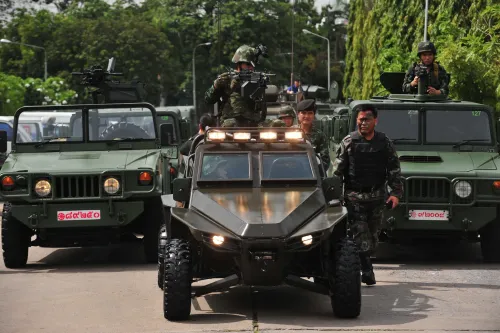
Phnom Penh, Dec 23 (NationPress) The Thai military has persistently utilized artillery and tank-mounted machine guns to target various sites within Cambodian territory, as reported by a spokesperson for the Cambodian defense ministry on Tuesday morning.
The civilian death toll in Cambodia has tragically risen to 21, with the border hostilities with Thailand now entering their 17th day, according to Lt. General Maly Socheata, Undersecretary of State and Spokesperson for the Defence Ministry.
"The Thai military has struck areas where Cambodian civilians live, leading to 21 civilian fatalities, including an infant, along with injuries to 83 individuals as of 6 pm on December 22," she stated during a press briefing.
The ongoing conflict along the Cambodia-Thailand border reignited on December 7, with both nations accusing each other of instigating the violence, as reported by Xinhua News Agency.
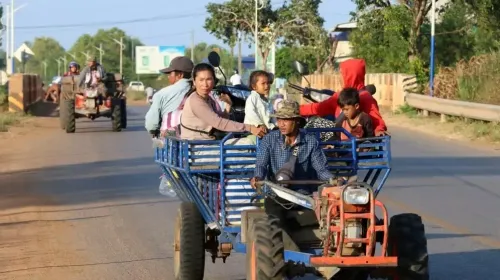
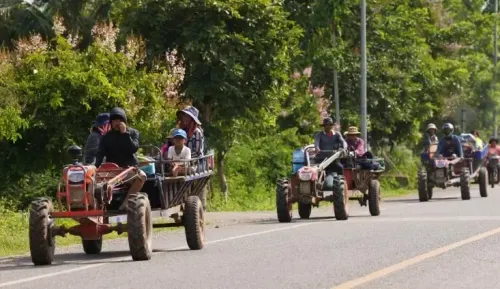
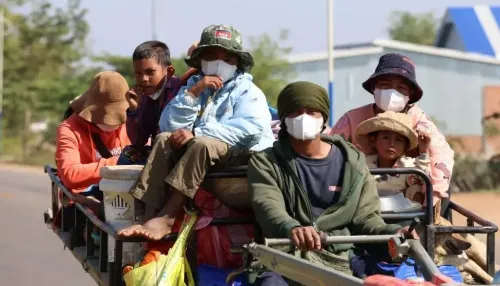
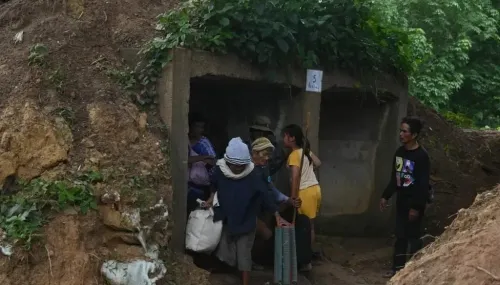
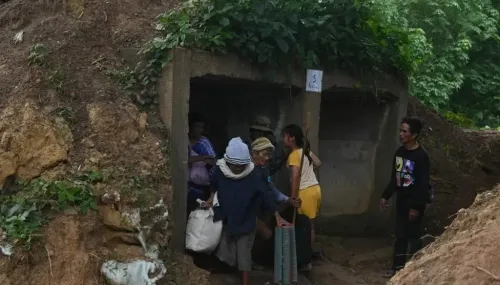
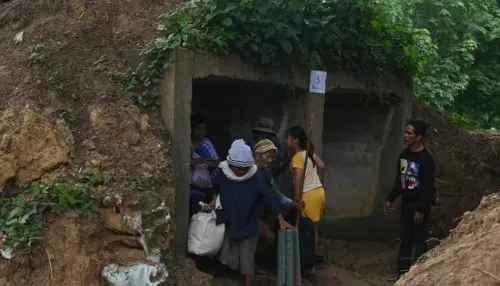
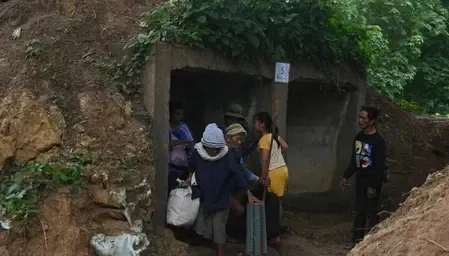
Recent statistics from the Cambodian Ministry of Interior reveal that approximately 545,000 Cambodians have been forced to evacuate their residences in search of safer accommodations due to the conflict.
During a 'special meeting' held in Kuala Lumpur, Malaysia, the Foreign Ministers of ASEAN member states expressed their concerns regarding the escalating situation between Cambodia and Thailand, urging both nations to show restraint and implement immediate measures to halt all forms of hostility.
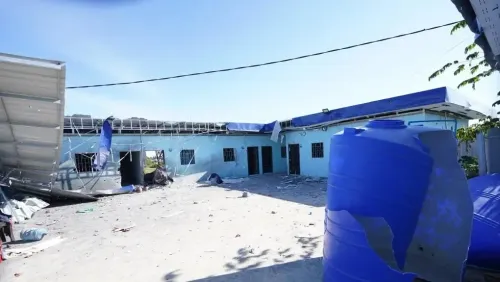
The meeting reaffirmed the commitment to ASEAN unity and its central role in promoting regional stability, security, and prosperity as outlined in the ASEAN Charter. Participants expressed serious concerns regarding ongoing tensions, which have resulted in significant casualties, damage to civilian infrastructure, and the displacement of populations on both sides of the border, according to a statement from the ASEAN Chair.
Participants called for both Thailand and Cambodia to ensure that civilians affected by the conflict can safely return to their homes and resume their normal lives without impediments.
The statement emphasized, "The Meeting urged both nations to exercise utmost restraint and take prompt actions to cease all hostilities. Furthermore, it encouraged a return to dialogue and cooperation on humanitarian demining, while adhering to international law and principles of peaceful coexistence to achieve a lasting resolution to the crisis."
Point of View
It's crucial to highlight the humanitarian impact of the ongoing conflict between Thailand and Cambodia. Both nations must prioritize the safety of civilians and seek dialogue to prevent further escalation. The international community's role in facilitating peaceful resolutions is also vital for regional stability.
NationPress
15 Oct 2026
Frequently Asked Questions
What caused the recent conflict between Thailand and Cambodia?
The conflict reignited on December 7, with both nations accusing one another of initiating hostilities, leading to artillery strikes and civilian casualties.
How many civilians have been affected by the conflict?
As of the latest reports, the conflict has resulted in 21 civilian deaths and forced approximately 545,000 Cambodians to evacuate their homes.
What actions have ASEAN leaders taken regarding the situation?
ASEAN Foreign Ministers held a special meeting to discuss the crisis, urging both Thailand and Cambodia to exercise restraint and engage in dialogue.
What impact has the conflict had on civilian infrastructure?
The ongoing hostilities have caused significant damage to civilian infrastructure, leading to a humanitarian crisis in the affected areas.
What measures are suggested for resolving the conflict?
ASEAN leaders have called for maximum restraint, the restoration of trust, and a return to dialogue to achieve a peaceful resolution.