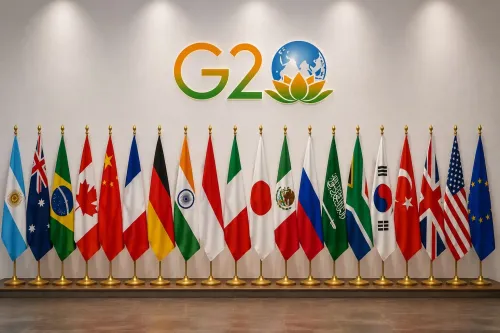
G20 Asheville finance meet: growth, fair trade and supply chains top US agenda

Synopsis
The G20 finance meetings in Asheville are shaping up as a platform for the US to push a tightly focused economic agenda — fair trade, onshored supply chains, and FDI — while also showcasing a hurricane-hit North Carolina city's recovery to the world. With AI and quantum tech on the table alongside financial literacy, Washington is signalling that G20 cooperation must deliver results at the community level, not just in communiqués.
Key Takeaways
G20 finance meetings in Asheville, North Carolina will focus on economic growth, fair trade, supply-chain resilience , and foreign direct investment .
Assistant Secretary Chris Pilkerton said the US wants trade arrangements that are 'fair and free' and address imbalances built up over several years.
The Trump administration's supply-chain onshoring drive will be a central discussion point, supported by the Treasury's Strategic Vendor Program .
Artificial intelligence, quantum technology, hypersonics, biotechnology , and the space economy are flagged as innovation cooperation areas.
Treasury Secretary Scott Bessent is expected to champion financial literacy as a community-level economic tool.
The meetings are projected to bring approximately $20 million in economic activity to Asheville , which is recovering from a recent hurricane.
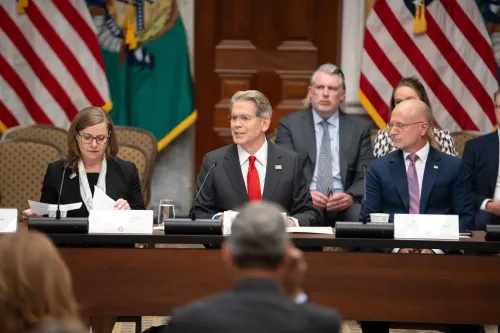
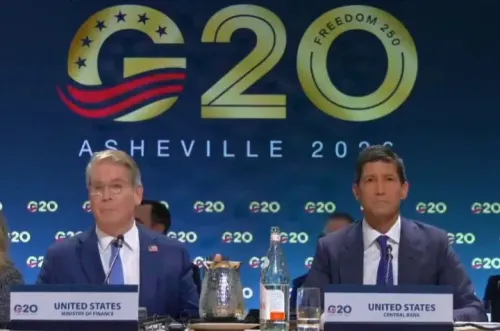
The G20 finance meetings in Asheville, North Carolina, will centre on economic growth, fair trade, resilient supply chains, and foreign direct investment, as the United States presses for deeper cooperation with its allies and partners, a senior Treasury official said on 31 August. The meetings mark a key milestone in the US-held G20 presidency, which Washington assumed from South Africa.
Key Themes on the Table
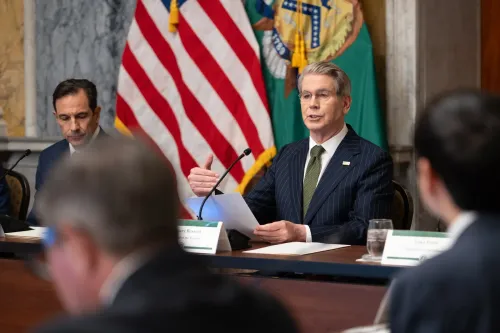
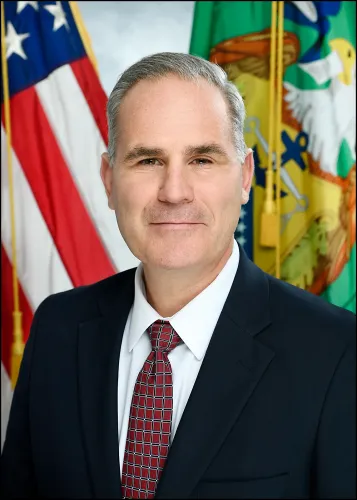
Assistant Secretary for the Treasury Chris Pilkerton said the discussions would move well beyond broad macroeconomic issues, drilling down into how international cooperation could tangibly benefit businesses, workers, and local communities. He said the meetings would provide a dedicated forum to discuss both trade partnerships and opportunities for foreign direct investment into the United States.
'What we're also bringing to Asheville are important conversations, not just about trade and the opportunity to work together with our partners and allies, but also the opportunity to have foreign direct investment into the United States,' Pilkerton said.
Trade Imbalances and Supply Chain Priorities
Economic growth was described as a major theme, with the US seeking to ensure that existing trade arrangements are both effective and equitable. Pilkerton said Washington wanted to address imbalances that had accumulated over several years, emphasising the need for trade that is 'fair and free' and mutually beneficial.
Supply-chain resilience featured prominently in the agenda. Pilkerton said the Trump administration had made onshoring supply chains a priority, and the Asheville meetings would help identify specific gaps preventing American companies from expanding. He cited the Treasury's Strategic Vendor Program, under which officials work with companies reviewed by the Committee on Foreign Investment in the United States to pinpoint critical equipment or inputs needed for growth. 'Addressing even a single missing component could help a company expand, recruit more workers and generate wider economic development,' he noted.
Technology, AI and National Security
Technological innovation is also expected to feature on the agenda. Pilkerton identified artificial intelligence, quantum technology, hypersonics, biotechnology, and the space economy as sectors where the US was witnessing rapid advances. He said Washington sought cooperation with allies in these fields, while remaining alert to national security risks linked to the potential dual use of sensitive technologies.
Financial Literacy and Local Impact
Treasury Secretary Scott Bessent is reportedly passionate about financial literacy, which is expected to receive dedicated attention at the meetings. Pilkerton said the conversations were designed to be local in impact, not merely global in scope — focused on strengthening opportunities for individuals and communities.
The G20 meetings are also projected to deliver an immediate economic benefit to Asheville itself, with Pilkerton estimating roughly $20 million in economic activity flowing into the North Carolina city. He also highlighted Asheville's ongoing recovery from a recent hurricane, calling it a priority for the Treasury Secretary to showcase that progress on a global stage. The Asheville finance meetings precede further ministerial and leaders-level engagements under the US G20 presidency.
Point of View
Attracting FDI into the US, and spotlighting a recovering American city are priorities that serve Washington's political narrative as much as global cooperation goals. The inclusion of AI and dual-use technology on a finance-track agenda is notable — it signals that the US sees economic and security interests as increasingly inseparable in multilateral forums. Whether allies and emerging-market G20 members, who have their own trade grievances with Washington, will align with this framing remains the central tension the meetings will need to resolve.
NationPress
15 Oct 2026
Frequently Asked Questions
What are the main agenda items at the G20 finance meetings in Asheville?
The G20 finance meetings in Asheville are focused on economic growth, fair trade, supply-chain resilience, and foreign direct investment, according to Assistant Secretary for the Treasury Chris Pilkerton. Technological innovation and financial literacy are also on the agenda.
Why is the US hosting G20 finance meetings in Asheville, North Carolina?
The US assumed the G20 presidency from South Africa, and the Asheville meetings form part of the US-led finance track agenda. Treasury officials also cited a desire to highlight Asheville's recovery from a recent hurricane, with the meetings expected to bring around $20 million in economic activity to the city.
What is the US position on trade and supply chains at the G20?
The US wants trade partnerships that are fair, effective, and address imbalances accumulated over several years. On supply chains, the Trump administration has prioritised onshoring and is using the Treasury's Strategic Vendor Program to identify critical gaps that limit American company expansion.
How does technology feature in the G20 Asheville discussions?
Artificial intelligence, quantum technology, hypersonics, biotechnology, and the space economy are identified as key innovation areas. The US seeks allied cooperation in these fields while flagging national security risks from the potential dual use of sensitive technologies.
What is the G20 and who holds the current presidency?
The G20 is a forum comprising the world's largest advanced and emerging economies, focused on international economic cooperation including growth, financial stability, and development. The United States currently holds the G20 presidency, having taken over from South Africa.