Battle of Three Pimples 1999: The Kargil victory that opened Tiger Hill
Synopsis
While Tiger Hill gets the headlines, it was the capture of Three Pimples on 29 June 1999 that broke the Kargil stalemate open. Colonel M.B. Ravindranath personally assumed command mid-battle after his company lost both its officers, scaled a near-vertical 10,800-foot rockface under fire, and secured the peak — earning a Vir Chakra and opening the route to Tiger Hill. He died jogging in Bengaluru in 2018, largely unknown outside military circles.
Key Takeaways
Three Pimples in Drass, Ladakh was captured by Indian Army soldiers on 29 June 1999 , a turning point in the Kargil War .
Ravindranath of 2 Rajputana Rifles personally led the assault at over 10,800 feet , assuming command of a company that had lost both its officers mid-battle.
The victory at Three Pimples, along with Black Rock , directly enabled subsequent Indian assaults on Tiger Hill .
Colonel Ravindranath was awarded the Vir Chakra on 15 August 1999 for his actions at Three Pimples, Tololing, and Point 4590.
He retired in 2001 , settled in Bengaluru , and passed away on 8 April 2018 at the age of 59 .
Pakistani forces had crossed the LoC in May 1999 , targeting peaks overlooking the Srinagar–Leh Highway to isolate Ladakh.
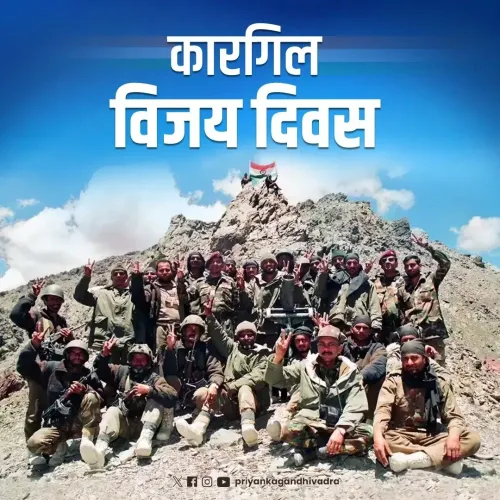
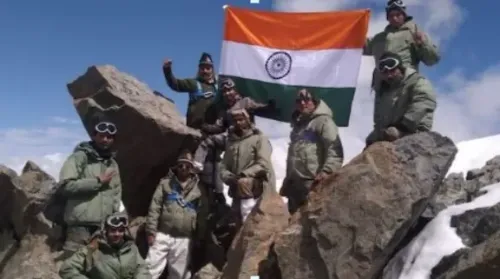
On 29 June 1999, Indian Army soldiers scaled the near-vertical rockface of Three Pimples in Drass, Ladakh, unfurling the tricolour at over 10,800 feet above sea level — a victory that cracked open the momentum leading to Pakistan's eventual eviction from the Kargil sector. The assault, led by Colonel M.B. Ravindranath of 2 Rajputana Rifles, stands as one of the lesser-celebrated but strategically decisive engagements of the 1999 Kargil War.
The Peak and Its Strategic Weight
Three Pimples derives its name from three eruption-like rocky formations that jut out from its summit. Towering above the Srinagar–Leh Highway, the peak offered Pakistani intruders a commanding vantage point over Indian supply lines into Ladakh. Its capture, alongside the adjacent Black Rock, directly enabled subsequent Indian assaults on Tiger Hill and other dominant ridgelines.
The approach was unforgiving. Up to roughly the midpoint, the terrain offered barely a toehold. Beyond that, the rockface turned nearly vertical — soldiers were required to haul themselves upward with weapons and rucksacks, fully exposed to enemy fire from flanking peaks. The odds, by any conventional military calculus, were daunting.
Colonel Ravindranath's Leadership Under Fire
Colonel M.B. Ravindranath, then 40 years old, led the assault personally — climbing at the front of his men through darkness, using stealth and surprise to offset the terrain disadvantage. His plan relied on the cover of night and sheer determination rather than numerical superiority.
The night of 28 June proved especially brutal. A company of 2 Raj Rif came under heavy enemy attack and lost both its officer commanding and second-in-command. Colonel Ravindranath stepped in personally, assumed command of the company mid-assault, and drove the attack to its conclusion — securing both Black Rock and Three Pimples. Many soldiers were martyred; several others were grievously wounded. The battalion subsequently received a special citation for its conduct.
For his actions across the battles of Tololing, Point 4590, and Three Pimples, Colonel Ravindranath was awarded the Vir Chakra on 15 August 1999.
The Broader Kargil Context
The Kargil conflict began in May 1999 when Pakistani forces crossed the Line of Control (LoC), occupying high-altitude positions across Drass, Kargil, Batalik, and Mushkoh. Their strategic objective was to sever the Srinagar–Leh highway, effectively isolating Ladakh and forcing India into a disadvantageous negotiation. The intruders fortified peaks overlooking supply lines and dug into ridges dominating key valleys.
While Tiger Hill and Tololing dominate popular memory of the war, victories at peaks like Three Pimples were the building blocks that made those later triumphs possible. This is the pattern of the Kargil campaign — a chain of hard-won heights, each one unlocking the next.
A Hero Remembered
Colonel Ravindranath retired from the Indian Army in 2001 and settled in Bengaluru, where he pursued corporate ventures. On 8 April 2018, at the age of 59, he died of a cardiac arrest while jogging at a neighbourhood park. He was 25 years removed from the war he helped win.
As India marks another anniversary of the Battle of Three Pimples, his story — and those of the unnamed soldiers who fell on that rockface — serves as a reminder that the Kargil War was not decided by a handful of famous engagements alone, but by dozens of acts of courage that history has yet to fully record.
Point of View
Obscure engagements that each made the next one possible. Three Pimples is a case study in how military history gets compressed: the decisive action happened in the dark, on a near-vertical rockface, led by an officer who stepped up after two of his subordinates fell — and that officer died in relative anonymity in 2018. India's institutional memory of Kargil risks reducing a complex, costly campaign to a few photogenic summits. The soldiers who took Three Pimples deserve better than a footnote.
NationPress
28 Sept 2026
Frequently Asked Questions
What was the Battle of Three Pimples in the Kargil War?
The Battle of Three Pimples was an Indian Army assault on 29 June 1999 to recapture a strategically vital peak in Drass, Ladakh, from Pakistani intruders during the Kargil War. The peak, named for its three eruption-like rock formations, stood at over 10,800 feet and overlooked the Srinagar–Leh Highway.
Who led the assault on Three Pimples?
Colonel M.B. Ravindranath of 2 Rajputana Rifles led the assault, personally climbing at the front of his men under heavy enemy fire. When a company lost both its officer commanding and second-in-command mid-battle on the night of 28 June, Colonel Ravindranath assumed direct command and completed the capture.
Why was the capture of Three Pimples strategically important?
Three Pimples overlooked key Indian supply lines along the Srinagar–Leh Highway, and its capture — along with Black Rock — opened the way for subsequent Indian assaults on Tiger Hill and other dominant ridgelines. It was a critical early momentum-shift in the Kargil campaign.
What award did Colonel Ravindranath receive for his actions in Kargil?
Colonel M.B. Ravindranath was awarded the Vir Chakra on 15 August 1999 for his exemplary leadership and valour during the battles of Three Pimples, Black Rock, Tololing, and Point 4590.
What happened to Colonel Ravindranath after the Kargil War?
Colonel Ravindranath retired from the Indian Army in 2001 and settled in Bengaluru, where he established himself in corporate ventures. He died of a heart attack on 8 April 2018 at the age of 59 while jogging at a neighbourhood park.