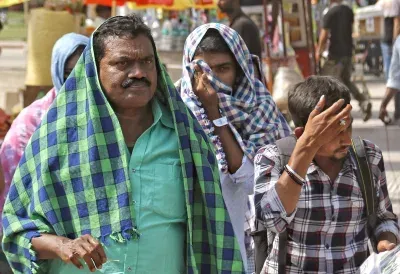
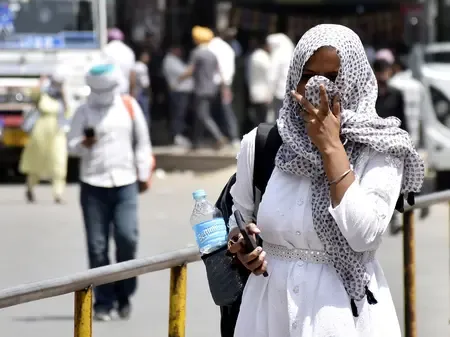
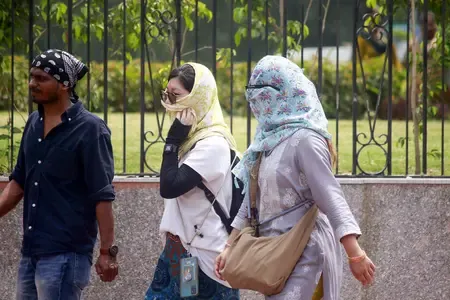
Tamil Nadu temperatures to rise 3-4°C above normal till July 16

Synopsis
Tamil Nadu is baking through an unusual mid-monsoon heat surge, with temperatures running 3 to 4 degrees above normal and 14 locations crossing 37.8°C on Sunday. Vellore hit 41.7°C — and the RMC says there is no substantial relief in sight until at least July 16, as the southwest monsoon remains stubbornly weak over the state.
Key Takeaways
The RMC, Chennai has forecast temperatures 3 to 4 degrees Celsius above normal across Tamil Nadu until July 16 .
Vellore recorded the state's highest temperature at 41.7 degrees Celsius ; Madurai Airport followed at 41.1 degrees Celsius .
14 locations across Tamil Nadu logged temperatures of 37.8 degrees Celsius or above on Sunday.
A weak southwest monsoon and below-normal rainfall are the primary drivers of the persistent heat.
Light rain is forecast over Western Ghats districts on Tuesday but is unlikely to cool the plains.
Residents have been advised to avoid afternoon sun exposure and stay hydrated.
The Regional Meteorological Centre (RMC), Chennai, has forecast that maximum temperatures across Tamil Nadu will climb 3 to 4 degrees Celsius above normal until July 16, with hot and humid conditions set to persist across large parts of the state despite the ongoing southwest monsoon season. The warning comes as Tamil Nadu finds itself in an unusual grip of summer-like heat at the midpoint of July.
Heat Readings Across the State
Vellore emerged as the hottest location in the state, recording a maximum temperature of 41.7 degrees Celsius. Madurai Airport logged 41.1 degrees Celsius, while Madurai city registered 40.6 degrees Celsius. Tiruttani and Chennai's Meenambakkam observatory each touched 40 degrees Celsius, and Tiruchy and Cuddalore both recorded 39.4 degrees Celsius.
Palayamkottai and Chennai's Nungambakkam weather station registered 38.9 degrees Celsius. Temperatures also crossed the 38.6-degree Celsius mark in Nagapattinam, Erode, Karur Paramathi, Parangipettai, and Namakkal. In total, 14 locations across Tamil Nadu recorded temperatures of 37.8 degrees Celsius or above on Sunday, underscoring the widespread nature of the heat event.
Why the Monsoon Has Failed to Cool the State
Meteorologists attribute the prolonged heat spell to a subdued southwest monsoon, which has curtailed rainfall across much of Tamil Nadu and allowed daytime temperatures to remain significantly above seasonal norms. The absence of widespread cloud cover — ordinarily a natural buffer during monsoon months — has compounded the problem, leaving plains districts exposed to intense solar radiation.
Rainfall has remained below normal across many regions, and the combined effect of elevated temperatures and high humidity has made conditions particularly uncomfortable along coastal districts of Tamil Nadu and Puducherry, according to the RMC.
Limited Relief on the Horizon
The RMC has forecast light rainfall over the Western Ghats districts on Tuesday. While these showers may bring localised relief to hilly areas, forecasters caution that they are unlikely to meaningfully reduce temperatures across the plains, where hot and humid conditions are expected to persist until at least July 16.
This is not the first time Tamil Nadu has experienced a heat anomaly during the monsoon season, but the scale — with temperatures running 3 to 4 degrees above normal across a wide swathe of the state simultaneously — reflects a pattern of increasing weather variability that climate scientists have flagged for peninsular India.
Advisory for Residents
The weather office has advised residents to avoid prolonged exposure to direct sunlight during afternoon hours and to stay adequately hydrated. Coastal communities in particular have been cautioned about the discomfort arising from the combination of high heat and elevated humidity levels.
All eyes will be on whether the southwest monsoon strengthens over Tamil Nadu after July 16, which could finally bring the seasonal cooling the state has been waiting for.
Point of View
And each such deficit compounds agricultural stress, water table pressure, and public health risk in a state already managing urban heat islands in Chennai and Madurai. The RMC forecast is technically accurate, but the broader question mainstream coverage is missing is why the Bay of Bengal circulation that typically drives Tamil Nadu's monsoon keeps weakening mid-season. Until that structural question is addressed, residents will keep facing this paradox: monsoon season, but no monsoon relief.
NationPress
12 Oct 2026
Frequently Asked Questions
Why is Tamil Nadu experiencing high temperatures during the monsoon season?
The southwest monsoon has remained weak over Tamil Nadu, limiting rainfall and cloud cover that would normally moderate daytime temperatures. This has allowed maximum temperatures to climb 3 to 4 degrees Celsius above normal, creating summer-like conditions in the middle of July.
Which was the hottest place in Tamil Nadu on Sunday?
Vellore recorded the highest maximum temperature in Tamil Nadu at 41.7 degrees Celsius. Madurai Airport followed at 41.1 degrees Celsius, and Madurai city registered 40.6 degrees Celsius.
When will temperatures return to normal in Tamil Nadu?
The RMC has forecast that above-normal temperatures and hot, humid conditions will persist until at least July 16. Light rainfall is expected in Western Ghats districts on Tuesday, but this is unlikely to bring significant relief to the plains.
Which districts are most affected by the heat and humidity?
Coastal districts of Tamil Nadu and Puducherry are particularly affected due to the combined impact of high temperatures and elevated humidity. Inland cities like Vellore, Madurai, Tiruchy, and Cuddalore have also recorded extreme temperatures.
What precautions have authorities advised for residents?
The Regional Meteorological Centre has advised people to avoid prolonged exposure to direct sunlight during afternoon hours and to remain adequately hydrated until conditions improve.